
Choosing the right Commercial Kitchen Range in 2026 requires more than comparing burner counts and price tags. Global buyers need equipment that performs reliably during long service hours, supports local energy systems, and fits practical kitchen workflows. A range may look powerful in a showroom, yet struggle when ventilation, gas pressure, or staff capacity changes. Real performance matters.
This guide examines commercial ranges through an experienced purchasing lens. It considers heat control, cooking capacity, construction materials, cleaning access, safety features, warranty support, and spare-parts availability. Electric, gas, induction, and hybrid models each serve different operating conditions. Local certification requirements also vary, so buyers should verify documentation before placing an international order. Manufacturer claims deserve careful checking.
Small details can shape daily results. Think about a stainless-steel worktop beside a busy sauté station, uneven pot bases, or a technician waiting weeks for one replacement valve. Those details are easy to miss. They should not be. We also acknowledge an uncomfortable point: no single range suits every market, menu, or budget. Some recommendations may need revision as energy prices, regulations, and supply chains change. That is part of responsible research.
The following overview compares leading options for hotels, restaurants, catering businesses, and institutional kitchens. It emphasizes documented specifications, user experience, supplier credibility, and long-term operating value. Buyers can use these insights to ask better questions, reduce avoidable purchasing risks, and select equipment with greater confidence. Performance is important. So is honest evaluation.
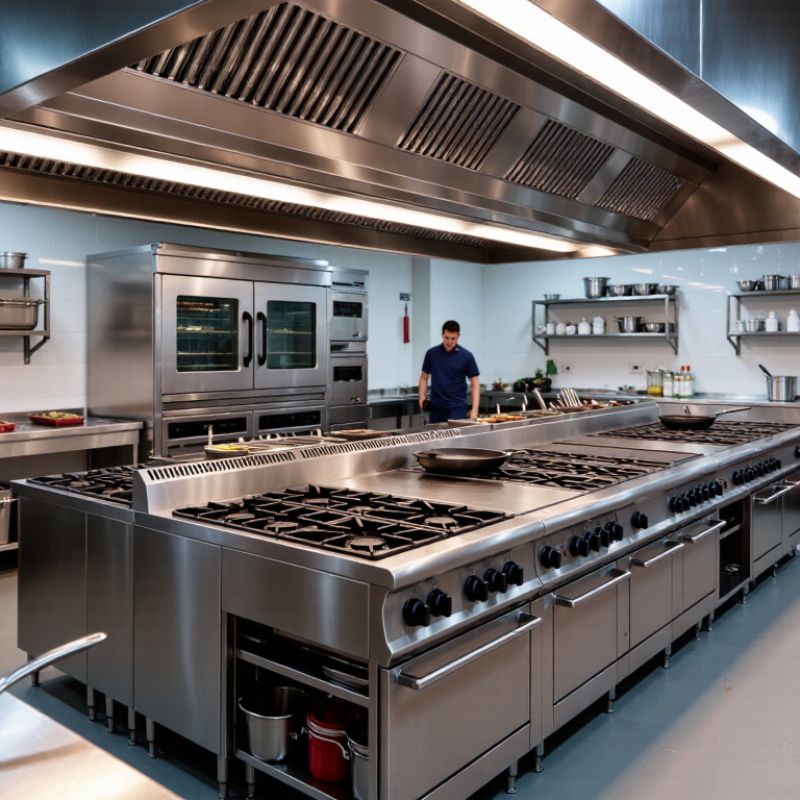
In 2026, a commercial kitchen range is more than a powerful cooker. It is a coordinated work station for speed, safety, cleaning, and energy control. Buyers now compare burner output, oven recovery, ventilation needs, and service access together. A range that cooks quickly but traps grease under sealed panels creates expensive problems later.
Practical testing still matters. During a site review, I check pan clearance, flame stability, knob reach, and heat around the operator’s knees. Electric models need stable power capacity, while gas models require suitable connections and professional installation. Controls may include timers, temperature sensors, and diagnostic displays. Useful features should reduce mistakes, not simply add complexity. Keep it simple.
A reliable 2026 range should support different cooking methods without wasting valuable floor space. Stainless surfaces, removable trays, smooth seams, and accessible filters help staff clean between busy service periods. Safety systems should manage flame failure, overheating, and accidental activation. Destination-market certification is essential, because electrical, gas, and ventilation requirements differ across regions. Documentation should clearly state input ratings, clearances, maintenance intervals, and available parts.
Efficiency deserves a careful look. Lower energy use can reduce operating costs, but advertised savings may depend on workload, ventilation, and staff habits. Not every smart feature earns its cost. Buyers should request operating data, inspect construction details, and speak with qualified service technicians before ordering. A thoughtful specification may feel slower at the start, yet it prevents costly surprises after installation.

2026 Best Commercial Kitchen Ranges for Global Buyers
How to Match Range Types with Global Cooking Operations
Choosing a commercial range starts with the cooking process, not the catalog photograph. High-output gas burners suit wok cooking, stockpots, and fast sautéing. They need strong ventilation and stable fuel pressure. Electric or induction ranges offer precise heat control for sauces, pastry, and compact urban kitchens. They also reduce direct combustion indoors. However, induction requires compatible cookware and dependable electrical capacity.
ENERGY STAR reports that restaurants can use five to seven times more energy per square foot than other commercial buildings. This makes range efficiency a practical operating issue, not a marketing detail. Buyers should compare input power, recovery time, standby consumption, and ventilation demand. A 400-volt, 50-hertz kitchen cannot simply install equipment designed for a 208-volt, 60-hertz system. Local technicians must verify connections, clearances, extraction, and safety certification before purchase.
Operations also shape the best configuration. A hotel breakfast line may need griddles, open burners, and rapid cleaning. A central production kitchen may favor induction suites and large electric boiling pans. Charbroilers create distinctive flavor, but they add heat, grease, and maintenance work. That trade-off is often underestimated. The U.S. Department of Energy’s commercial kitchen guidance emphasizes efficient cooking equipment and demand-controlled ventilation as key energy measures. Still, performance data can look different in humid ports, high-altitude cities, or kitchens with uneven training. A perfect specification on paper may fail during the dinner rush. Test the range with local recipes, cookware, and staff before committing.
| Range Type | Typical Heat Source | Typical Cooking Capacity | Typical Output or Power | Common Oven Configuration | Best-Match Cooking Operations | Infrastructure and Ventilation Requirements | Global Buyer Matching Guidance |
|---|---|---|---|---|---|---|---|
| Open-Burner Gas Range | Natural gas or LPG | 4–10 open burners; approximately 300–900 mm working width | Approximately 3–8 kW per burner, depending on burner design | Optional gas or electric oven; commonly 1 oven cavity | Restaurants requiring direct pan control, sautéing, boiling, stock preparation, and mixed à la carte production | Gas supply, commercial extraction, make-up air where required, flame-failure protection, and compliance with local gas regulations | Suitable where gas is reliable and chefs prefer visible flame control. Confirm gas pressure, fuel type, altitude requirements, and local certification before purchase. |
| Heavy-Duty Gas Range with Griddle | Natural gas or LPG | Open burners plus a 450–1200 mm griddle plate | Approximately 15–45 kW total, depending on size and configuration | Optional standard or convection oven | High-volume breakfast service, burgers, flatbreads, grilled sandwiches, eggs, meat, and rapid batch cooking | High-capacity extraction, heat management, grease filtration, gas connection, and sufficient clearance around the griddle | Well suited to hotels, diners, institutional kitchens, and multi-period operations that need both pan cooking and flat-top production. |
| Electric Solid-Top Range | Electric cast-iron plates or sealed solid elements | 4–6 cooking zones; approximately 600–1200 mm working width | Approximately 1.5–4 kW per cooking zone | Usually electric static or convection oven | Slow simmering, sauce production, braising, general cooking, and operations without an on-site gas connection | Three-phase electrical supply is common for larger units; extraction is still required for heat, moisture, and cooking vapors | A practical option where gas infrastructure is unavailable or restricted. Solid plates retain heat, so they are less responsive than induction for rapid temperature changes. |
| Induction Range | Electromagnetic induction | 2–6 induction zones; approximately 400–1200 mm working width | Approximately 2–5 kW per zone; total connected load varies by model | Optional electric convection oven | Precision sautéing, Asian and European à la carte cooking, low-temperature simmering, and kitchens prioritizing lower ambient heat | Stable electrical supply, compatible magnetic cookware, suitable ventilation, and electrical protection sized for the connected load | Strong choice for urban kitchens, open kitchens, and locations with strict indoor-air requirements. Check cookware compatibility and peak electrical capacity. |
| Wok Range | High-output gas, induction, or electric heating | 1–6 wok stations; typically 300–1500 mm working width | Gas models commonly use approximately 10–35 kW per wok station; electrical ratings vary by design | Usually none; may be installed beside separate ovens or steam equipment | Stir-frying, boiling, steaming, noodle production, hot-pot service, and high-speed Chinese or Southeast Asian cooking | Powerful canopy or purpose-built wok extraction, grease filtration, heat-resistant wall protection, drainage planning, and gas or high-capacity electrical service | Best for operations where round-bottom or flat-bottom wok cooking is central. Select the heating method according to local fuel availability, chef workflow, and ventilation capacity. |
| French Top Range | Gas-heated solid steel or cast-iron cooking surface | One continuous hot plate with multiple temperature zones; approximately 600–1200 mm wide | Approximately 10–30 kW total, depending on surface area and burner arrangement | Often paired with a gas or electric convection oven | Multiple-pot cooking, simmering, braising, reductions, banquet production, and controlled movement between hot and cooler zones | Gas or electrical connection according to model, commercial extraction, and adequate clearance for the large heated surface | Useful for professional kitchens needing several pans at different heat levels. It offers less instant control than individual induction zones but supports efficient batch production. |
| Modular Suite Range | Combination of gas burners, induction, griddle, charbroiler, salamander, and oven modules | Custom-built line, commonly 1200–3600 mm or more | Approximately 20–100 kW total, based on the selected modules | One or more static, convection, or specialty ovens | Hotels, central production kitchens, large restaurants, catering operations, and menus combining several cooking methods | Detailed equipment layout, coordinated gas and electrical services, high-capacity extraction, fire-suppression planning, drainage, and service access | Best when workflow, menu diversity, and throughput justify a planned cooking line. Match the suite to peak demand rather than average demand to avoid bottlenecks. |
| Combi-Oven and Range Combination | Gas or electric range combined with steam, convection, and combination cooking | Usually 2–6 range zones plus a separate combi-oven sized for production volume | Range output varies; combi-ovens commonly require substantial electrical or gas input and a water connection | Combi-oven with convection, steam, and combination modes | Hotels, hospitals, schools, catering, batch roasting, steaming, regeneration, baking, and standardized multi-site production | Potable water, filtration where required, drainage, extraction or ventilation, electrical or gas service, and adequate clearance for door opening and maintenance | Recommended when menu consistency, batch cooking, and labor efficiency are more important than having every cooking process directly on the range. |
For global buyers, a commercial kitchen range should prove its value during a busy service, not only on a specification sheet. Burner output matters, but consistent heat matters more. A strong range should move quickly from high-temperature searing to controlled simmering without sudden flame changes. Heat recovery matters. After a stockpot is removed, the cooking surface should respond predictably.
Professional buyers should examine oven recovery time, temperature stability, and usable cooking space. A crowded oven can expose weak airflow and uneven heating. Look for durable grates, sealed burner areas, and controls that remain clear near steam and grease. Stainless steel construction helps, but thickness and joint quality deserve closer inspection. Small details matter. A removable drip tray can reduce cleaning time during overnight maintenance.
Energy compatibility also requires practical attention. Gas pressure, electrical supply, ventilation capacity, and local installation rules vary between markets. A range that performs well in a test kitchen may struggle with poor extraction or unstable utilities. Ask for measured performance data, service access details, and replacement-part availability before purchasing. A higher output is not always better. It may increase fuel use, heat load, and operator fatigue. My own preference is to compare real cooking tasks, such as twenty portions of sauce and repeated oven loading, rather than trust maximum figures alone. That method is slower, but often more honest.
Which performance features matter most for professional buyers?
This chart presents representative performance benchmarks commonly found in professional gas ranges. High-output burners improve cooking speed, oven temperatures support roasting and baking, and fast recovery helps maintain stable heat during continuous service. Actual specifications vary by configuration, fuel type, local gas standards, and installation requirements.
Commercial kitchens rarely fail because of the range alone. Installation decisions usually create the expensive problems. The U.S. Energy Information Administration’s 2018 Commercial Buildings Energy Consumption Survey reports that food-service buildings use about 330 kBtu per square foot annually, among the highest commercial intensities. Fuel selection therefore deserves serious attention.
Gas provides fast visual control and suits heavy wok or stockpot work. Electric resistance offers a flatter surface and simpler cleaning. Induction transfers roughly 80–90% of input energy to cookware, while gas transfers about 35–40%, according to U.S. Department of Energy cooking-efficiency guidance. These figures are useful comparisons, not guaranteed commercial performance. Pan material, ventilation, and operator habits still matter. Some kitchens discover this too late.
Size must match the menu, not the floor plan. A six-burner range may need less space than a larger modular line, but service clearance, landing areas, and hood overlap remain essential. NFPA 96 addresses commercial cooking ventilation and fire protection, while local codes control gas piping, electrical capacity, makeup air, and clearances. Measure twice. A 900 mm range can become a serious bottleneck beside a deep fryer or pass shelf. I would also leave capacity for future demand, although oversizing wastes energy and working space. Installation drawings should show utility points, exhaust volume, suppression coverage, and cleaning access before equipment is ordered.
A commercial range should match the destination country before price enters the discussion. Check local gas pressure, electrical voltage, frequency, and ventilation requirements. A unit made for one market may perform poorly elsewhere. Ask for current conformity documents, testing reports, installation instructions, and material specifications. Food-contact surfaces should resist corrosion and allow thorough cleaning. Certification alone is not enough. Importers must confirm whether local authorities accept that certification.
Maintenance access also affects long-term purchasing value. Look for removable burner parts, clear service panels, strong hinges, and replaceable knobs. Inspect welds and cooking grates carefully. Uneven joints can trap grease and moisture. Keep spare ignition components and seals available near the installation site. Remote kitchens cannot wait weeks for a small part. That happens.
Cleaning routines should be realistic for busy staff. Smooth surfaces reduce buildup, while complicated corners increase maintenance errors. Review the manual before ordering, not after installation. Ask who will service the range and how quickly technical support can respond. Document daily cleaning, burner checks, and ventilation inspections. A purchasing mistake is choosing impressive output while ignoring local technicians. Reconsider that decision before the contract is signed.
