7 Best MCB Lock Off Kits for Global Buyers
Choosing a Mcb Lock Off Kit is not a matter of picking the largest bundle. Buyers need to check the isolator type, shackle clearance, and visibility of the warning tag. A lock that sits neatly on a small breaker may not fit a wider switch. That detail matters. For global buyers, product listings can also use different names for similar components. Compare dimensions, materials, and photographs before comparing price.
Safety researcher Sidney Dekker’s systems-based work offers a useful buying principle: “A device helps only when the whole process works.” This is an editorial summary, not a verified direct quotation. The seven kits in this guide are considered through practical criteria: compatibility, build quality, portability, labeling, and clarity of product information. A compact pouch may suit a technician carrying a few locks between panels; a larger case may make shared equipment easier to inspect. Still, no kit can replace correct isolation procedures or trained judgment. That part is easy to overlook. Buyers should confirm specifications with suppliers and assess each product for their equipment and workplace needs. This guide aims to make that comparison more grounded, though product details can change and should be checked before purchase.
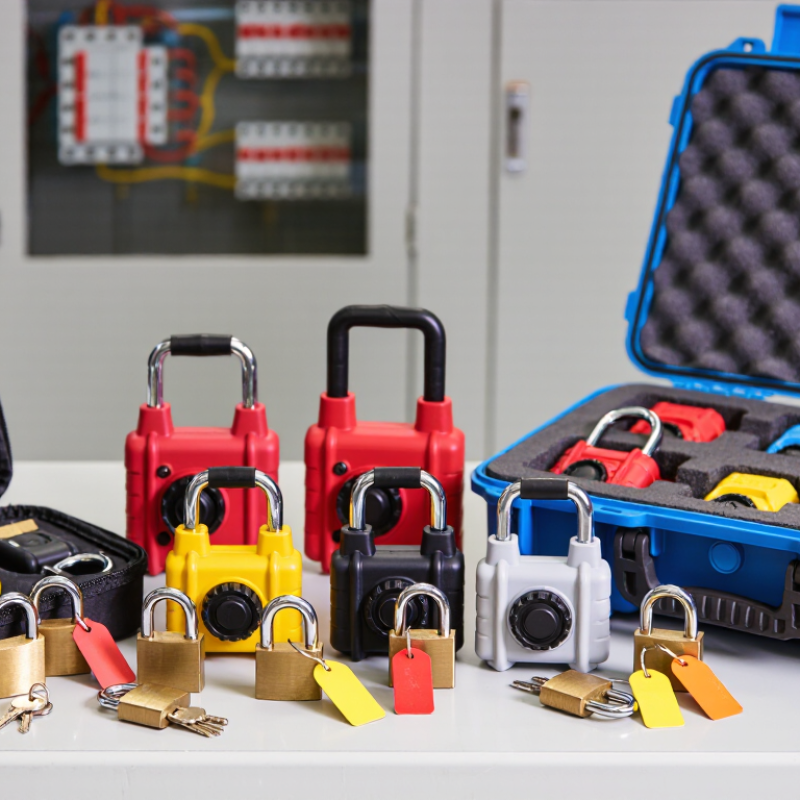
Understanding MCB Lock-Off Kits and Their Safety Role
An MCB lock-off kit holds a miniature circuit breaker in the off position and provides a point for a padlock and warning tag. This helps stop accidental re-energizing while someone works on a circuit. Small device. Serious role. Yet a locked handle does not prove that wiring is safe. A qualified person must isolate relevant power sources and test for absence of voltage with suitable equipment.
The U.S. Occupational Safety and Health Administration estimates that compliance with its lockout/tagout standard prevents 120 deaths and 50,000 injuries each year. The International Labour Organization’s 2017 estimates report 2.78 million work-related deaths and 374 million non-fatal work injuries annually. These figures cover workplace hazards broadly, not MCB incidents alone. They show why reliable energy control matters, but they cannot predict the risk at any single site.
For buyers, fit is a practical safety issue. Check the breaker’s toggle shape, available clearance, and the kit’s stated compatibility before purchase. A loose device can be easier to defeat than intended. During group work, each worker should apply a personal lock where the procedure allows. Tags should clearly identify who applied the lock and why. Small details matter. Still, a lock-off kit is only one part of a safe isolation process, and product instructions deserve a careful read.
MCB Lock-Off Kits: A Six-Step Safety Sequence
An MCB lock-off kit helps secure a circuit breaker in the OFF position and can help prevent accidental re-energization during maintenance. The bars show the order of a typical lockout sequence, not a safety score: identify the circuit, switch it off, fit the lock-off device, apply a personal lock and tag, verify absence of voltage with a suitable tester, and restore power only after work is complete and locks are removed by their owners. Follow applicable local procedures; a locked breaker alone does not prove a circuit is de-energized.
Key Features to Compare Before Choosing a Kit
A useful MCB lock-off kit should fit the breakers technicians actually encounter, not just promise “universal” coverage. Compare the clamp’s adjustment range with toggle width and operating direction. Check whether it grips firmly without covering nearby breakers or bending the switch. Small details matter. A loose fit can be obvious on a bench and less obvious inside a crowded panel.
Check shackle diameter, lock quantity, tag space, and whether the kit includes different clamp styles for varied breaker shapes. Durable, clearly labeled components are easier to inspect and account for between jobs.
The International Labour Organization’s 2023 report, A Call for Safer and Healthier Working Environments, estimated 2.93 million work-related deaths and 395 million non-fatal work injuries worldwide in 2019. These figures cover many hazards, not electrical incidents alone, but they underline why equipment selection and safe work procedures deserve careful attention.
A lock-off device is only one part of isolation; verify the circuit is de-energized using suitable test equipment and follow site procedures.
Before buying, compare the kit’s compatibility chart against actual panel samples, and confirm replacement parts are available. Ask suppliers for dimensional details and clear fitting instructions, rather than relying on product photos. I would also test the fit on a spare breaker. That step can feel fussy. It may reveal a mismatch before the kit reaches a worksite.
Seven MCB Lock-Off Kits for Global Buyers
Seven MCB Lock-Off Kits for Global Buyers
Choosing among seven MCB lock-off kits starts with the breaker, not the case. Compact pin-in and pin-out devices suit compatible toggle openings, while clamp-on models grip handles without relying on a pin slot. Universal-looking designs still need a fit check. Not always. Compare handle width, breaker spacing, pole configuration, and available panel clearance. A technician should be able to install the device without forcing it or touching adjacent live components.
Fit matters.
Kits with hasps and tags can support team isolation, but tags do not physically prevent operation.
OSHA estimates that effective control of hazardous energy prevents about 120 fatalities and 50,000 injuries annually in the United States. This is a US estimate, not a global forecast, but it shows why a small lock-off device deserves careful evaluation.
The seven kit options may include compact pin styles, clamp-on units, multi-pole locks, miniature-breaker-specific devices, handle covers, adjustable blocks, and grouped kits with accessories. Buyers should verify compatibility against actual breaker models and test installation on representative panels before purchasing in volume. The ILO’s 2019 report estimated 2.78 million work-related deaths worldwide each year, including occupational diseases and injuries; it is broader context, not an MCB-specific measure. A missing fit detail can undermine a good-looking kit. Check materials, legibility of labels, and replacement-part availability too.
Compatibility and Regional Safety Requirements
A suitable MCB lock-off kit must fit the breaker, not just the product category. Miniature circuit breakers vary in toggle width, handle shape, pole arrangement, and available clearance inside the enclosure. Measure the switch and check the panel space before choosing a device. A clamp that sits crooked or blocks a neighboring breaker may not secure the intended circuit reliably.
Fit varies. Regional electrical practices and safety requirements also differ. Check the site’s applicable procedures and the breaker manufacturer’s instructions, especially where enclosures are crowded or equipment is imported. A kit described as universal may still fail to grip a recessed, unusually shaped, or oversized toggle. Compatibility claims deserve a physical check.
A lock-off device helps prevent unintended operation, but it does not confirm that a circuit is de-energized. After isolation, a qualified person should follow the local safe-work procedure and verify the absence of voltage with a suitable, tested instrument. Check twice. Keep the key controlled, label the isolated circuit clearly, and inspect the device for cracks or loose parts before use. Even a well-fitting kit can be misused; that is an easy detail to underestimate when work is rushed.
How to Select and Apply the Right Kit Safely
Choosing an MCB lock-off kit starts with the breaker, not the product photo. Check its toggle shape, width, travel, and available clearance inside the panel. A device designed for a miniature circuit breaker may not fit a wider or differently shaped handle. A kit can look universal online; that is exactly when buyers should pause. Fit matters. Test the device on the actual breaker, with the panel safely isolated, and confirm it cannot be removed or switched on without the assigned lock. OSHA estimates that proper lockout/tagout practices prevent about 120 deaths and 50,000 injuries each year in the United States. This is a U.S. estimate, not a global rate, but it shows why careful isolation matters.
Apply the kit only after identifying every energy source and following the site’s written isolation procedure. Switch off the breaker, attach the lock-off device, and secure it with a personal lock and clear identification. Then verify absence of voltage with a suitable, tested instrument; a locked handle alone does not prove a circuit is safe. OSHA’s Control of Hazardous Energy guidance is a useful reference, though local procedures and equipment instructions should govern the work. Never guess.
Tips: Keep a small compatibility record with breaker type, handle dimensions, and tested kit model. Photograph the fit only when safe and permitted. If the device shifts under light hand pressure, stop and choose a better-matched option. A tidy kit is useful, but a rushed fit is not.