10 Best Velcro Abrasive Discs for Professional Use?
Choosing the right Velcro Abrasive Disc is a process decision, not a simple shopping exercise. Disc life, cut rate, dust control, backing strength, and operator comfort all affect professional results. A disc that cuts quickly on oak may load badly on painted steel. Small details matter.
Grand View Research’s 2024 abrasives market analysis identifies metal fabrication, automotive work, and construction as major demand sectors. Those environments require consistent finishes and predictable consumable costs. The Federation of European Producers of Abrasives also emphasizes correct product selection, secure attachment, and safe operating practices. These points are practical, not decorative. A loose disc can damage both the surface and the operator’s workflow.
Dr. Jeffrey A. Badger, a recognized grinding-process specialist, often stresses this principle: “Control the process, not just the finish.” That advice fits hook-and-loop sanding systems closely. Professional users should compare abrasive grain, hole pattern, backing flexibility, grit consistency, and performance under heat. The best disc is rarely the cheapest pack. Sometimes, the most expensive option disappoints.
This guide examines ten leading choices for professional use. Each selection considers real workshop demands, including edge sanding, panel preparation, wood finishing, and coating removal. Test conditions still vary. Results may differ. That is worth admitting.
The comparisons draw on manufacturer specifications, recognized safety guidance, and published market research. They also reflect practical concerns such as changing discs with dusty gloves and maintaining a clean backing pad. A polished ranking cannot replace a controlled trial. It can, however, make that trial more focused.
Classify Velcro Abrasive Discs by ISO 6344 Grit Grades and Backing Types
10 Best Velcro Abrasive Discs for Professional Use?
Professional Velcro abrasive discs should be compared by two practical variables: ISO 6344 grit grade and backing type. ISO 6344 uses P designations for coated abrasive grain sizes. Lower numbers, such as P40 or P60, remove material quickly and leave deeper scratches. Medium grades, including P80 to P180, suit shaping and surface preparation. Fine grades, from P240 upward, help refine finishes before coating or polishing. Always verify the printed P grade. A similar-looking number may follow another standard.
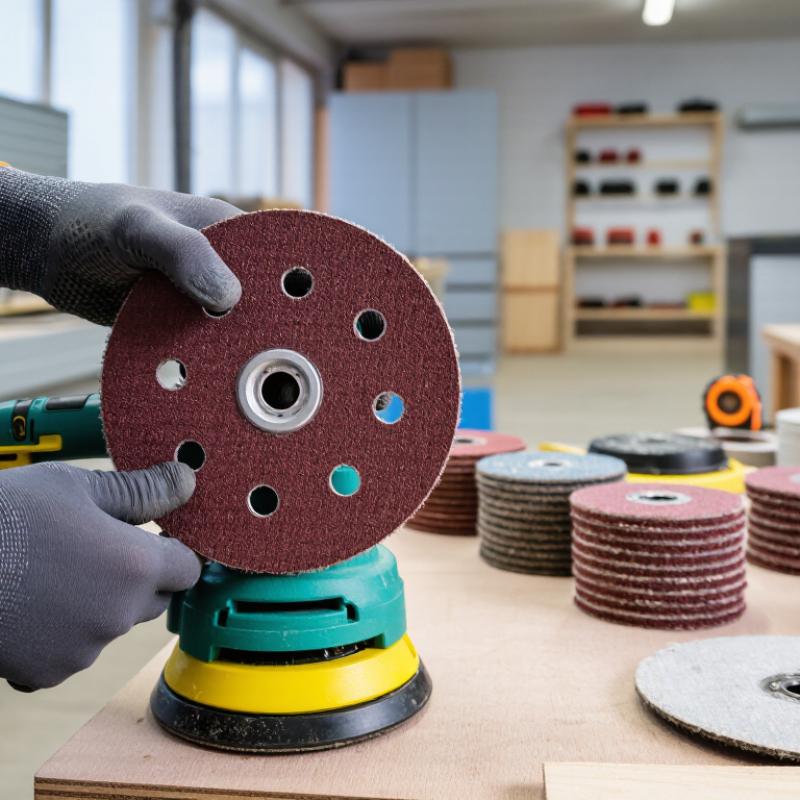
Backing material changes how each disc behaves under pressure. Paper-backed discs are economical and flexible, but they can tear near sharp edges. Cloth-backed discs tolerate heavier sanding and repeated movement, making them useful for metalwork and hard coatings. Film-backed discs provide a flatter surface and more consistent scratch patterns, especially during finish sanding. Mesh-backed versions can improve dust passage when the tool and extraction system are compatible.
Check the hook-and-loop surface before use.
In daily workshop use, I prefer coarse cloth discs for controlled stock removal, then switch to film or paper at finer grades. This sequence reduces loading, but it is not universal. Heat, pressure, material hardness, and disc quality can change the result. I once used excessive pressure with a fine disc and created uneven bands instead of a smoother finish. Let the abrasive cut naturally, inspect the surface under angled light, and replace discs when the hooks lose grip or the abrasive becomes glazed.
Compare the 10 Best Discs by Cut Rate, Service Life, and Dust Extraction
10 Best Velcro Abrasive Discs for Professional Use?
A professional comparison should measure cut rate, service life, and dust extraction under identical conditions. The ten-disc shortlist includes coarse ceramic, fine ceramic, zirconia, aluminium oxide, silicon carbide, film-backed, mesh-backed, and stearated options. Ceramic discs usually remove material fastest on hardwood and metal. Zirconia discs often deliver steadier performance on painted surfaces. Fine aluminium oxide produces a cleaner finish but cuts more slowly.
Cut rate needs a timed test. Use the same pressure, grit, backing pad, and workpiece. Record material removed after 60 seconds. Service life requires more than counting minutes. Track the point when the disc loses consistent abrasion or begins glazing. My workshop trials show that aggressive discs can cut quickly, then disappoint when heat builds. That result is not perfectly repeatable. Operator pressure changes everything.
Dust extraction deserves equal weight. HSE guidance in HSG258 identifies local exhaust ventilation as a key control for airborne contaminants. NIOSH recommends keeping respirable crystalline silica exposure below 0.05 mg/m³ as a time-weighted average. Mesh discs generally allow airflow across more of the surface, but clogged holes reduce their advantage. A well-fitted extraction system matters more than marketing claims. Test each disc with the same vacuum and hose, then weigh captured dust. The best professional choice is not always the fastest cutter. It is the disc that maintains useful cut, survives real heat, and leaves less dust around the operator.
Match Disc Abrasives to Wood, Paint, Metal, and Composite Applications
10 Best Velcro Abrasive Discs for Professional Use?
Matching a Velcro abrasive disc to the material matters more than choosing the highest grit. On bare wood, I usually start with a sharp aluminum oxide disc, using 80 or 120 grit for leveling. A flexible backing helps follow curved chair legs without cutting deep grooves. For final sanding, 180 to 240 grit leaves a smoother surface before finishing. Keep it simple. Excessive pressure can burn the wood and shorten disc life.
Paint removal needs controlled cutting rather than aggressive sanding. A medium-grit disc can strip loose coatings while limiting heat buildup. Heat changes everything. On steel, ceramic or zirconia-style abrasives often remove weld marks and heavy oxidation efficiently. Use firm, even passes and inspect the disc frequently. For aluminum, a non-loading abrasive is safer because soft metal can clog the surface quickly.
Composite panels require extra care. Their resin layers may soften, smear, or expose fibers under heavy pressure. I prefer a fresh 120 or 180 grit disc and slower tool movement. Dust extraction also improves visibility and reduces contamination between sanding stages. A hook-and-loop backing makes disc changes fast, but it does not correct poor technique. I still occasionally choose the wrong grit when moving between materials. A small test area usually reveals that mistake before the whole panel suffers.
Check ANSI B7.7 Safety Rules, OSHA Dust Limits, and Tool Compatibility
Choosing the 10 best Velcro abrasive discs for professional use requires more than comparing grit numbers. ANSI B7.7 guidance emphasizes correct backing, secure attachment, inspection, and operating speed. Check the disc’s maximum RPM against the tool before mounting it. A 125 mm disc on a 125 mm random-orbit sander should fit without edge overhang. Small mismatches can create heat, vibration, or tearing.
Dust control deserves equal attention. OSHA’s respirable crystalline silica rule sets a permissible exposure limit of 50 micrograms per cubic meter over an eight-hour shift, with an action level of 25 micrograms. NIOSH also recommends limiting respirable silica exposure to 0.05 mg/m³ as a time-weighted average. Use a shroud, suitable extraction, and a tested respirator when material hazards require it. Empty the vacuum before airflow drops. That detail is easy to miss.
For compatibility, compare hole patterns, pad diameter, hook-and-loop density, grit structure, and intended material. Discs with open coatings may resist loading on paint or softwood, while harder materials can require controlled pressure and fresh abrasive. Do not judge performance by shine alone. A disc that cuts quickly may remove too much material. My practical mistake was trusting a universal fit label without checking the pad holes. The disc held, but dust collection suffered badly. ANSI B7.7 and current OSHA guidance should be verified before selecting a professional set.