
10 Check Valve Buying Tips for Global Buyers

A Check Valve may look like a compact part in a piping diagram, yet the wrong choice can cause noise, pressure loss, or repeated maintenance. Global buyers must compare more than price and connection size. Fluid type, flow direction, cracking pressure, temperature, pressure rating, and installation position all matter. Small details count.

Check the basics. A swing design may suit one line, while a lift or dual-plate design may better fit another. No single style works everywhere. Valve engineer Philip L. Skousen’s selection guidance can be paraphrased this way: “Match the valve to its service conditions.” Treat that as a practical reminder, not a substitute for checking the manufacturer’s data and project requirements.

This guide introduces ten buying checks for comparing suppliers and products. It covers body and trim materials, end connections, pressure and temperature limits, testing documents, certifications, lead times, spare parts, and after-sales support. Ask for drawings and performance data, then confirm that they match the actual operating conditions—not just the catalog description. A polished datasheet helps, but it cannot answer every question. Even experienced teams can overlook installation orientation or the cost of future maintenance. That deserves a second look. For international orders, clarify units, documentation, packaging, and delivery terms before approving a purchase. The aim is not to find the most impressive Check Valve. It is to select one that fits the system, can be verified, and remains serviceable after arrival.
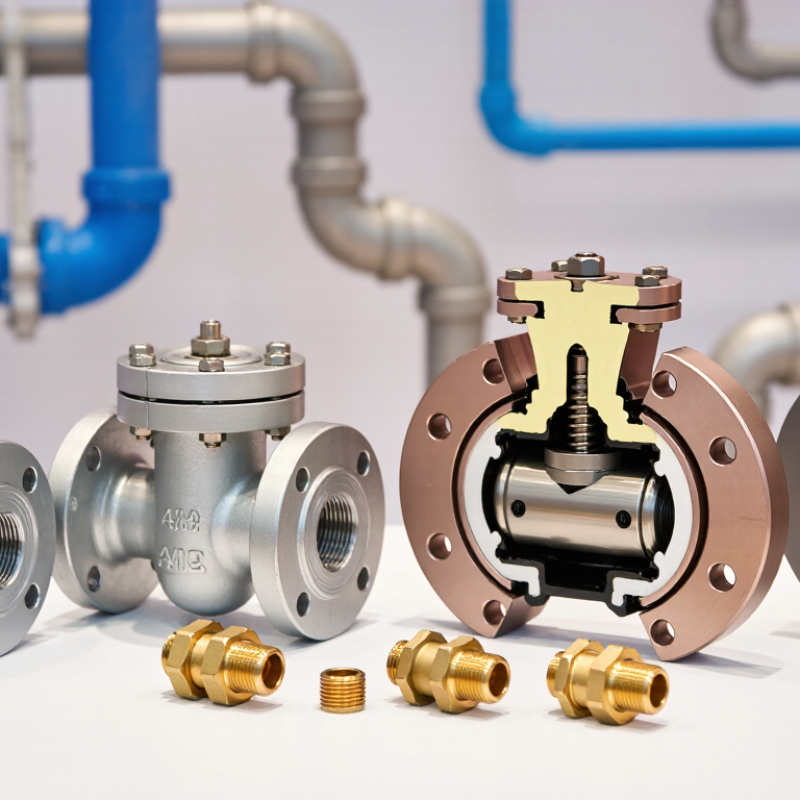
10 Check Valve Buying Tips for Global Buyers

Understand Check Valve Types and How They Work

Check valves permit flow in one direction and close when flow reverses. Their moving parts respond to pressure differences, not external controls. Type matters. A swing check uses a hinged disc and suits steady, low-velocity flow. A lift check raises a disc from its seat, but usually needs stronger flow and careful installation. Dual-plate designs use two spring-loaded plates, making the body compact. Axial or nozzle checks use a guided disc and spring for rapid closure. None is universally best.

The U.S. Department of Energy’s 2014 report, Improving Pumping System Performance: A Sourcebook for Industry, says pumping systems use nearly 20% of global electricity. That figure is a reminder: pressure loss across an oversized or poorly matched valve can add operating cost. Check the fluid, line size, flow range, pressure, and mounting orientation before comparing models. On a vertical line, some designs need upward flow to open correctly. Also consider water hammer: a valve that closes too slowly may let reverse flow build before sealing. Catalog tables rarely capture every transient condition. That is an imperfect gap. Where shutdowns are costly, ask a qualified engineer to review system behavior and verify applicable design standards.

Define System Requirements and Operating Conditions

Before requesting check valve quotations, document the system’s fluid, pressure, temperature, flow range, and installation orientation. Include start-up, shutdown, and upset conditions, not only normal operation. A valve sized for steady flow may still slam shut when flow reverses quickly. Note whether the line carries clean water, viscous fluid, or suspended particles; these conditions affect closure and wear.

For a useful reference point, the IAPWS-95 formulation gives liquid water a density of about 998.2 kg/m³ at 20°C. That figure helps establish a baseline, but it does not describe hot water, changing viscosity, or dirty service. Small details matter. I have seen specifications omit the minimum flow rate; that gap can make a seemingly suitable valve chatter in the field. Check allowable pressure and temperature against recognized standards and the actual operating envelope.

Tip: Prepare a one-page duty sheet with minimum, normal, and maximum values. Ask the supplier to confirm cracking pressure, flow capacity, end connections, and expected closure behavior for those conditions. If surge pressure is uncertain, measure or model it before final selection.

Compare Materials, Pressure Ratings, and Global Standards

10 Check Valve Buying Tips for Global Buyers

Compare materials against the actual fluid, temperature, and cleaning conditions. Stainless steel may resist corrosion in one service, while another fluid attacks its seals. Check body, disc, spring, and seat materials separately. Small parts matter. Ask for material certificates when traceability is important, and confirm that stated grades match the purchase documents. A data sheet can look complete and still omit the seat material.

Read pressure ratings alongside temperature limits and flow conditions. The maximum working pressure is not necessarily safe at every temperature. Check for pressure derating, expected surges, and the valve’s cracking pressure. Do not guess. A valve that opens too late can restrict flow; one that closes slowly may allow reverse flow. Compare the rating with the system design, not just the normal operating reading.

For international purchases, identify the required standard before comparing quotations. Check whether the applicable ISO, API, or regional specification covers dimensions, testing, materials, or all three. These requirements are not interchangeable. Request test records and verify connection dimensions against the piping drawings. Requirements vary by project and destination, so confirm them with the responsible engineer. This step can feel tedious, but correcting a mismatch after shipment is worse.

Verify Supplier Quality, Testing, and Product Documentation

Before comparing prices, ask the supplier how quality is checked from raw material to final assembly. Quality claims need evidence. Request the inspection plan, material certificates, and a sample production test report. Check that the documents identify the valve size, pressure class, material, and batch. A report for a similar model is not enough.

For a check valve, testing should match the agreed design and service conditions. Ask how shell strength, seat leakage, and cracking pressure are verified. Confirm the test medium, pressure, duration, and acceptance criteria. If the valve will handle a specific fluid or temperature range, make sure the supplied materials and test conditions reflect that duty. A neat PDF can still leave gaps. Read the details, not only the certificate title.

Review product drawings, installation instructions, nameplate details, and traceability records together. Names, dimensions, and ratings should agree across each file. Ask who performs the tests and whether measuring equipment is calibrated. Where independent inspection matters, agree on its scope before production; it should not be an afterthought. No document set guarantees flawless valves, and paperwork can be incomplete. That is worth discussing openly. A clear answer, followed by a corrected record, is more useful than a quick promise.

10 Check Valve Buying Tips for Global Buyers - Verify Supplier Quality, Testing, and Product Documentation
No. Buying Tip What to Verify Useful Evidence or Documents Buyer Action
1 Define the operating conditions Confirm the fluid, operating temperature, minimum and maximum pressure, flow range, and whether the service is corrosive, abrasive, or sanitary. Written process specifications and the supplier’s technical data sheet. Provide actual operating conditions, not only nominal line size and pressure class, before requesting a quotation.
2 Select the appropriate check-valve type Compare suitable designs, such as swing, lift, dual-plate, or axial-flow check valves. Opening behavior, installation orientation, pressure loss, and closing characteristics vary by design. Product drawings, installation instructions, and published flow or pressure-loss data where available. Ask the supplier to confirm the proposed design is suitable for the system layout and flow conditions.
3 Match materials to the service Check the pressure-containing body, trim, disc, spring, seat, and gasket materials against the fluid, temperature, and corrosion requirements. Bill of materials and material test certificates; EN 10204 Type 3.1 certificates may be specified for relevant metallic components. State material requirements in the purchase order and clarify which components need traceable certificates.
4 Confirm size, end connections, and pressure rating Verify nominal size, flange or threaded connection details, applicable dimensional standard, pressure class, and mating-pipe compatibility. Dimensioned general arrangement drawing and connection-standard details. Check dimensions and rating against the project piping specifications; do not rely on size labels alone.
5 Check the supplier’s quality controls Review whether the supplier has documented inspection procedures, traceability controls, nonconformance handling, and appropriate quality-management processes. Quality-system certificate, inspection plan, sample inspection records, or audit information, as applicable. Verify certificate scope and validity, and assess controls relevant to the valve order rather than relying on a certificate alone.
6 Agree on pressure-test requirements Specify the required test standard, test stages, acceptance criteria, test medium, and any project-specific requirements. ISO 5208, API 598, and EN 12266-1 are examples of industrial-valve testing standards; applicability depends on the valve and contract. Agreed inspection and test plan and completed pressure-test report identifying the valve and test results. Name the required standard and acceptance criteria in the purchase documents before production or testing begins.
7 Request inspection and traceability records Check that identification on the valve can be linked to its order, material records, inspection results, and final test documentation. Nameplate or marking details, serial or batch identification, inspection reports, and material records where required. Define required marking and record-retention details, especially for safety-critical or regulated applications.
8 Review drawings and product documentation Confirm that the drawing, materials, dimensions, flow direction, installation position, and operating limits match the approved specification. Approved drawings, product data sheet, installation and maintenance instructions, and certificate list. Resolve deviations in writing before approving the order or manufacturing release.
9 Assess suitability for the installation environment Consider orientation, vibration, water hammer risk, ambient conditions, access for maintenance, and any applicable emissions or industry requirements. Application review, installation guidance, and relevant project or regulatory compliance documents. Share the piping layout and service context with the supplier, and obtain written confirmation of any assumptions.
10 Clarify delivery, packaging, and after-sales support Confirm lead time, export packaging, preservation, shipping documents, warranty terms, spare-parts availability, and the process for handling defects. Order confirmation, packing requirements, shipping-document checklist, warranty terms, and support contact details. Include documentation and packaging requirements in the purchase order and inspect delivered items against the approved records.

Evaluate Total Cost, Delivery, and After-Sales Support

A low quoted price does not always mean a low project cost. For a check valve, compare the purchase price with freight, import charges, inspection, installation, and likely spare-part needs. Confirm that the quoted material, pressure rating, connection type, and test documentation match the operating conditions. A mismatch can create delays or costly rework. Small details matter. Ask whether the price includes protective packaging and the documents your receiving team needs. Then compare offers using the same specification and delivery terms, rather than relying on the unit price alone.

Delivery promises deserve careful checking. Request a realistic production schedule, dispatch date, and estimated transit time, with key milestones in writing. Add a buffer for customs processing or site scheduling; a few days can disrupt planned maintenance. That adds up. After-sales support also has a cost, even when it is included. Ask how quickly technical questions are answered, which replacement parts are available, and what information is needed for a warranty claim. Keep the answers with the purchase records. A spreadsheet can still mislead if it assumes every shipment arrives on time or every service issue is simple. I have seen buyers focus on price and overlook the time needed to confirm a valve’s suitability.

Translate