
China Top 10 Electric Motor Project Suppliers?
China has become a major manufacturing base for electric motors, but choosing a supplier is not simply a matter of comparing prices. An Electric Motor Project may involve custom designs, coordinated production, testing, and on-site commissioning. A capable supplier should explain how its motor fits the actual load, operating cycle, and installation environment. Details matter: voltage, rated power, insulation class, cooling method, and shaft dimensions can affect performance.
The International Energy Agency’s Global EV Outlook 2024 reports that electric car sales approached 14 million in 2023, representing about 18% of global car sales. That figure signals growing electrification, though it does not measure industrial motor demand directly. For a broader efficiency perspective, the IEA’s 2011 report, Energy-Efficiency Policy Opportunities for Electric Motor-Driven Systems, estimates that these systems account for roughly 45% of global electricity use. Both sources underline why motor efficiency and application fit deserve careful attention.
This guide introduces ten Chinese suppliers for comparison, not as a universal ranking. A company’s public profile alone cannot prove project readiness. Ask for relevant project references, test documentation, production capacity, and clear warranty terms. Check whether specifications match your operating conditions, rather than relying on a catalogue headline. Small gaps can become expensive. Supplier capabilities also change, and this list should be verified before procurement.
Understanding Electric Motor Project Suppliers in China
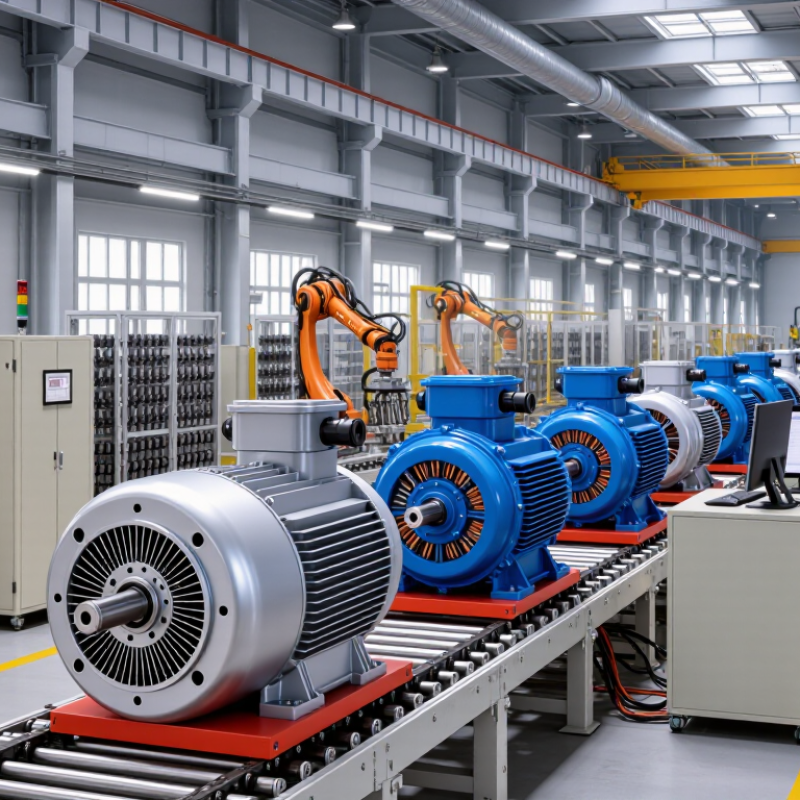
Choosing an electric motor project supplier in China is less about finding a “top ten” list and more about matching engineering capability to the application. Suppliers may manufacture motors, integrate drive systems, or coordinate several subcontractors. Ask who controls design changes and final testing. Details matter. A workshop visit, live video inspection, or sample review can reveal how winding, balancing, and quality checks are handled.
Share the real operating conditions: load profile, start frequency, voltage, installation space, ambient temperature, and required protection level. Then request drawings, a test plan, material specifications, and a clear delivery schedule. Ask for evidence. A supplier’s answers should connect to measurable checks, such as temperature rise, vibration, noise, and efficiency—not just broad assurances. Confirm which documents are available for your destination market, and have an engineer review them. It is easy to focus on unit price; I would also compare spare-parts access and response time when a motor needs adjustment. One point can remain uncertain until a pilot order: how smoothly the supplier handles revisions after installation feedback. A small trial may expose that gap before a larger project.
China Top 10 Electric Motor Project Suppliers? - Understanding Electric Motor Project Suppliers in China
The following list compares common supplier profiles for electric motor projects in China. It is an indicative sourcing framework, not a ranking of named companies. Product availability, performance, certifications, and project scope should be verified with each supplier.
| No. | Supplier Profile | Typical Motor Scope | Common Project Applications | Potential Project Support | Key Checks for Buyers |
|---|---|---|---|---|---|
| 1 | General-purpose low-voltage motor supplier | Three-phase induction motors for common industrial duties; frame, mounting, voltage, and enclosure options vary by range. | Pumps, fans, conveyors, machine tools, and general factory equipment. | Motor selection, mounting and terminal-box options, routine test documentation, and replacement-motor matching. | Confirm rated voltage and frequency, duty cycle, enclosure and cooling method, efficiency class, and applicable test standard. |
| 2 | High-efficiency motor project supplier | Low-voltage induction motors offered in efficiency levels such as IE3 or IE4 where available for the specified design and market. | Continuous-duty industrial systems and projects focused on reducing electrical energy use. | Efficiency and load data, operating-point review, dimensional checks, and documentation for project approval. | Request test evidence for the exact model and rating; compare efficiency at the intended load and verify local regulatory requirements. |
| 3 | Explosion-protected motor supplier | Motors designed for specified hazardous-area classifications and protection concepts; configurations depend on destination-market requirements. | Oil and gas facilities, chemical plants, mines, and other classified hazardous locations. | Hazardous-area configuration review, nameplate and certificate documentation, and coordination of accessories and temperature limits. | Match the certificate to the required zone or division, gas or dust group, temperature class, ambient conditions, and country of installation. |
| 4 | Medium-voltage motor supplier | Medium-voltage induction motors for larger industrial drives; voltage, power, starting method, and insulation design are project-specific. | Large pumps, compressors, fans, mills, and process-industry equipment. | Electrical and mechanical data review, starting and protection coordination, interface drawings, and factory inspection planning. | Confirm system voltage, starting current, driven-load requirements, cooling, insulation, protection, and required acceptance tests. |
| 5 | Permanent-magnet motor supplier | Permanent-magnet synchronous motors and related drive options, with designs tailored to speed, torque, and control requirements. | Energy-efficient pumps, compressors, fans, and compact or variable-speed equipment. | Motor-drive matching, operating-envelope review, thermal assessment, and integration guidance. | Check drive compatibility, low-speed cooling, control method, magnet-temperature limits, and performance across the operating range. |
| 6 | Servo motor and motion-system supplier | Servo motors, feedback devices, and compatible motion-control components selected for dynamic response and positioning needs. | Packaging machinery, robotics, CNC equipment, and automated production lines. | Torque-speed sizing, inertia review, feedback and cable selection, and system commissioning support where included. | Verify peak and continuous torque, speed, duty cycle, encoder interface, brake requirements, and controller compatibility. |
| 7 | Gearmotor project supplier | Motor and gearbox assemblies with specified output speed, torque, ratio, mounting, and service conditions. | Conveyors, mixers, material handling, packaging, and process machinery. | Drive sizing, gearbox ratio selection, mounting-interface review, and assembly-level documentation. | Check output torque and speed, starting frequency, radial and axial loads, gearbox service factor, lubrication, and installation position. |
| 8 | Pump or compressor motor-package supplier | Motors selected as part of a driven-equipment package; shaft, coupling, base, and environmental requirements depend on the package. | Water and wastewater, building services, industrial process systems, and compressed-air installations. | Interface coordination with the equipment maker, load-point review, package drawings, and commissioning documentation. | Confirm load curve, duty point, coupling arrangement, start method, site conditions, and responsibility for package performance. |
| 9 | Custom-engineered large motor supplier | Special-purpose, large-frame, or non-standard motors designed around defined electrical, mechanical, and site constraints. | Heavy industry, large process plants, specialized machinery, and retrofit projects with restricted interfaces. | Design review, interface drawings, inspection and test planning, and coordination of transport and installation constraints. | Review design assumptions, delivery milestones, spare-parts scope, factory acceptance criteria, and service capabilities. |
| 10 | OEM and project-integration supplier | Project-based sourcing or integration of motors with drives, control panels, sensors, or other equipment, depending on the agreed scope. | Turnkey machinery, production lines, packaged systems, and multi-vendor projects. | Specification consolidation, supplier coordination, document control, inspection scheduling, and interface management. | Define scope boundaries, component traceability, approval workflow, warranty responsibility, after-sales support, and delivery terms. |