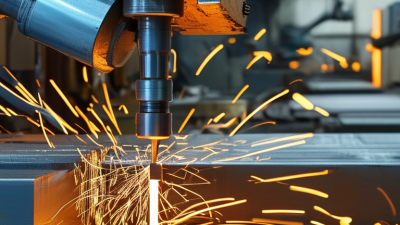
China’s metal fabrication sector supports automotive, construction, energy, electronics, and industrial equipment supply chains worldwide. The World Steel Association reported that China produced about 1.005 billion tonnes of crude steel in 2024. That scale creates strong material access, yet material volume does not guarantee fabrication quality.
Metal fabrication processes include cutting, stamping, bending, welding, machining, casting, and surface finishing. Each process demands different equipment, skills, inspection methods, and production controls. Grand View Research identifies automation, lightweight materials, and digitally connected production as major forces shaping advanced fabrication. These trends matter when comparing Chinese manufacturers. A modern laser cutter may reduce waste, but weak traceability can still undermine the final product.
Serope Kalpakjian, a respected manufacturing engineering educator, describes manufacturing as “the transformation of materials into useful products.” His point remains practical. A supplier must convert drawings into stable, repeatable results. This introduction examines ten leading Chinese manufacturers through process capability, certifications, equipment, quality assurance, export experience, and delivery performance. It also considers engineering support after the quotation stage.
Not every published ranking is complete.
Some capable factories disclose little online. Others present impressive machinery without clear inspection evidence. Therefore, company claims should be checked against ISO records, sample approvals, production audits, and customer feedback. Reports from UNIDO and industry research firms provide valuable market context, but they cannot replace factory-level verification. The selected manufacturers should be viewed as strong candidates, not automatic choices. That distinction is important when tolerances are tight, surfaces must remain consistent, and a small weld defect can delay an entire project.
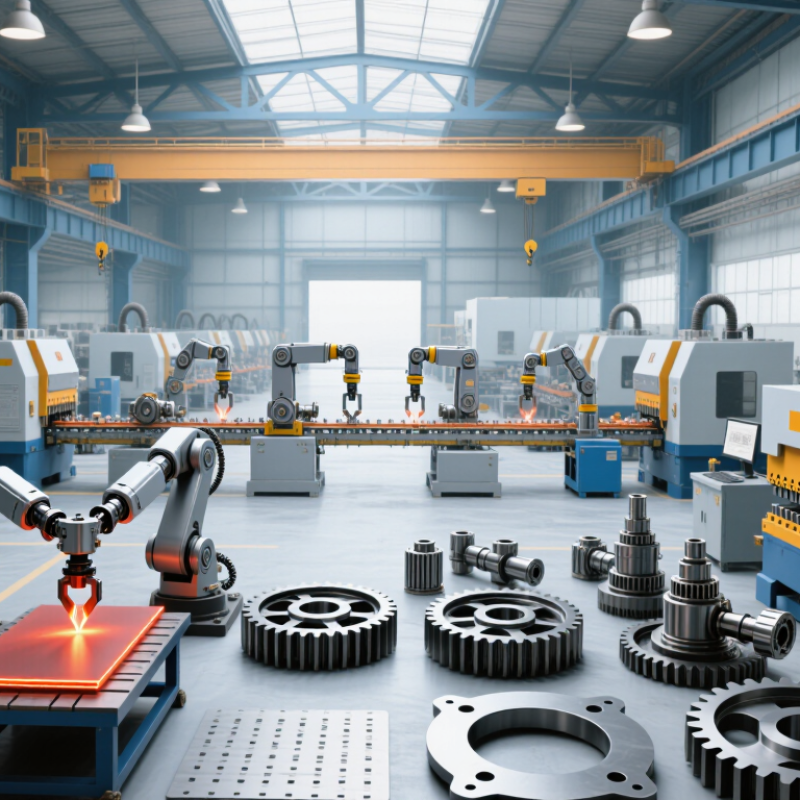
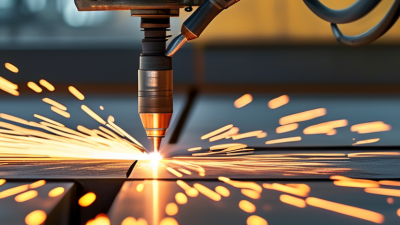
Chinese metal fabrication manufacturers provide more than basic cutting and welding. Their services often cover the complete production path, from design review to packed components. Laser cutting handles stainless steel sheets, aluminum plates, and mild steel with clean edges. CNC machining produces precise holes, slots, threads, and curved surfaces. Sheet metal bending then forms panels, brackets, enclosures, and frames.
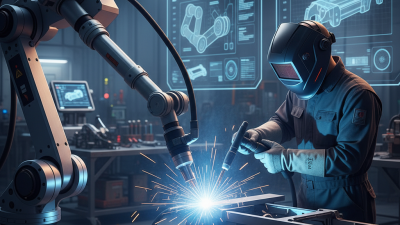
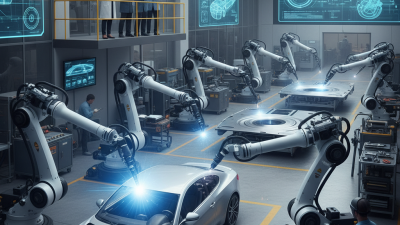
Several factories also offer stamping, die casting, aluminum extrusion, and robotic welding. These methods suit different volumes and product structures. Stamping works well for repeated thin-metal parts. Casting supports complex shapes with internal cavities. Extrusion creates long profiles with consistent cross-sections. Welding teams may use TIG, MIG, or spot welding, depending on thickness and appearance requirements. Surface services include powder coating, anodizing, plating, brushing, and polishing.
Quality depends on process control, not attractive samples alone. Experienced manufacturers review tolerances, material grades, bend allowances, and weld access before production. Many provide first-article samples, material certificates, dimensional reports, and inspection records. Useful equipment may include coordinate measuring machines, laser scanners, hardness testers, and calibrated gauges. Still, supplier claims need verification. A low quotation can hide weak tooling, unstable materials, or poor packaging. I have found that unclear drawings cause more delays than difficult machining. The better approach is practical: confirm critical dimensions, approve samples, define acceptance standards, and inspect key stages. Mistakes can remain. Good communication reduces them.
Quality evidence matters more than polished factory photos.
The ISO Survey 2023 places China among the world’s largest holders of ISO 9001 certificates. However, certification alone is insufficient. Auditors should review calibration records, inspection reports, nonconformance handling, and material traceability. Sample parts should be checked against drawings, tolerances, weld specifications, and coating thickness requirements. Small details matter.
Delivery performance deserves equal attention.
The World Bank’s Logistics Performance Index 2023 ranked China 19th globally, showing strong logistics infrastructure, but factory-level reliability can differ greatly. Ranking criteria should include on-time delivery data, packaging controls, export documentation, and communication response times. Sustainability should also be assessed through energy monitoring, scrap recycling, and environmental management systems. No ranking is perfect. Public reports rarely show rework rates or hidden subcontracting. A careful buyer should request recent references, conduct a process audit, and compare verified evidence rather than accepting the lowest quotation.
China’s ten leading metal fabrication process manufacturers should be assessed by capability, not visibility. A credible shortlist covers laser cutting, CNC machining, stamping, bending, welding, die casting, extrusion, and surface finishing. Each manufacturer should provide process records, inspection data, and traceable material certificates. No ranking is perfect.
Fortune Business Insights’ Metal Fabrication Market report valued the global market at approximately USD 17.22 billion in 2024. It projects growth to about USD 22.72 billion by 2032. China’s large industrial base strengthens its supply network.
The World Steel Association reported China produced about 1,005 million tonnes of crude steel in 2024. Material scale helps, but it does not guarantee fabrication quality.
Real manufacturing experience appears in details. Look for stable sheet thickness, clean laser edges, consistent bend angles, and controlled weld penetration.
Inspection plans should identify gauges, sampling levels, and corrective actions. ISO 9001 certification supports quality management, but certificates alone prove little.
Ask for sample parts, dimensional reports, lead-time records, and production photographs. A reliable manufacturer will explain scrap rates and capacity limits honestly. That response matters.
Supplier performance can still change between projects. Tool wear, operator skill, and raw material variation create hidden risks.
The best ten manufacturers therefore combine engineering support with measurable process control. Their quotations should state tolerances, finishes, packaging, and testing responsibilities clearly. Small omissions become expensive.
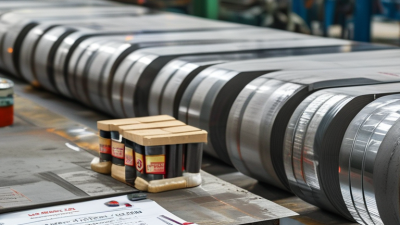
China’s top ten metal fabrication manufacturers usually work with carbon steel, stainless steel, aluminum, copper, brass, and titanium. Material choice depends on strength, corrosion resistance, weight, and production cost. Some facilities also process engineering plastics for mixed assemblies. Experienced teams verify mill certificates and batch numbers before cutting begins. Traceability matters.
Their equipment often includes fiber laser cutters, CNC punching machines, press brakes, waterjet systems, and robotic welding cells. Large workshops may use five-axis machining centers for complex parts. Smaller suppliers can still produce accurate components with well-maintained three-axis machines. Inspection commonly involves calipers, coordinate measuring machines, coating gauges, and weld testing. The details matter.
These manufacturers serve construction, industrial machinery, transportation, energy, agricultural equipment, electronics, and medical-device industries. They produce frames, enclosures, brackets, pressure-rated parts, machine guards, and custom assemblies. A reliable supplier should explain tolerances, surface finishes, packaging, and production capacity before accepting an order. Not every workshop gets this right. Some advertise broad capabilities but outsource critical operations without clear disclosure. That weakness can affect delivery dates and consistency. Buyers should review sample parts, inspection records, welding qualifications, and change-control procedures. Practical experience shows that communication during prototyping often prevents expensive rework later. Exact requirements still need careful discussion.
An anonymized comparison of the principal metal fabrication processes, materials, equipment, and end-use industries commonly covered by leading manufacturers in China.
| No. | Metal Fabrication Process | Common Materials | Typical Equipment | Typical Production Characteristics | Industries Served | Common Deliverables |
|---|---|---|---|---|---|---|
| 01 | Laser Cutting | Carbon steel, stainless steel, aluminum, galvanized steel, brass, copper | Fiber-laser cutting machines, CNC tables, automatic sheet loaders, nitrogen or oxygen assist-gas systems | High-speed profiling of sheet and plate; suitable for prototypes and medium-to-large production runs; thickness depends on material and laser power | Industrial machinery, electrical enclosures, transportation, construction, renewable-energy equipment | Flat cut parts, brackets, panels, base plates, precision blanks |
| 02 | CNC Punching | Mild steel, stainless steel, aluminum, copper, galvanized sheet | CNC turret punch presses, punching tools, nibbling tools, forming stations | Efficient production of repeated holes, louvers, slots, knockouts, and shallow forms in sheet metal | Electrical equipment, HVAC, telecommunications, office equipment, industrial cabinets | Perforated panels, mounting plates, cabinet components, ventilation parts |
| 03 | CNC Press-Brake Bending | Carbon steel, stainless steel, aluminum, galvanized steel | Hydraulic or electric press brakes, CNC backgauges, V-dies, punch tooling, angle-measurement systems | Repeatable angular forming of cut blanks; bend accuracy depends on material, tooling, thickness, and machine setup | Machine building, transportation, construction, energy, agricultural equipment | Chassis, trays, covers, brackets, frames, folded panels |
| 04 | Metal Stamping | Carbon steel, stainless steel, aluminum, copper, brass, coated sheet steel | Mechanical or servo presses, progressive dies, transfer dies, coil feeders, straighteners | High-volume blanking, piercing, forming, drawing, and coining using dedicated tooling | Automotive components, electronics, appliances, hardware, lighting, battery systems | Clips, terminals, brackets, covers, washers, formed housings |
| 05 | MIG, TIG, and Robotic Welding | Carbon steel, stainless steel, aluminum, galvanized steel, nickel alloys | MIG/MAG welders, TIG welders, robotic cells, positioners, fixtures, fume-extraction systems | Permanent joining of fabricated assemblies; manual welding supports flexible work, while robotics support repeatable production | Heavy equipment, transportation, construction, industrial machinery, pressure-related equipment | Welded frames, machine bases, tanks, structural assemblies, pipe and sheet-metal components |
| 06 | Roll Forming | Galvanized steel, carbon steel, stainless steel, aluminum, pre-painted steel | Multi-pass roll-forming lines, decoilers, straighteners, flying saws, punching units | Continuous production of long profiles with consistent cross-sections and integrated cutting or punching | Construction, solar mounting, storage systems, transportation, HVAC, racking | Channels, rails, studs, roof panels, cable trays, structural profiles |
| 07 | Tube and Pipe Fabrication | Carbon steel tube, stainless tube, aluminum tube, galvanized pipe, copper tube | CNC tube lasers, rotary tube benders, tube saws, end-forming machines, tube welders | Cutting, bending, drilling, notching, flaring, and end forming for round, square, and rectangular profiles | Furniture, automotive, bicycles, fitness equipment, fluid handling, construction | Tubular frames, manifolds, handrails, exhaust parts, brackets, fluid-system components |
| 08 | CNC Machining | Aluminum, stainless steel, carbon steel, brass, copper, engineering alloys | CNC milling machines, turning centers, machining centers, coordinate-measuring machines | Precision removal of material for close-tolerance features, holes, threads, slots, and contoured surfaces | Automation, robotics, medical equipment, aerospace support, industrial machinery, energy | Machined housings, shafts, adapters, fixtures, manifolds, precision components |
| 09 | Die Casting | Zinc alloys, aluminum alloys, magnesium alloys | Hot-chamber or cold-chamber die-casting machines, metal dies, trimming presses, shot-blasting equipment | High-volume production of complex near-net-shape parts with integrated ribs, bosses, and thin walls | Automotive, electronics, appliances, lighting, telecommunications, industrial products | Motor housings, heat sinks, gear cases, connector bodies, structural castings |
| 10 | Surface Finishing and Coating | Steel, stainless steel, aluminum, zinc-coated metals, copper alloys | Deburring systems, shot-blasting machines, powder-coating lines, wet-paint booths, anodizing or plating tanks | Improves corrosion resistance, appearance, wear resistance, cleanliness, and preparation for assembly | Construction, appliances, electronics, automotive, furniture, outdoor equipment | Powder-coated panels, anodized aluminum parts, plated hardware, painted frames, deburred assemblies |
China’s top metal fabrication manufacturers distinguish themselves through measurable quality control, not attractive brochures. Experienced buyers should review incoming material checks, laser or plasma cutting accuracy, weld inspection, surface finish, and final dimensional reports. A capable factory can provide batch records, calibrated measuring tools, and inspection photos showing actual production details.
Certifications support reliability, but certificates alone prove little. Request current ISO 9001 documents, welding qualifications, material traceability records, and relevant environmental certificates. Check the issuing body and certificate scope.
Pricing should be compared item by item, including tooling, finishing, packaging, inspection, and shipping. A low quotation may exclude critical steps. I have seen this create expensive revisions later. No supplier is flawless.
Tips: Ask for a sample part before approving mass production. Confirm tolerance standards, coating thickness, payment milestones, and replacement terms in writing. For export capability, evaluate customs experience, export documentation, protective packaging, and delivery history. The supplier should explain Incoterms, HS codes, loading procedures, and how oversized parts are secured. A practical test is simple: request a complete quotation and inspection plan, then compare response clarity. Hesitation is not always a failure, but vague answers deserve deeper review.