
China Top 10 Bidet Toilet Manufacturers for Global Buyers

China’s Bidet Toilet industry has moved from a domestic convenience to a serious export category. Global buyers now examine hygiene, water efficiency, electronics, certification, and after-sales support. The opportunity is growing, but the market is not simple.

Grand View Research reports strong expansion in the global smart toilet market through 2030. Fortune Business Insights also identifies smart toilets as a rising bathroom technology segment, supported by urbanization and premium home renovation. However, these reports often combine bidet seats, integrated toilets, and connected bathroom products. Comparisons can therefore become misleading. A careful buyer should check each report’s product definition before trusting its figures.

Jack Sim, founder of the World Toilet Organization, has said, “Sanitation is a human right, not a privilege.” His statement gives this product category a wider meaning. A reliable Bidet Toilet should offer more than a warm seat and polished control panel. It should deliver stable water pressure, safe heating, dependable ceramic quality, and understandable installation instructions. Small details matter. A leaking inlet can damage a customer’s floor. An unavailable replacement board can create years of frustration.

This guide reviews China’s top 10 Bidet Toilet manufacturers for global buyers. It considers manufacturing experience, export markets, testing capability, customization, certifications, and service responsiveness. Factory scale alone is not enough. A ranking can never replace an independent audit, product sample, or warranty review. That is an important limitation, and buyers should remember it. The strongest suppliers combine engineering discipline with practical communication. Some may still have weaknesses. Transparency matters more than a perfect image.
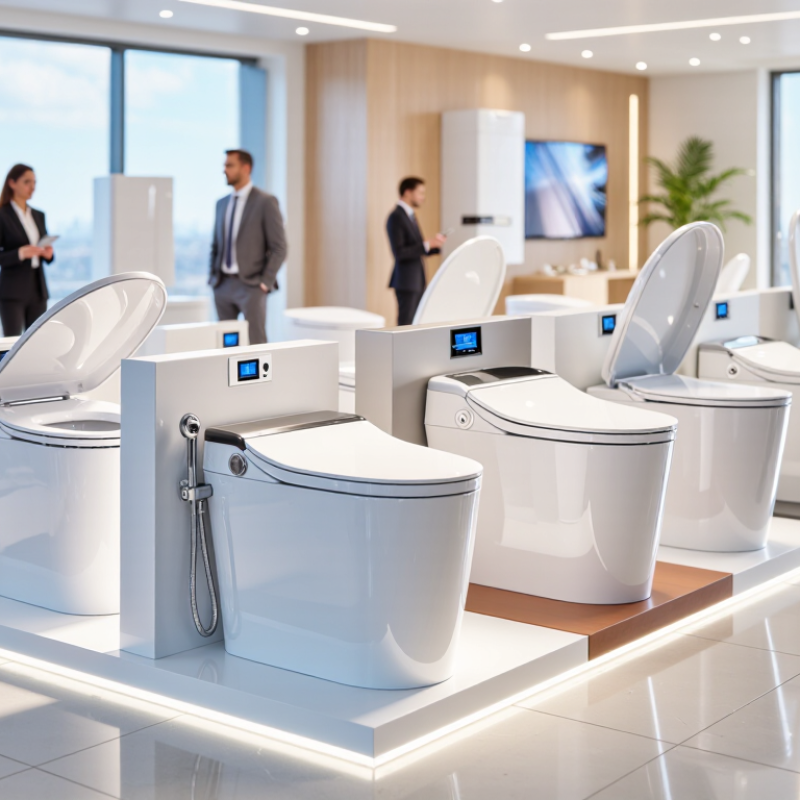
China Top 10 Bidet Toilet Manufacturers for Global Buyers

Bidet Toilets in China: Product Types, Features, and Market Scope

China’s bidet toilet industry covers several practical formats. Integrated smart toilets combine the bowl, bidet nozzle, heated seat, dryer, deodorizer, and automatic flushing. Electronic bidet seats fit existing toilets and reduce replacement costs. Wall-hung models save floor space, while floor-mounted one-piece units suit renovation projects and hospitality bathrooms.

Key specifications deserve close inspection. Buyers should compare nozzle material, spray pressure, water temperature control, seat heating, noise levels, filtration, and emergency flushing. Ceramic quality matters too. In commercial projects, accessible controls and easy maintenance often outweigh smartphone functions. Some suppliers offer UV cleaning, night lighting, remote controls, or app connectivity. These features sound impressive. They also need testing.

Market data indicates expanding demand. Fortune Business Insights valued the global smart toilet market at about USD 8.26 billion in 2023. It projects continued growth through 2032. Grand View Research also identifies residential, hospitality, and healthcare applications as important demand areas. China’s manufacturing base supports OEM customization, export packaging, multilingual manuals, and varied electrical configurations. However, report definitions differ between smart toilets, bidet seats, and broader bathroom equipment. Figures are not perfectly comparable. Global buyers should request test records, water-efficiency data, warranty terms, and replacement-part availability before ordering. A polished sample may hide service limitations. That risk deserves attention.

How to Evaluate Chinese Bidet Toilet Manufacturers

Evaluating Chinese bidet toilet manufacturers requires evidence beyond polished showrooms. Grand View Research’s Smart Toilet Market report projects a 12.6% CAGR from 2024 to 2030, increasing pressure on factories to scale without weakening quality. Ask for ISO 9001 records, production capacity, defect rates, and recent third-party audit reports. A factory should explain its testing process clearly, including water leakage checks, heating endurance, flushing cycles, and electrical safety controls.

Request samples from different production batches, not one carefully prepared unit. Inspect nozzle movement, seat stability, ceramic glazing, sensor response, and remote-control accuracy. Check whether replacement pumps, valves, filters, and circuit boards remain available for at least five years. That detail matters.

Safety documentation must match your destination market. Chinese compliance alone may not satisfy local certification rules. Confirm applicable electrical, water-efficiency, and radio requirements before placing a purchase order. The U.S. EPA’s WaterSense program requires certified toilets to meet strict flushing performance and water-use criteria; similar regional rules may apply elsewhere. Also review the factory’s export history, packaging tests, warranty claims, and response times. One uncomfortable question helps: what failed in the last shipment? A vague answer is not proof of reliability. It is a warning.

China Top 10 Bidet Toilet Manufacturers for Global Buyers - How to Evaluate Chinese Bidet Toilet Manufacturers

Supplier-neutral evaluation matrix for international purchasing and due diligence

No. Evaluation Dimension What Global Buyers Should Check Reliable Evidence Practical Benchmark Suggested Weight
1 Legal Manufacturing Status Confirm that the supplier is a legally registered manufacturer rather than only a trading company. Chinese business license, unified social credit code, registered address, and factory audit report. Business scope should cover sanitary ware, bathroom products, electrical appliances, or related manufacturing activities. 15%
2 Product Safety Compliance Evaluate electrical safety, leakage protection, heating components, wiring, and market-specific compliance. Valid test reports and certificates issued for the destination market; product-level documentation should match the offered model. Documentation should cover the exact model, rated voltage, frequency, plug type, and intended market. 15%
3 Water and Electrical Protection Review protection against water ingress, overheating, current leakage, and abnormal operating conditions. Independent laboratory test reports, technical drawings, protection-system specifications, and sample inspection records. The supplier should clearly state applicable protection ratings and installation limitations instead of using unsupported claims. 10%
4 Core Function Performance Assess washing, drying, flushing, seat heating, nozzle movement, deodorization, remote control, and user settings. Pre-shipment inspection checklist, sample test video, technical specification sheet, and buyer-approved golden sample. Every advertised function should be demonstrated on the same model and included in the purchase specification. 12%
5 Ceramic and Component Quality Check ceramic consistency, glaze quality, waterway design, valves, pumps, sensors, heating modules, and seals. Incoming-material inspection records, component bills of materials, supplier approvals, and random production inspections. Critical components should have defined specifications, inspection criteria, and controlled replacement procedures. 10%
6 Quality Management System Determine whether the manufacturer controls design changes, production defects, traceability, corrective actions, and final inspection. Quality-management certificate where applicable, process-control documents, inspection records, and nonconformity reports. A documented inspection process should exist from incoming materials through final packing and shipment. 10%
7 Customization and Engineering Capability Evaluate private-label support, software or control-panel localization, plug standards, installation dimensions, and packaging changes. Approved drawings, engineering change records, prototype samples, artwork approvals, and documented development timelines. The supplier should identify which changes are standard, which require tooling, and which affect certification. 8%
8 Production Capacity and Lead Time Check actual capacity, production scheduling, peak-season planning, component availability, and delivery reliability. Recent production records, capacity statements, purchase-order history with confidential data removed, and factory audit results. Lead times should be quoted separately for sampling, mass production, customization, and replenishment orders. 8%
9 Export, Packaging, and Logistics Support Assess export documentation, carton engineering, palletization, damage prevention, shipping terms, and after-sales coordination. Packing specification, drop or transport test records where available, export documents, and shipment references. Packaging must protect ceramic and electrical components while complying with the destination country's labeling requirements. 6%
10 Warranty, Spare Parts, and Service Review warranty coverage, replacement-part availability, troubleshooting support, technician training, and response procedures. Written warranty terms, spare-parts list, service-level agreement, repair manuals, and documented customer-support channels. Warranty exclusions, claim procedures, response times, and spare-parts pricing should be agreed in writing before ordering. 6%
Total Suggested Evaluation Weight 100%
Buyer Note: Use this matrix to compare shortlisted Chinese manufacturers without relying solely on online rankings. Verify all certifications, production claims, test reports, and commercial terms against the exact model and destination market.

China’s Top 10 Bidet Toilet Manufacturers for Global Buyers

China’s Top 10 Bidet Toilet Manufacturers for Global Buyers should be evaluated beyond price. Grand View Research estimated the global smart toilet market at about USD 9.9 billion in 2023. It also projects strong growth through 2030. China’s manufacturing base supports this demand with integrated ceramic, electronic, and plumbing supply chains. However, factory scale alone does not prove reliability.

Global buyers should examine production experience, export records, testing systems, and after-sales support. Ask for water-pressure tests, leakage reports, electrical safety documents, and carton-drop results. Check whether the manufacturer can provide stable spare parts for five years. A useful supplier should also explain nozzle hygiene, heating performance, power consumption, and installation limits clearly. The data matters.

Tips: Compare at least three factories. Request samples from the same production line. Confirm voltage, plug type, drainage size, and language settings before ordering. ISO 9001 certification can indicate process control, but it is not a guarantee of product quality. Buyers should verify certificates with the issuing body. According to UN Comtrade trade data, China remains a major exporter of bathroom and sanitary products, yet export volume does not equal consistent bidet toilet performance. Some suppliers may present impressive samples while offering weaker mass production. That risk deserves direct factory audits, video inspections, or independent testing.

Typical Heating Power by Bidet Toilet Function

Benchmark specifications commonly found in China-made smart bidet toilets for global markets

Water heating generally requires the highest power because it heats the cleansing stream in real time. Dryer and seat-heating systems typically use moderate power, while deodorization and night-light functions require much less. Actual specifications vary by model, voltage, water-heating method, and target market.

Manufacturer Capabilities, Certifications, and Export Strengths

China’s leading bidet toilet manufacturers serve global buyers through integrated design, tooling, production, and quality control. Many operate ISO 9001 systems, while selected models may carry CE, cUPC, WRAS, or other market-specific certifications. Buyers should verify certificate numbers, issuing bodies, product models, and expiry dates. A certificate without matching documentation proves little.

Manufacturing capability is visible on the factory floor. Look for water-pressure testing, leakage checks, electrical safety inspections, and aging tests for heated seats and flushing systems. Reliable producers can provide test records, inspection photos, spare-part lists, and clear acceptance standards. They may also support OEM colors, private-label packaging, remote-control languages, and customized software settings. Details matter.

Export strength extends beyond production capacity. Experienced suppliers understand container loading, moisture protection, carton drop testing, customs documents, and installation requirements. They usually maintain multilingual technical files and offer video training for distributors. Still, weaknesses can appear. Some factories communicate well before an order but respond slowly after shipment. A cautious buyer should test sample quality, replacement speed, and after-sales responsibility before signing a large contract. Product performance can vary between batches, so ongoing inspections remain necessary.

How Global Buyers Can Compare Suppliers and Place Orders

For a China top-ten bidet toilet shortlist, global buyers need more than factory photos. Grand View Research estimated the global smart toilet market at USD 7.74 billion in 2023. It also projected a 12.8% CAGR from 2024 to 2030. Demand is growing, but supplier quality remains uneven. Ask each manufacturer for production capacity, export markets, monthly output, and recent quality records.

Request the same specification sheet from every supplier. Compare water pressure, heating time, flushing volume, noise, seat materials, and spare-part availability. Check certifications required in your destination market. A working sample matters more than a polished catalog. Test leakage, spray alignment, electrical safety, and packaging strength. Request a video inspection before shipment. Small details matter.

Place orders with a clear purchase contract. Include model numbers, tolerances, logo rules, warranty duties, inspection standards, delivery dates, and payment milestones. Confirm Incoterms and carton dimensions before calculating landed cost. WHO and UNICEF reported that 3.5 billion people lacked safely managed sanitation in 2022. This highlights long-term sanitation needs, but it does not guarantee automatic product demand. My checklist is useful, not perfect. I sometimes overvalue price and underestimate after-sales response. Buyers should score communication speed and replacement-part support over several weeks.

Translate