What Are Double Head Bolts and What Are They Used For?
Double Head Bolts are threaded fasteners with a plain or shaped center section and a threaded end on each side. They are designed to connect components where a conventional bolt head would obstruct installation or service. One end may screw into a tapped hole, while the other accepts a nut. Simple in form. Not interchangeable in every application.
Richard T. Barrett, author of NASA’s Fastener Design Manual, is a recognized reference in fastener design. A practical takeaway from the engineering principles in his work is: “Choose the fastener for the joint, not just the hole.” This is a concise summary, not a verbatim quotation. It reflects an important detail: thread engagement, material strength, preload, and operating conditions all affect joint performance.
You may find Double Head Bolts in machinery, flanges, engine assemblies, and equipment that needs repeated disassembly. Picture a stud fixed into a metal housing, with a nut tightened on the exposed end. That arrangement can reduce wear on the housing’s threads during maintenance. But fit matters. Check the bolt’s diameter, thread pitch, length, material, and grade against the equipment specifications. A bolt that looks right may still be unsuitable. This guide explains the common designs, how they work, and what to consider when selecting and installing them. One caution remains: naming can vary between suppliers, so verify the product drawing before ordering.
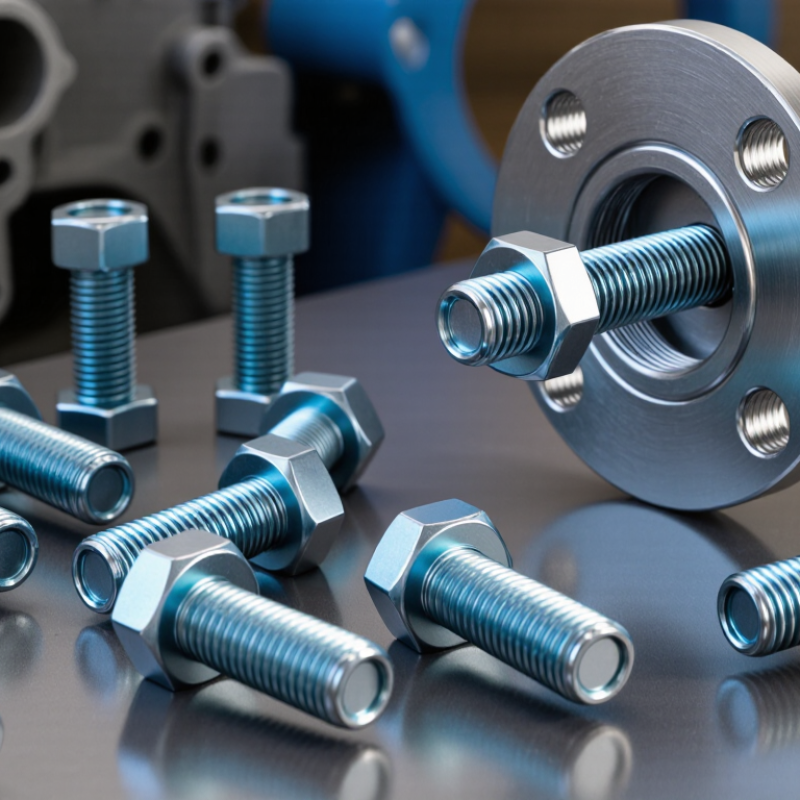
What Double-Head Bolts Are
Double-head bolts, often called double-ended bolts or studs, have threads at both ends and a plain or partly threaded section between them. One end usually screws into a tapped hole; the exposed end accepts a nut. Unlike a conventional bolt, it has no head to turn against the workpiece. That distinction matters. The term can be confusing, since names and designs vary across industries. Some versions have equal thread lengths, while others have a shorter end for fitting into the base material.
These fasteners are used where parts need to be clamped together, such as flanges, machine housings, and engine components. A stud can stay in place while a nut is removed, which may help during repeated maintenance. It can also reduce wear on threads in a housing, though correct sizing and installation still matter. A poor fit can loosen or damage the joint. I’d check the drawing or equipment specification rather than assume every double-head design works the same way.
Tips: Match the thread size, material, and engagement length to the application. Keep the stud aligned as you install it, and tighten the nut to the specified torque. Small details count.
How Their Design and Threads Work
Double head bolts, often called double-ended studs, have threads at both ends and a plain or partly threaded section between them. One end screws into a tapped hole; a nut fastens the component at the other end. This layout is useful when a joint must be assembled and removed repeatedly without turning a bolt inside the base material.
The thread design matters. Both ends may use the same diameter and pitch, but some studs use different thread lengths or pitches to suit the materials being joined. The end installed in the base usually needs enough engagement to hold securely, while the exposed end needs room for the component and nut. Check the specified thread size, pitch, and engagement depth before installation. Small details matter.
A stud is commonly fitted by turning two locked nuts on its exposed end, then removing them after seating. Avoid forcing it into the hole; cross-threading can damage the part before the joint is even assembled. Tighten the final nut to the applicable specification, since excess torque may stretch the stud or strip softer threads. In practice, the naming can be confusing: not every product called a double head bolt has identical end geometry. Verify the drawing or measurements rather than relying on the label alone.
What Are Double Head Bolts and What Are They Used For? - How Their Design and Threads Work | Dimension | Description | Practical Notes |
| Basic design | A double-ended stud has external threads at both ends, usually separated by an unthreaded or partially threaded shank. | One end is commonly fitted into a tapped hole, while a nut is secured on the exposed end. |
| How it differs from a bolt | A conventional bolt generally has a head at one end and threads at the other. A double-ended stud has no bolt head and is threaded at both ends. | Studs are useful when a component needs to be attached with a nut but does not provide access for a bolt head. |
| Thread arrangement | The two ends may have the same or different thread lengths. Depending on the design, they may also use different thread forms or pitches. | Thread size and pitch must match the tapped hole and the nut. Specifications should be checked before installation. |
| Installation | The first threaded end is installed into a tapped hole or other compatible threaded component. The joined part is placed over the projecting end and secured with a nut. | Correct engagement and tightening are important. Follow the equipment or engineering specification for installation and torque requirements. |
| Common applications | Double-ended studs are used in machinery assemblies, pipe flanges, engine components, and other joints where one part must be fastened to a threaded base. | Suitability depends on the joint design, operating loads, temperature, vibration, and surrounding environment. |
| Why use a stud? | A stud can leave a projecting threaded end ready for a nut and can avoid repeatedly turning a bolt in the base component during assembly or maintenance. | This can be useful where access is limited or where a component is removed and refitted periodically. |
| Materials and finishes | Studs are manufactured in materials such as carbon steel, alloy steel, and stainless steel, with finishes selected for the service environment. | Material grade and corrosion resistance should be selected for the application; appearance alone does not establish strength or suitability. |
| Selection checks | Key details include diameter, thread pitch, thread lengths, overall length, material, strength specification, and any required coating. | Confirm compatibility with the mating hole, nut, connected parts, and applicable engineering requirements before use. |
Common Materials and Variations
Common Materials and Variations
Double head bolts, often called double-ended studs, have threads at both ends and a plain section between them. Carbon steel is a common choice for general mechanical assemblies. It offers good strength, but exposed surfaces may corrode without protection. Stainless steel handles moisture better and suits many outdoor or washdown settings. Alloy steel can provide higher strength for demanding loads. Match the material to the environment and expected stress, not appearance alone. It is easy to overlook corrosion when a part looks sturdy.
Designs vary by diameter, overall length, thread pitch, and the length of each threaded end. Some studs have equal thread lengths; others use a shorter end for a tapped hole and a longer end for a nut. Zinc coatings can add corrosion resistance, while other finishes may affect fit. Check the mating threads and available clearance before ordering. Small differences matter.
Tips: Compare the bolt’s material, dimensions, and finish with the equipment specifications. For critical joints, verify the required grade and tightening method with a qualified technician. Don’t guess.
How Double-Head Bolts Are Installed
How Double-Head Bolts Are Installed
A double-head bolt, often called a stud, has threads at both ends and a smooth section between them. One threaded end fits into a tapped hole; the exposed end accepts a nut. Before installation, check that the stud length and thread type match the component. Clean the hole and inspect both sets of threads. Dirt or damaged threads can cause poor alignment.
Keep it straight. Start the end intended for the component by hand, turning it gently to avoid cross-threading. Some studs have different-length ends, so check the installation instructions rather than assuming both ends are interchangeable. A stud driver can help seat it evenly. If using the double-nut method, lock two nuts together on the exposed end and turn carefully. Do not grip the threads with pliers.
Do not force it. Seat the stud only as specified for the assembly; excessive torque may damage the hole or distort the part. Leave enough thread exposed for the washer and nut to engage fully. Then tighten the nut to the component’s specified torque, using a calibrated torque wrench when required. The easy-to-miss detail is alignment: a slightly tilted stud can make the nut feel tight before the joint is secure. Check the fit again before putting the assembly into service.
Typical Uses Across Industries
Across automotive and heavy-vehicle work, double head bolts commonly secure cylinder heads, exhaust manifolds, and other parts that need a firm, repeatable clamp. One threaded end sits in the engine block; a nut tightens the component onto the other. This can reduce repeated wear on threads inside softer housings. A mechanic may also find the arrangement useful when a part must be removed for service. Fit matters.
In industrial machinery, these fasteners join pumps, gear housings, and flanged equipment. They can help hold two thick components together where a regular bolt is awkward to install or remove. On pipelines and pressure equipment, stud-style fasteners are used at flanges, with nuts tightened on both sides. The required material, thread size, and tightening method depend on the equipment’s load, temperature, and service conditions. A suitable fastener should match the design specification, not just look close.
Construction and agricultural machinery use double-ended fasteners in assemblies that face vibration, dirt, or frequent maintenance. They may secure brackets, covers, and replaceable components. Real installations are less tidy than diagrams: corrosion, damaged threads, or limited tool clearance can complicate removal. Not always. Inspecting the surrounding parts before choosing a replacement helps avoid forcing a fastener that does not fit.
What Are Double Head Bolts and What Are They Used For?
Double-ended bolts, often called studs, have threads at both ends. One end screws into a tapped hole; the other is secured with a nut. They are commonly used in machinery, construction, automotive assemblies, piping, and electrical equipment.
The chart shows preliminary thread-engagement guidelines for the tapped end: about 1× the nominal diameter in steel and 1.5× in aluminum. These are general rules of thumb, not universal design requirements; actual engagement depends on materials, loads, and applicable standards.