
What Is Drone Jamming and Why Is It Regulated?

Drone Jamming describes the use of radio-frequency interference to disrupt communication between a drone and its controller, or to affect navigation signals. The term sounds simple. The consequences are not. A drone may lose a control link, behave unpredictably, or affect nearby communications. That is why jamming is treated as a safety and spectrum-management issue, not merely a security tool.

The FAA’s Aerospace Forecast FY 2024–2044 tracks the expanding role of uncrewed aircraft in U.S. airspace. The Government Accountability Office’s review of counter-drone technologies also examines agency authorities and coordination challenges. Together, these reports show why any response must account for aircraft, people, and radio users beyond the immediate scene. GNSS-security researcher Dr. Todd Humphreys has highlighted a related concern: radio interference can affect systems beyond its intended target. That risk is easy to underestimate.

Rules vary by country, but in the United States, transmitting devices and interference are subject to federal restrictions; private use of jammers is generally prohibited. Authorized agencies may have specific powers under applicable law. This introduction is not legal advice. The practical question is not only whether a drone can be stopped, but who is legally authorized to act and what else could be disrupted. The boundary is not always intuitive. That deserves careful attention.
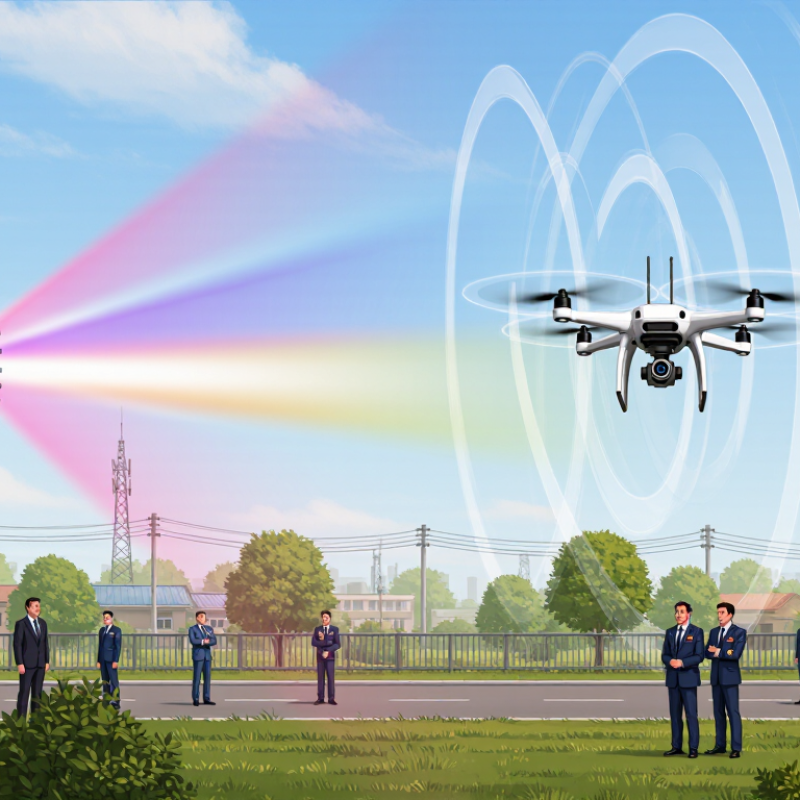
What Is Drone Jamming and Why Is It Regulated?

Drone Jamming Defined: How Radio-Frequency Interference Disrupts Drones

Drone jamming is radio-frequency interference intended to prevent a drone from receiving or exchanging essential signals. Those signals may carry control commands, location data, or status information between the aircraft and its operator. In practical terms, a drone may stop responding, lose a reliable navigation reference, or enter a programmed failsafe. Effects vary. No outcome is guaranteed. The result depends on the drone’s design, surroundings, and backup systems.

The word “jamming” can sound simple, but the behavior is not always predictable. A drone might hover, land, return, or drift, depending on its configuration and conditions. Buildings, terrain, and other radio traffic can also affect communications, so a sudden connection loss does not by itself prove deliberate interference. That distinction matters when assessing an incident. A careful account should separate observed symptoms from assumptions about their cause.

Radio links support more than convenience; they can help maintain safe separation from people, aircraft, and infrastructure. Interference may therefore create risks beyond the drone itself. For this reason, authorities regulate radio transmissions and restrict interference devices in many places. Rules differ by jurisdiction, and authorized testing generally requires appropriate oversight. Even a controlled experiment can affect nearby systems. A seemingly small signal can have a wider footprint than expected.

Common Targets: 2.4 GHz, 5.8 GHz, and GNSS Navigation Signals

Drone jamming refers to interference that disrupts the radio links or navigation signals used by an aircraft. Commonly discussed targets include 2.4 GHz and 5.8 GHz bands, which may carry control or video communications. GNSS signals, such as satellite-based positioning and timing, are another concern. These signals can be weak by the time they reach a receiver, so interference may affect devices beyond the intended area.

The effects are not always obvious. A drone might lose a live video feed, respond less reliably, or show inaccurate positioning. Nearby equipment using the same bands could also be affected, including Wi-Fi devices. That wider impact is one reason signal interference is tightly regulated in many places. Rules differ by location, and even a small test can create risks for other people or aircraft. It is easy to treat these frequencies as isolated channels; they are not.

Tips: If you suspect interference, move to a safe landing area and follow the aircraft’s approved recovery procedure. Check local requirements before using any radio equipment. Keep a written record of the time, location, and observed symptoms, and consult qualified authorities rather than trying to create interference yourself.

Effects of Jamming: Lost Links, Failsafes, and Uncontrolled Flight Risks

When a drone loses its control link, the aircraft may stop receiving commands while still moving through the air. A brief interruption can matter near trees, buildings, roads, or people. The pilot may see a frozen video feed, delayed telemetry, or no update at all. Silence is not proof that the aircraft has stopped.

Many drones have failsafes, such as hovering, landing, or returning toward a recorded point. Their response depends on the model, settings, battery level, and signal conditions. Return paths can be unsafe if obstacles or changing conditions are involved. Failsafes reduce some risks; they do not remove them. That distinction is easy to overlook.

Jamming can disrupt navigation or communication signals, creating unpredictable behavior and hazards beyond the aircraft itself. A drone might drift, descend, or continue along an unsuitable route. These risks help explain why interference is tightly regulated in many places: it can affect other users of shared radio services and public safety systems. The details vary by jurisdiction, so operators should check current local requirements and follow approved safety procedures. Even careful planning has limits. I would not treat a lost-link response as a substitute for maintaining a clear, controlled operating area.

What Is Drone Jamming and Why Is It Regulated? — Effects of Jamming: Lost Links, Failsafes, and Uncontrolled Flight Risks

Jamming scenario Possible effect on the drone Typical safety response Why it matters Regulatory context
Control-link interference The pilot’s commands may be delayed or lost, leaving the aircraft unable to respond normally. Depending on its configuration, the drone may hover, land, or attempt a return procedure after a link-loss timeout. A failsafe is not guaranteed to be safe in every location; obstacles, people, and limited battery can change the outcome. Intentional interference with radio communications is prohibited or tightly restricted in many jurisdictions, except for specifically authorized activity.
Navigation-signal interference Position estimates or navigation functions that rely on satellite signals may become unreliable or unavailable. The aircraft may switch to another available mode, hold position less accurately, or trigger a configured warning or failsafe. Position-dependent functions, including some return or route-following behaviors, may not work as expected. Rules differ by country, but interference can affect aviation and other protected radio services, not just the targeted aircraft.
Interference during takeoff or landing A control or navigation disruption can occur when the aircraft is close to people, structures, or the ground. The pilot may have little time to regain control; automated responses depend on the aircraft, settings, and conditions. The reduced recovery time can increase the chance of a collision, hard landing, or injury. Operating requirements commonly emphasize maintaining control and avoiding hazards; specific obligations depend on local aviation rules.
Interference near other radio users Nearby communications or navigation equipment may also experience disruption if affected by the interference. Effects may extend beyond the drone and may not be apparent to the person causing the interference. Unintended impacts can create risks for public safety, transport, and essential communications. Radio-frequency use is generally subject to national rules and licensing; unauthorized jamming can carry serious penalties.
Unknown or changing failsafe behavior The aircraft may behave differently from what the operator expects because of its settings, software, sensors, or flight conditions. Operators should consult the aircraft’s documentation, verify failsafe settings, and plan for safe loss-of-link contingencies before flight. Assuming that every drone will automatically return, land, or remain in place can lead to unsafe decisions. Safe operation remains the operator’s responsibility; authorization to use a drone does not generally authorize interference with communications.

Note: Outcomes vary by aircraft design, configuration, environment, and applicable law. This table is general safety information, not legal advice or instructions for causing interference.

Why It Is Regulated: The FAA Receives 100+ Airport Drone Reports Monthly

Drone jamming means disrupting the radio or navigation signals used by an unmanned aircraft. It may sound like a simple way to stop a drone, but interference can spread beyond the intended target. Nearby aircraft, communication systems, or other devices could be affected. The consequences may be hard to predict.

The FAA receives more than 100 reports of drones near airports each month, according to the figure highlighted here. That number is unsettling, though a report does not necessarily confirm a dangerous encounter. Even so, a drone near a runway can create a serious hazard. Pilots may need to change course, and airport staff may pause operations while checking what is happening. Regulation helps limit risky interference and gives authorities a safer way to respond. The details can vary by location, so broad assumptions are unwise.

Tips: Check current flight restrictions before flying. Keep well away from airports and approach paths. If you spot a drone concern, share its location and time with airport staff or local authorities. Don’t try to interfere with the aircraft yourself. A calm report is more useful than a guess.

Who May Jam Drones: U.S. Federal Authority and Radio-Spectrum Rules

What Is Drone Jamming and Why Is It Regulated?

In the United States, authority to disrupt a drone’s signals is limited. Specific federal agencies may use counter-drone measures under narrowly defined laws and conditions. This authority is not a general permission for every government worker, property owner, or security contractor. The authority is narrow. Agencies must consider their mission, location, and potential effects on other communications.

Radio spectrum is shared. Federal Communications Commission rules and federal communications law generally prohibit unauthorized signal jamming. A jammer aimed at one drone may also interfere with nearby wireless devices or public-safety communications. In a real setting, that spillover could affect people who have nothing to do with the drone. The rules can feel counterintuitive, but the risk is easy to underestimate.

Tips: If a drone causes concern, note the time, location, direction, and observed behavior. Keep a safe distance and contact local law enforcement or appropriate aviation authorities. Do not try to block its signal. A clear report is more useful than a guess about who is controlling it.

Translate