What Is the Best Zero Leakage Butterfly Valve?
Selecting the best Zero Leakage Butterfly Valve requires more than comparing catalogue prices or pressure ratings. In practice, “zero leakage” usually means no visible leakage during a defined test, not an impossible molecular seal. ISO 5208 and API 609 provide useful frameworks for testing, design, and acceptance. Buyers should read the test standard carefully.
Market demand supports this caution. Grand View Research’s industrial valves market analysis identifies water infrastructure, energy, chemicals, and manufacturing as major growth areas. Mordor Intelligence also forecasts continued expansion in the industrial valves market through 2030. These reports show strong demand, but they do not prove that every valve performs equally in service. The details matter.
Greg Johnson, a long-time valve industry professional and former United Valve president, has stated, “A valve’s reliability is only as good as its installation.” That warning applies directly here. A resilient seat may pass a factory test, yet misalignment, pipe stress, dirty media, or incorrect torque can create leakage at the plant. Small details matter.
The strongest choice combines a verified seat material, accurate shaft alignment, suitable elastomer compatibility, and documented pressure testing. For corrosive fluid, temperature changes can quietly shorten seat life. For clean water, debris can leave a thin path across the sealing surface. Therefore, this guide compares Zero Leakage Butterfly Valve designs through standards, field experience, lifecycle cost, and maintenance evidence. No product wins every application. That is the uncomfortable truth.
Zero-Leakage Butterfly Valve: Definition and Operating Principles
What Is the Best Zero Leakage Butterfly Valve?
Zero-Leakage Butterfly Valve: Definition and Operating Principles
A zero-leakage butterfly valve is designed to stop visible fluid passage when fully closed. The term does not mean permanent perfection. It describes performance under defined pressure, temperature, and testing conditions. Standards such as ISO 5208 and API 598 help establish these conditions. In practical maintenance work, technicians should confirm the required leakage class before selecting a valve.
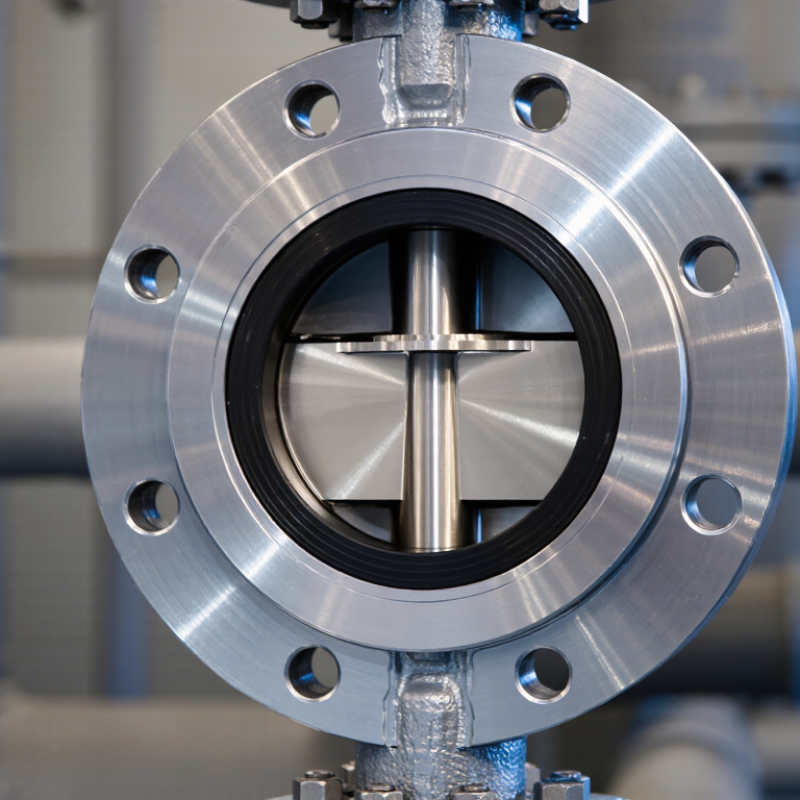
The valve uses a circular disc mounted inside the pipeline. Turning the shaft rotates the disc through approximately 90 degrees. In the open position, the disc aligns with the flow. In the closed position, it presses against a resilient or metal seat. The seat design creates the sealing line. Shaft seals also matter, because leakage can occur outside the pipeline, not only through the disc.
Resilient seats often provide reliable bubble-tight shutoff for water, air, and compatible chemicals. Offset designs can reduce seat friction and improve service life during repeated cycling. Metal-seated versions may suit higher temperatures, but their sealing behavior requires closer engineering review. Check the medium, pressure rating, temperature range, actuator torque, and installation alignment. A dirty pipe can damage the seat quickly. That detail is easy to overlook. Even a well-designed valve may leak after thermal cycling, incorrect torque, or worn sealing surfaces. Therefore, field testing and scheduled inspection remain essential.
What Is the Best Zero Leakage Butterfly Valve?
Zero-Leakage Butterfly Valve: Definition, Operating Principles, and Selection Guide
| Valve Design | Sealing Principle | Typical Zero-Leakage Capability | Typical Pressure Range | Typical Temperature Range | Key Advantages | Main Limitations | Best-Fit Applications |
|---|---|---|---|---|---|---|---|
| Concentric Resilient-Seated Butterfly Valve | The disc rotates around the central shaft axis. An elastomer seat is compressed by the disc, creating a circumferential seal when the valve is fully closed. | Suitable for bubble-tight shutoff when correctly selected, installed, and tested to a recognized shutoff standard such as API 598 or ISO 5208 Rate A. | Commonly used from vacuum service up to approximately 16 bar, depending on body design, pressure class, diameter, and seat material. | Approximately −40°C to 150°C, depending on the elastomer. EPDM, NBR, and PTFE have different chemical and temperature limits. | Low purchase cost, compact construction, low weight, simple operation, and good shutoff performance in clean liquid and general utility services. | Elastomer compatibility limits temperature, pressure, chemical resistance, and abrasive-service capability. Seat wear can increase operating torque over time. | Water, HVAC, irrigation, compressed air, wastewater, and general-purpose isolation service. |
| Double-Offset High-Performance Butterfly Valve | The shaft is offset from the disc centerline and the seat centerline. The disc moves away from the seat soon after opening, reducing rubbing and seat wear. | Can provide bubble-tight shutoff with a resilient or laminated seat when the valve is designed and tested for the required leakage class. | Commonly available from approximately 10 bar to 40 bar, with the actual rating determined by the pressure class, materials, diameter, and manufacturer design. | Approximately −40°C to 260°C for many resilient or laminated-seat configurations; the actual limit depends on the seat, liner, disc, and media. | Lower seat friction, improved cycle life, better flow capacity than many gate-valve designs, and improved suitability for higher-pressure service. | More expensive and mechanically complex than a concentric valve. Seat selection remains critical for high-temperature or chemically aggressive media. | Water transmission, cooling systems, hydrocarbons, process piping, fire protection, and moderate high-temperature services. |
| Triple-Offset Metal-Seated Butterfly Valve | Three geometric offsets create a cam-like, non-rubbing movement. The metal sealing surfaces contact primarily at the final closing position, minimizing friction during rotation. | Tight shutoff is possible, but “zero leakage” is not automatic. Metal-seated valves must be specified and tested to the required leakage rate; some designs meet API 598 or ISO 5208 Rate A, while others permit a defined leakage rate. | Commonly used from approximately 16 bar to 100 bar or higher in specialized designs, subject to the applicable pressure class and engineering specification. | Approximately −196°C to 600°C or more in specialized constructions, depending on alloy, seat design, packing, and thermal expansion control. | Excellent high-temperature capability, low seat wear, high cycle life, fire-safe potential, and strong resistance to many demanding process conditions. | Higher cost, greater actuator torque requirements, more complex installation, and possible leakage if the sealing surfaces are damaged, contaminated, or incorrectly specified. | Steam, hot gas, high-temperature process lines, cryogenic service, refinery systems, and applications requiring fire-safe or high-cycle performance. |
| PTFE- or Laminated-Seat Butterfly Valve | A chemically resistant polymer or laminated seat forms a tight seal against the disc. The seat may be installed in a concentric or offset valve body. | Often suitable for bubble-tight isolation when the media, temperature, pressure, and seat construction are within design limits. | Commonly used up to approximately 16 bar to 40 bar, depending on the valve configuration and temperature derating. | Approximately −50°C to 260°C for selected PTFE or laminated constructions; pressure capability usually decreases as temperature increases. | Good resistance to many corrosive chemicals, low friction, and reliable isolation in compatible process media. | Polymer creep, thermal expansion, cold flow, and compatibility issues can affect sealing performance. Abrasive particles may damage the seat. | Chemical processing, corrosive liquids, food and pharmaceutical utilities, and clean process systems where the seat material is compatible. |
Selection conclusion: For most ordinary water and utility applications, a correctly sized resilient-seated butterfly valve tested for bubble-tight shutoff is usually the most practical choice. For higher pressure or frequent cycling, a double-offset design is generally more suitable. For extreme temperatures, fire-safe service, cryogenic duty, or demanding process conditions, a triple-offset metal-seated valve may be preferred. “Zero leakage” should always be confirmed by the specified test standard, leakage class, seat material, pressure, temperature, and operating medium rather than assumed from the valve type alone.