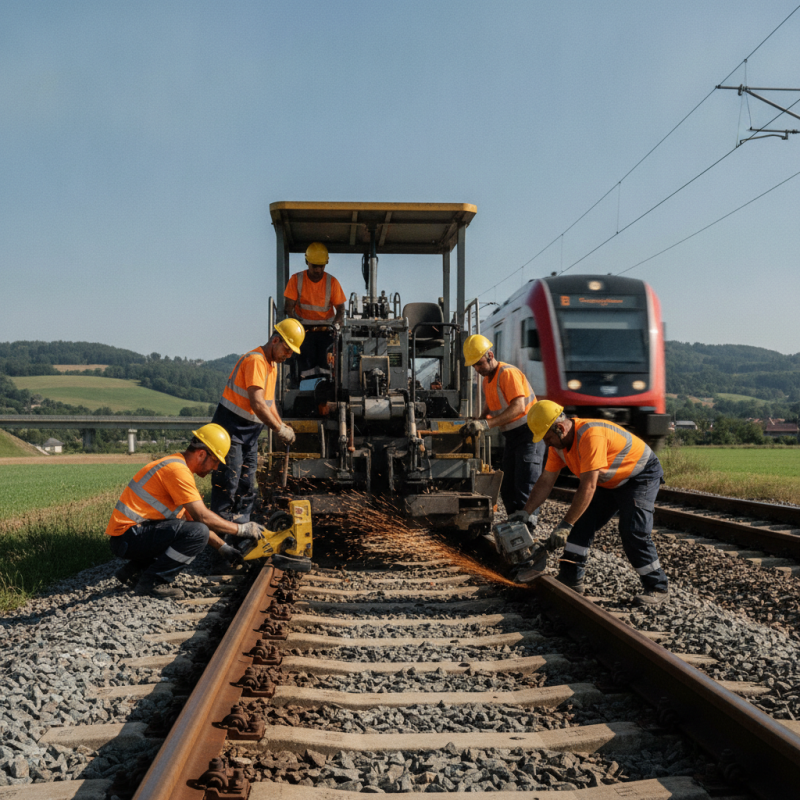
Why Rail Maintenance Tools Are Essential for Safe Operations?
Rail Maintenance Tools play a crucial role in ensuring the safety and efficiency of rail operations. According to John Peterson, a leading expert in railway safety, "The reliability of our rail systems hinges on the tools we use for maintenance." This statement emphasizes the significant impact that proper maintenance can have on rail safety.
Effective rail maintenance requires specialized tools designed for various tasks. These tools facilitate inspections, repairs, and overall system efficiency. Neglecting regular maintenance not only risks the safety of passengers but can also lead to costly downtimes.
Rail Maintenance Tools are essential to prevent accidents. Using outdated or faulty equipment increases safety hazards. Accurate and timely maintenance is critical for preventing disruptions and ensuring smooth operations. Continuous improvement in these tools will reflect the evolving needs of the railway industry.
Importance of Rail Maintenance Tools for Operational Safety
Rail maintenance tools are critical for ensuring operational safety in the rail industry. According to the Federal Railroad Administration (FRA), over 20% of train accidents are linked to track defects and related issues. Regular maintenance can detect these problems early. Using the right tools can significantly reduce the risk of derailments and accidents.
A study from the Transportation Research Board highlights that using specialized rail maintenance tools improves the accuracy of inspections. These tools allow workers to assess track conditions more effectively. For instance, ultrasonic testing devices can find cracks that the naked eye may miss. Without them, the likelihood of severe accidents increases dramatically.
Despite advancements, some rail systems still face challenges. Insufficient investment in maintenance tools stalls progress. Many operators struggle to prioritize preventative measures over reactive fixes. This gap can result in unsafe conditions for both crews and passengers. Investing in the right maintenance tools ensures that safety is not an afterthought but a priority in rail operations.
Types of Rail Maintenance Tools and Their Functions
Rail maintenance tools are vital for ensuring safety and operational efficiency. They come in various types, each designed for specific tasks. Track inspection tools play a crucial role in identifying potential issues. These tools include rail profile gauges and ultrasonic flaw detectors. Regular checks help prevent accidents caused by track deformities or defects.
Another important category consists of maintenance-of-way equipment. Rail grinders and rail saws are essential for track alignment and repair. These tools ensure that the trains operate smoothly and safely over the tracks. Corrective maintenance is also necessary. It involves using tools like track shifters and tampers to adjust track positions after disturbances.
Timely inspections and repairs can mitigate future problems. However, equipment may wear out or malfunction over time. Operators must frequently assess their tools' conditions. While the tools improve safety, relying solely on them without proper protocols can lead to dangerous oversights. Teams must prioritize not just tool availability but also training in their proper use to maintain a secure rail environment.
Best Practices for Using Rail Maintenance Tools Effectively
Rail maintenance tools play a crucial role in ensuring the safety and efficiency of rail operations. To maximize their effectiveness, it's vital to implement best practices during their use. Regular training for maintenance personnel can greatly improve their skill set. Workers who understand tool operation are less likely to make mistakes.
Additionally, proper tool inspection before each use cannot be overlooked. A routine check can identify wear and tear that could lead to accidents. Each tool must be maintained according to its specifications. Using damaged tools risks not only equipment failure but also worker safety.
Documentation is another vital aspect. Keeping accurate records of maintenance can help identify patterns over time. This can lead to proactive measures that prevent flaws before they evolve into significant issues. Encouraging feedback among team members can also enhance safety protocols. A culture of open communication around tool use fosters improvement and reliability in rail operations.
Impact of Poor Maintenance on Rail Safety and Efficiency
Poor maintenance can lead to severe rail operational failures. According to the Federal Railroad Administration, derailments due to track defects accounted for over 27% of all train accidents in 2020. Such incidents not only compromise safety but also disrupt entire rail networks, causing delays and significant financial losses. Tracking systems and inspections must be strictly adhered to. However, many rail companies struggle to implement consistent maintenance practices.
Inadequate inspections can allow issues to escalate. For instance, a study by the National Transportation Safety Board revealed that poor rail conditions can increase the likelihood of accidents by threefold. Routine checks for equipment functionality and track integrity are not optional; they are essential for efficient operations. Obsolete practices may lead to overlooked defects, jeopardizing crew and passenger safety.
The cumulative effects of neglect are concerning. In 2019, the rail industry faced expenses exceeding $1.5 billion due to maintenance failures. High-profile derailments serve as grim reminders of this issue. Regular investment in rail maintenance tools and inspections can reduce risks significantly and enhance overall safety. Prioritizing reliable maintenance protocols is crucial for achieving rail industry resilience and efficiency.
Future Innovations in Rail Maintenance Technology and Tools
Rail maintenance technology is evolving rapidly. Innovations are emerging to enhance safety and efficiency. Automatic inspection systems are redefining traditional methods. These systems use sensors and artificial intelligence to detect issues in real-time. Trains can now be assessed without halting operations, reducing delays. This development ensures safer journeys and minimizes maintenance downtime.
Additionally, drones are becoming integral in track inspections. They can access areas that are hard to reach. Drones provide high-resolution images, helping teams identify potential problems quickly. However, the implementation of these technologies isn’t without challenges. Training staff to operate new tools can be time-consuming. Also, there can be initial resistance to changing long-standing practices.
Predictive maintenance tools are gaining traction. They utilize big data analytics to foresee potential failures. This approach allows teams to address issues proactively. Yet, organizations must ensure data reliability to make informed decisions. Balancing innovation with practical challenges will shape the future of rail safety. Embracing these advancements can lead to safer rail operations, but the transition needs careful planning.