
China Top 10 Control Valve Manufacturers 2026

China’s Control Valve industry is entering 2026 with stronger demand from energy, chemicals, water treatment, and advanced manufacturing. Control Valve performance directly affects flow stability, process safety, energy use, and maintenance costs.

Market estimates show sustained expansion. MarketsandMarkets reported that the global control valve market could grow from approximately USD 7.7 billion in 2023 to USD 10.5 billion by 2028. Its forecast suggests a compound annual growth rate near 6.5%. Grand View Research also identified industrial valves as a growing market, supported by infrastructure investment and process automation. These figures are useful, but they are not identical. Research firms define product categories differently.

That matters.

A serious manufacturer comparison should examine more than factory size or export claims. It should review valve range, pressure classes, body materials, actuator compatibility, leakage performance, certifications, testing procedures, and after-sales support. Field experience often reveals details that brochures omit, such as response stability during repeated cycling or corrosion resistance near coastal plants. Standards such as IEC 60534 and ISO 15848 provide practical reference points for performance and fugitive-emission evaluation.

China now has manufacturers serving both domestic projects and international process industries. Some focus on high-pressure applications, while others specialize in sanitary, cryogenic, or intelligent valve systems. The distinction is important. A low purchase price may become expensive when calibration, spare parts, or technical support are weak.

This guide reviews ten leading Chinese Control Valve manufacturers for 2026. The ranking considers technical capability, manufacturing experience, quality systems, application coverage, and market reputation. No list is perfect. Buyer requirements differ, and supplier information can change. Independent verification remains essential before procurement.
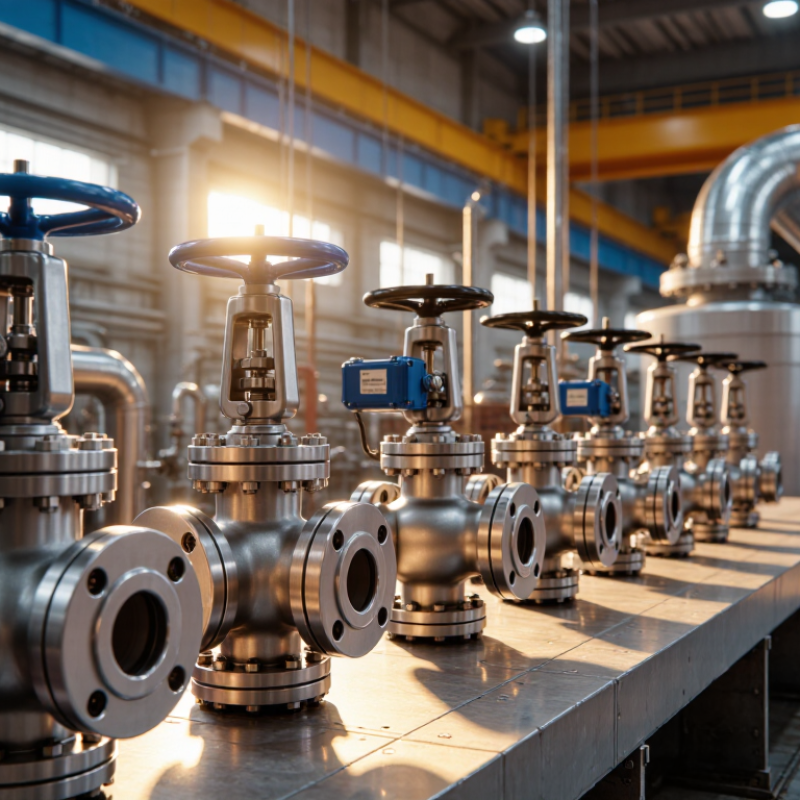
China Top 10 Control Valve Manufacturers 2026

Control Valves in China: Types, Functions, and Industrial Applications

China Top 10 Control Valve Manufacturers 2026

Control valves regulate fluid flow, pressure, temperature, and liquid level inside industrial systems. Their performance depends on accurate sizing, suitable materials, and stable actuator control.

Common types include globe, ball, butterfly, gate, diaphragm, and check valves.

Globe valves provide precise throttling, while butterfly valves suit large pipelines and moderate pressure control. Ball valves offer fast movement and tight shutoff, but they may perform poorly with abrasive media.

Pneumatic actuators remain common because they respond quickly and work reliably in hazardous process areas. Electric actuators support remote operation and accurate positioning. Hydraulic actuators deliver strong closing force for demanding applications.

A practical selection considers pressure rating, temperature, fluid viscosity, corrosion, noise, and available maintenance skills. A neat specification sheet can still mislead. Valve trim, seals, and actuator response require equal attention.

In Chinese industrial plants, control valves serve water treatment, chemical processing, power generation, HVAC, food production, and oil and gas facilities.

Engineers often inspect cavitation marks, leaking stem seals, and unstable position signals during maintenance. These details reveal problems that catalog data may hide.

Fail-open or fail-close action should match the process risk, not merely the purchasing preference.

IEC 60534 and applicable national standards can support testing, sizing, and documentation, although site conditions still demand engineering judgment.

How China’s Top Control Valve Manufacturers Are Evaluated in 2026

In 2026, China’s top control valve manufacturers are evaluated through evidence, not polished product pages. Reviewers examine design calculations, material certificates, welding records, and pressure-test results. Each valve should match the process temperature, pressure, fluid chemistry, and required flow range. Numbers matter. A laboratory report should identify test methods, instruments, dates, and responsible personnel.

Factory capability also receives close attention. Auditors may inspect machining centers, calibration records, assembly areas, and final inspection points. Testing should reflect real service conditions, including seat leakage, hysteresis, response time, and actuator performance. For critical applications, evaluators may request independent verification against recognized standards, such as IEC 60534, ISO 9001, or relevant safety and emissions requirements. A certificate alone is not enough. Traceability is essential.

Field reliability separates a capable supplier from an average one. Buyers review failure statistics, maintenance records, spare-part availability, delivery consistency, and technical support during commissioning. Engineers often ask for a complete serial-number trail, from raw material to shipment. One practical lesson is easily missed: low purchase cost can hide expensive downtime. Yet evaluation is not perfect. Laboratory results may not reflect dirty fluids, poor installation, or unstable utilities. Site feedback should therefore challenge factory claims. Test it twice. Listen to operators. Manufacturers that accept questions, disclose limitations, and improve designs through documented feedback usually earn stronger long-term trust.

China’s Top 10 Control Valve Manufacturers in 2026

China’s top 10 control valve manufacturers in 2026 are judged beyond production volume. Buyers now examine engineering depth, material traceability, and field support. A reliable manufacturer should provide pressure-class records, actuator sizing data, and test reports matching the delivered valve. In a refinery, stainless-steel trim may face heat, vibration, and corrosive media within one service line. Small documentation gaps can become expensive maintenance problems. That detail matters.

Experienced manufacturers typically offer globe, ball, butterfly, and eccentric rotary designs for water, chemical, power, and process applications. Stronger plants use CNC machining, calibrated test benches, and documented inspection points. Welding procedures, casting quality, and seat-leakage testing deserve careful review. Certifications help, but certificates alone do not prove stable performance. Engineers should compare failure data, spare-part lead times, and commissioning support. I would question unusually low prices. They may show efficiency, or hidden compromises.

The leading group in 2026 will not be identical for every project. A valve maker with excellent export logistics may lack local service technicians. Another may offer smart positioners but limited experience with severe cavitation. Ask for references involving similar pressure, temperature, and fluid conditions. Check how complaints are handled after delivery. No supplier is flawless. Even a well-designed valve can fail when sizing, installation, or control tuning is overlooked.

Product Capabilities, Technologies, and Market Strengths Compared

China Top 10 Control Valve Manufacturers 2026

China’s leading ten control valve manufacturers show different strengths across process industries. Some focus on globe valves for steam, water, and chemical service. Others specialize in segmented ball valves, butterfly valves, or severe-service designs. Their product ranges often cover carbon steel, stainless steel, alloy materials, pneumatic actuators, and electric actuation. Product breadth matters, but it can also hide uneven engineering depth.

Digital capability now separates stronger suppliers from ordinary producers. Advanced manufacturers offer smart positioners, partial-stroke testing, remote diagnostics, and communication protocols for plant systems. Some provide finite-element analysis, flow testing, cryogenic verification, and noise-control calculations. These details become practical when a valve must control pressure within a narrow operating range. A reliable supplier should also provide material certificates, calibration records, traceable testing, and clear maintenance instructions.

Market strength depends on more than factory size. Export experience, local service teams, spare-part availability, and response time affect lifecycle cost. Several Chinese manufacturers compete effectively through flexible customization and shorter production schedules. That advantage is real, though not universal. Documentation quality may vary between projects. Field performance can also depend heavily on actuator sizing and installation discipline. Buyers should compare leakage class, pressure-temperature ratings, control accuracy, warranty terms, and after-sales support before selecting a manufacturer. A polished catalog is not enough. Real test data matters.

How to Select a Chinese Control Valve Manufacturer for Your Project

Selecting a Chinese control valve manufacturer for a 2026 project requires more than comparing catalog prices. Begin with process conditions, including medium, pressure, temperature, flow range, and shutoff class. Ask for sizing calculations, material certificates, and test procedures. Reliable suppliers explain their decisions in clear engineering language. That matters. A polished website proves little.

Request evidence from similar installations, preferably with anonymized operating data and service records. Check whether the factory controls casting, machining, assembly, and calibration internally or through subcontractors. A site visit can reveal practical details: clean actuator benches, traceable gauges, protected stainless-steel parts, and organized final inspection. Review ISO certificates, but verify their scope and validity. Confirm response times for drawings, spare parts, and technical questions. A low quote may exclude testing, coatings, documentation, or commissioning support.

Before signing, define acceptance criteria in writing. Include leakage limits, fail position, signal type, connection standard, inspection points, and packaging requirements. Ask for sample inspections and witnessed pressure tests for critical service. Compare lifecycle cost, not only purchase price. Energy loss, actuator wear, downtime, and replacement lead time can change the decision. Be cautious with impressive promises. Some specifications remain vague until a failure occurs. I would leave room for a pilot order. Even a strong factory may communicate poorly during its first project.

China Top 10 Control Valve Manufacturers 2026 - How to Select a Chinese Control Valve Manufacturer for Your Project

A practical, manufacturer-neutral screening matrix based on internationally recognized valve standards, project documentation, engineering capability, quality control, and lifecycle service requirements.

No. Selection Dimension What to Verify Relevant Technical Reference or Evidence Recommended Benchmark Priority
1 Application and Valve Type Confirm experience with globe, rotary, butterfly, eccentric plug, or severe-service control valves suitable for the process medium. Approved valve data sheets, application references, flow-characteristic curves, and sizing calculations based on IEC 60534. Documented experience with the same valve type and a comparable process duty. Critical
2 Pressure and Temperature Range Check pressure class, design pressure, design temperature, shut-off pressure, and allowable pressure-temperature ratings. ASME B16.34, ASME B16.5, ASME B16.10, EN 12516, and certified pressure-test records. Rated capacity should exceed the project design conditions with an appropriate engineering margin. Critical
3 Flow Capacity and Control Performance Evaluate Cv or Kv capacity, rangeability, inherent flow characteristic, cavitation risk, noise, and flashing performance. IEC 60534 sizing report, certified Cv/Kv data, noise prediction, and anti-cavitation trim design. Complete sizing documentation with stable control across the specified operating range. Critical
4 Materials and Corrosion Resistance Verify body, trim, seat, stem, packing, gasket, and coating materials against fluid chemistry and temperature. Material test certificates, EN 10204 3.1 certificates, NACE MR0175 / ISO 15156 compliance where applicable, and coating records. Full material traceability and documented compatibility with the process medium. Critical
5 Leakage and Pressure Testing Review shell testing, seat leakage class, test medium, test pressure, duration, and acceptance criteria. ISO 5208, API 598, IEC 60534-4, or the project-specified testing standard. Test procedures and certificates must match the purchase specification and required leakage class. Critical
6 Actuator and Instrument Integration Assess actuator sizing, fail position, stroking time, air supply, positioner compatibility, feedback, and control-system interfaces. Actuator sizing calculations, ISO 5211 interface information where applicable, wiring diagrams, and functional test reports. Actuator torque or thrust should cover maximum required load with documented safety margin. High
7 Quality Management and Inspection Check manufacturing procedures, inspection points, nonconformance handling, calibration, welding control, and final inspection. Current ISO 9001 certificate, inspection and test plan, calibration records, welding procedure qualifications, and quality dossier samples. Independent traceable quality records for every critical component and test stage. High
8 Certification and Compliance Confirm certificates required for the destination market, hazardous areas, pressure equipment, emissions, and functional safety. Applicable CE/PED documentation, ATEX or IECEx certification, SIL assessment, ISO 15848-1 fugitive-emission testing, and other project requirements. All mandatory certificates should be valid, scope-matched, and issued by recognized certification bodies. High
9 Delivery Capability and Supply Chain Evaluate engineering lead time, production capacity, critical-component sourcing, expediting process, export packaging, and logistics support. Realistic manufacturing schedule, production progress reports, factory acceptance test plan, packing list, and export documentation sample. Schedule should include design approval, procurement, testing, documentation, and transportation buffers. High
10 After-Sales Service and Lifecycle Cost Compare commissioning support, spare-parts availability, warranty terms, maintenance guidance, training, and response time. Warranty conditions, recommended spare-parts list, service network details, maintenance manuals, and technical-support agreement. Clear lifecycle support plan with defined response times and long-term spare-parts availability. Medium

Note: Standards and certification requirements should be selected according to the process, destination market, industry sector, and purchase specification. Final supplier selection should be based on verified technical documents, reference checks, factory audits, and project-specific compliance review rather than price alone.

Article Source:

Translate