Top 10 Fountain Construction Companies Worldwide

The world’s leading fountain projects combine architecture, engineering, water management, and public experience. This Top 10 list examines companies shaping modern Fountain Construction across commercial plazas, hotels, resorts, civic spaces, and cultural destinations. Their work often begins with a simple visual idea: a thin water sheet, a synchronized jet, or a quiet reflecting pool.

Design matters. Water matters more.

The United Nations World Water Development Report 2024 emphasizes growing pressure on freshwater resources and the need for efficient, resilient water systems. That principle affects every serious fountain project. Designers must consider filtration, evaporation, pump efficiency, maintenance access, and safe public use. A dramatic fountain may look effortless, yet its hidden plant room can contain complex pumps, sensors, dosing equipment, and control panels.

Urban demand also continues to expand. The United Nations projects that nearly 68% of the global population could live in urban areas by 2050. Public water features may therefore support placemaking, cooling, tourism, and social interaction. Their value depends on responsible design, not visual spectacle alone.

Industry guidance from organizations such as the American Society of Landscape Architects and the U.S. Environmental Protection Agency supports integrated planning, efficient equipment, and lifecycle thinking. These references help frame the companies included here through practical standards rather than marketing claims.

The ranking is not perfect. Project quality can vary by region, climate, budget, and maintenance culture. A renowned contractor can still face delays or operational weaknesses. This guide considers technical capability, project experience, design innovation, sustainability practices, and demonstrated reliability. It also asks a harder question: does each fountain remain beautiful after the opening ceremony?

Top 10 Fountain Construction Companies Worldwide

Global Fountain Construction: Scope, Standards, and Industry Definition

Global fountain construction covers more than decorative water features. It includes hydraulic design, structural support, electrical systems, controls, lighting, filtration, and long-term maintenance. A skilled contractor studies water pressure, wind exposure, soil movement, and pedestrian traffic before preparing drawings. These details affect nozzle performance and public safety.

International projects require careful coordination with local building, electrical, environmental, and accessibility regulations. There is no single global fountain standard. Reliable teams compare regional codes with recognized engineering practices and document every design decision. Waterproof electrical enclosures, slip-resistant paving, safe drainage, and controlled chemical treatment deserve close attention. Small errors can become expensive repairs.

A credible top-ten list should measure more than visual impact. It should examine verified project experience, engineering capacity, construction quality, testing procedures, and after-sales support. Site commissioning should include pressure tests, leakage checks, water-quality verification, and emergency shutoff trials. Clear maintenance manuals also show professional responsibility. Still, rankings can be imperfect. A contractor may excel at a large civic plaza but struggle with a compact indoor installation. Project conditions change the result. Procurement teams should review references, schedules, insurance documents, and local compliance records before awarding work. A beautiful fountain is not enough. It must remain stable, clean, accessible, and manageable after opening.

How the Top Fountain Construction Companies Are Evaluated

A credible shortlist starts with completed evidence, not glossy renderings.

Top fountain construction companies should show project photographs, commissioning records, and verifiable client references. Reviewers can inspect basin joints, pump rooms, drainage channels, and control cabinets. These details reveal workmanship better than a sales presentation.

Technical evaluation should measure hydraulic accuracy, water treatment, electrical safety, noise, and maintenance access. The U.S. Department of Energy’s pumping-system guidance reports potential energy savings of 20–50% through proper sizing and system optimization. This makes pump selection a financial issue, not merely an engineering preference. The 2023 Global Status Report for Buildings and Construction states that buildings consume about 32% of global energy. Efficient fountain systems therefore deserve measurable weight in company rankings. Strong contractors provide flow calculations, power-load data, filtration schedules, and realistic replacement costs.

Compliance also separates experienced teams from capable-looking newcomers.

Evaluators should check local permits, electrical protections, water-quality procedures, and documented risk controls. International guidance on recreational and decorative water environments emphasizes reducing contamination and aerosol exposure. A beautiful fountain can still fail if maintenance staff cannot safely reach the filters. No scorecard is perfect. A low-cost bid may reflect efficient design, or missing scope. That uncertainty requires site visits, independent technical review, and contract language covering performance after handover. Past results matter, but poorly documented results should not receive full credit.

Design, Engineering, and Construction Services Provided Worldwide

Top 10 Fountain Construction Companies Worldwide should be judged by more than visual impact. Strong providers deliver complete design, engineering, and construction services across regions. Their teams translate a concept into hydraulic calculations, structural drawings, filtration plans, lighting layouts, and safe maintenance access. Experienced engineers also test pump duty, nozzle pressure, splash control, and water quality before handover. Small details matter.

The 2024 United Nations World Water Development Report highlights growing pressure on freshwater resources. This makes recirculation, leak detection, efficient filtration, and automated water-level control essential. A capable contractor should model water loss from evaporation and wind, then specify practical recovery measures. The result may be less dramatic than an oversized display, but it usually performs better. That trade-off deserves honest discussion.

Energy performance also matters. The 2024 Global Status Report for Buildings and Construction states that buildings consume about 32% of global energy and create roughly 34% of energy-related carbon emissions. Fountain specialists should therefore coordinate variable-speed pumps, efficient lighting, controls, and operating schedules with the wider site system. International delivery requires more than copying one design. Local climate, electrical standards, water regulations, soil conditions, and access limitations can change the entire solution. Some proposals still overpromise installation speed. Real projects often reveal delays, redesigns, and underestimated maintenance costs. That imperfection should be measured, not hidden. Reliable firms document commissioning results, provide training, and support lifecycle inspections after construction.

Regional Strengths and Signature Projects of Leading Companies

Top 10 Fountain Construction Companies Worldwide

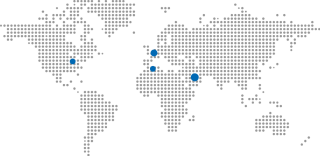
Leading fountain contractors now compete through regional expertise, not scale alone. The strongest firms combine hydraulic engineering, lighting control, stonework, and long-term maintenance. In Europe, several top-ranked companies specialize in heritage plazas and synchronized musical fountains. Their signature projects often use restrained jets, natural stone basins, and low-noise pumps.

In the Gulf region, leading contractors build monumental water displays for resorts, civic districts, and destination developments. Their projects demand strong cooling systems and corrosion-resistant materials. Asian specialists often focus on compact urban fountains, interactive floors, and automated water recycling. In North America, experienced firms usually deliver public-space renovations, airport features, and digitally controlled shows. Regional conditions matter greatly.

The UN World Water Development Report 2024 states that agriculture represents about 70% of global freshwater withdrawals. This makes efficient fountain design increasingly important. Top companies now specify variable-speed pumps, rainwater storage, ultraviolet treatment, and sensor-based controls. The World Bank also reports that cities will absorb most future population growth, increasing pressure on public infrastructure.

A credible ranking should examine verified project records, maintenance performance, safety documentation, and lifecycle costs. Construction quality alone is not enough. Some impressive installations still consume excessive energy or lack practical servicing access. That is a weakness worth admitting. The best regional contractors are those that balance visual drama with measurable water savings, reliable controls, and realistic maintenance planning.

Top 10 Fountain Construction Companies Worldwide - Regional Strengths and Signature Projects of Leading Companies
Comparative overview based on publicly documented project types, regional activity, engineering capabilities, and representative installation scales
Rank Primary Regional Strength Core Market Advantage Representative Signature Project Profile Typical Documented Project Scale Key Technical Capabilities International Delivery Profile
01 North America Large-scale choreographed water features for civic plazas, resorts, entertainment districts, and destination developments.
Show Fountains
A musical lake fountain combining synchronized water movement, colored lighting, projection effects, and computer-controlled show programming. Lake or basin systems exceeding 5,000 nozzles, with peak water columns commonly ranging from 100 to 150 metres on major installations. Real-time choreography, variable-speed pumps, high-output LED lighting, programmable controls, and multi-zone hydraulic systems. Strong experience in North America, the Middle East, Asia, and major international tourism developments.
02 Middle East Landmark fountains integrated into luxury mixed-use developments, waterfront districts, shopping destinations, and public attractions.
Destination Projects
A large urban fountain positioned around a high-density commercial district, designed to operate as a scheduled evening attraction. Systems with thousands of moving nozzles, more than 1,000 programmable lights, and water displays visible across large open spaces. High-capacity pumping, long-distance hydraulic distribution, synchronized audio, LED color control, and automated maintenance monitoring. Particularly strong in Gulf countries, with experience in high-temperature climates and technically complex urban sites.
03 Western Europe Architectural fountains for historic squares, museums, hotels, public gardens, and premium urban regeneration projects.
Architectural Integration
A formal plaza fountain using discreet slot, jet, and mist nozzles while preserving clear pedestrian routes and architectural sightlines. Public-space installations ranging from compact interactive plazas to multi-basin schemes covering several thousand square metres. Precision nozzle design, water recycling, anti-slip deck construction, concealed plant rooms, and heritage-sensitive engineering. Established project capability across Europe, North Africa, the Gulf, and selected Asian capital cities.
04 East Asia High-density urban fountains, musical displays, civic landmarks, and large public-realm projects requiring advanced automation.
Urban Systems
A city-centre fountain plaza combining dancing jets, illuminated mist, interactive controls, and timed performances for public events. Multi-zone installations with hundreds to several thousand nozzles and display areas extending across major civic plazas. Digital show control, energy-efficient pumps, interactive sensors, DMX lighting systems, and integrated water-quality treatment. Strong regional delivery across China, Japan, South Korea, Southeast Asia, and large infrastructure-led developments.
05 South Asia Cost-efficient engineering for public parks, cultural districts, religious precincts, hospitality projects, and municipal developments.
Value Engineering
A public park fountain combining programmed vertical jets, perimeter cascades, decorative lighting, and timed music sequences. Typical projects include several dozen to more than 1,000 nozzles, with basin layouts adapted to local water and power conditions. Modular pump rooms, filtration packages, low-maintenance nozzle assemblies, programmable lighting, and locally adaptable controls. Strong activity in India, Southeast Asia, the Gulf, and developing urban markets requiring scalable project budgets.
06 Oceania Sustainable fountains for waterfronts, civic precincts, resorts, residential communities, and environmentally sensitive public spaces.
Water Efficiency
A waterfront installation designed around recycled water, low-energy pumping, durable materials, and reduced operational requirements. Projects range from interactive children’s water plazas to large waterfront displays with several hundred programmable outlets. Water-saving recirculation, automated dosing, UV treatment, remote monitoring, corrosion-resistant equipment, and efficient LED systems. Strongest in Australia and New Zealand, with selected work in Asia-Pacific resort and urban development markets.
07 Southern Europe Decorative and leisure fountains for hotels, resorts, plazas, cultural venues, and Mediterranean public landscapes.
Hospitality Projects
A resort fountain combining choreographed jets, architectural cascades, underwater lighting, and landscaped water elements. Common project sizes range from courtyard fountains to resort systems covering more than 1,000 square metres. Stainless-steel fabrication, custom nozzles, underwater lighting, water-feature automation, and integration with landscape design. Strong project presence in Southern Europe, North Africa, the Middle East, and international hospitality developments.
08 Latin America Public fountains for city parks, cultural landmarks, shopping areas, hotels, and urban revitalization schemes.
Public Realm
A civic park fountain using synchronized vertical jets, colored lighting, music programming, and robust public-access controls. Installations commonly include 100 to more than 1,000 nozzles, with layouts tailored to municipal budgets and available infrastructure. Durable hydraulic equipment, automated filtration, programmable lighting, weather-resistant controls, and simplified maintenance access. Regional strength across Brazil, Mexico, Colombia, Chile, Argentina, and other major metropolitan areas.
09 Central and Eastern Europe Engineering-led fountains for municipal squares, shopping centres, transport hubs, hotels, and redevelopment projects.
Engineering Design
A modern plaza fountain combining flush-mounted jets, dry-deck technology, programmable lighting, and winterized equipment. Project sizes range from compact dry-deck systems to large civic installations with several hundred independently controlled jets. Freeze protection, underground plant rooms, automated drainage, stainless-steel assemblies, and control systems designed for seasonal operation. Strong regional coverage across Central Europe, Eastern Europe, the Balkans, and selected Middle Eastern markets.
10 Africa Landmark and hospitality fountains adapted to high temperatures, dust exposure, variable water quality, and complex site conditions.
Climate Adaptation
A resort or civic fountain using recycled water, robust filtration, illuminated jets, and automated operating schedules. Typical systems range from decorative hotel features to large public displays with hundreds of nozzles and multiple water circuits. Advanced filtration, corrosion-resistant components, remote diagnostics, water-level control, and energy-conscious pump selection. Project activity is concentrated in North Africa, Southern Africa, East Africa, and major tourism and infrastructure developments.
Note: Project scales are presented as rounded ranges or representative industry benchmarks. Company names and branded project identifiers have been intentionally omitted.

Innovation, Sustainability, and Future Trends in Fountain Construction

The world’s leading fountain construction companies are shifting from decoration toward measurable performance.

The 2024 Global Status Report for Buildings and Construction states that buildings consumed 32% of global energy and produced 34% of global carbon emissions. Fountain designers now respond with variable-speed pumps, LED systems, and digital flow controls. These choices reduce operating demand while preserving movement, sound, and nighttime visibility.

Water still moves.

However, it should circulate intelligently.

The United Nations World Water Development Report 2024 identifies agriculture as responsible for roughly 70% of global freshwater withdrawals. That pressure influences public fountain design. Closed-loop systems, rainwater harvesting, filtration sensors, and automatic leak detection can reduce freshwater replacement.

A practical test is simple: inspect the balance tank, pump room, and nozzle line after peak use. Small leaks often hide there.

Future construction will combine engineering with real-time monitoring.

The International Energy Agency reports that buildings must improve efficiency rapidly to support global climate targets. Fountain systems can contribute through occupancy-based schedules and weather-responsive controls. Yet not every smart feature earns its cost.

Sensors may fail without calibration, and recycled water can damage finishes when treatment is neglected. Experienced contractors should publish maintenance intervals, energy assumptions, and water-quality limits before installation.

A 30-metre display may look impressive, but its lifecycle data matters more than opening-day spectacle.

Translate