
Top 10 Screw Centrifuge Manufacturers for Global Buyers
Choosing the right Screw Centrifuge manufacturer can shape plant reliability, maintenance costs, and product quality. Global buyers need more than attractive specifications. They need evidence from demanding operating environments.
This guide reviews ten leading manufacturers serving industrial and municipal applications. The comparison considers centrifuge design, separation performance, torque capacity, wear protection, automation, and after-sales support. It also examines experience with wastewater sludge, food ingredients, chemicals, minerals, and other challenging materials. Details matter. A polished stainless-steel bowl, for example, may look impressive, but internal wear protection can determine its service life.
Manufacturers are assessed through technical documentation, engineering capabilities, customer support, and visible market experience. Factory testing, spare-parts availability, commissioning support, and operator training also deserve attention. A reliable supplier should explain expected solids recovery, power demand, feed limits, and maintenance intervals without hiding practical constraints.
No ranking is perfect. Application conditions vary widely. A machine performing well in municipal sludge may struggle with abrasive mineral slurry. Buyers should verify test results using representative feed material before signing a major order. Site space, local service coverage, export requirements, and integration with pumps or polymer systems can change the final decision.
This overview aims to support informed discussions with engineers and procurement teams. It does not replace pilot testing or an independent technical review. Some manufacturers provide limited public data, which makes direct comparison difficult. That limitation deserves honest attention. The best Screw Centrifuge is not always the largest or most advanced model. It is the one that delivers stable separation, manageable maintenance, and dependable support for the buyer’s actual process.
What Screw Centrifuges Are and How They Work
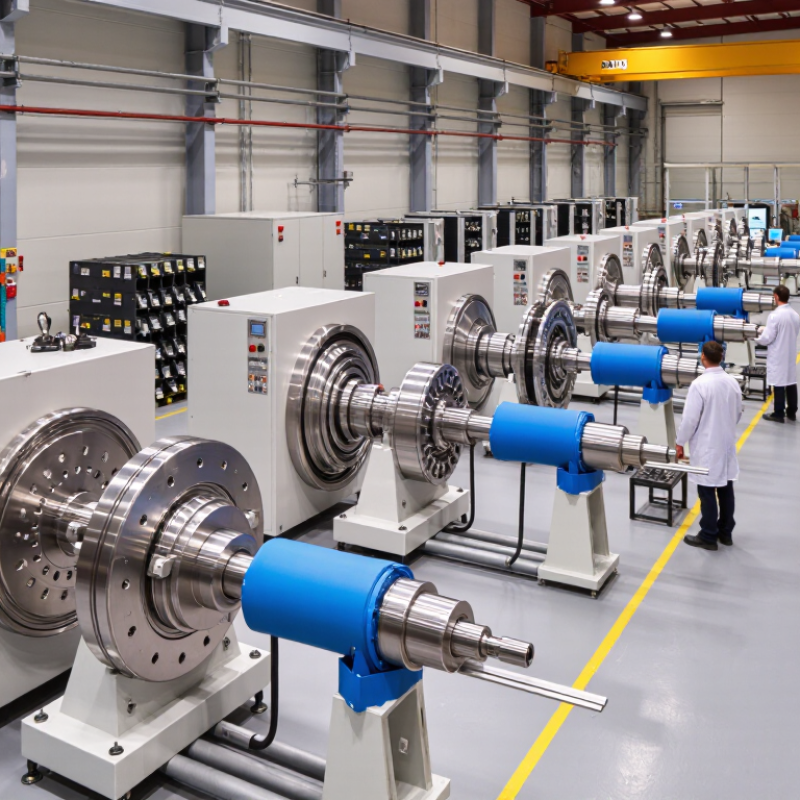
A screw centrifuge separates solids from liquids through controlled rotation and mechanical conveying. Its main parts are a horizontal bowl, an internal screw conveyor, a feed chamber, and separate discharge outlets. The bowl spins at high speed, creating centrifugal force that pushes heavier particles toward the outer wall. Clarified liquid moves toward one outlet, while the screw slowly transports settled solids toward the opposite end.
The difference between bowl speed and screw speed is called differential speed. This setting controls solids residence time and dryness. A slower differential speed usually leaves solids in the bowl longer, often improving dryness but reducing throughput. Feed rate, temperature, particle size, and liquid viscosity also affect performance. In practical operation, small changes can produce visible results. The discharge may become wetter within minutes.
During equipment checks, operators should inspect vibration, bearing temperature, torque, and the clarity of the liquid phase. Excessive torque can indicate overfeeding or compacted solids. Uneven wear on conveyor flights deserves attention. It is not a magic separator. Real process streams change throughout the day, and laboratory results may not match plant conditions. I have found that gradual adjustments are safer than dramatic speed changes. Proper screening, maintenance access, and correct material selection also improve reliability. A screw centrifuge works best when its design matches the actual feed, not an idealized sample.
| No. | Manufacturer Capability Area | What a Screw Centrifuge Does | Typical Engineering Data | Why Global Buyers Should Check It |
|---|---|---|---|---|
| 1 | Solid-Liquid Separation | A decanter centrifuge uses centrifugal force to separate suspended solids from a liquid phase. The rotating bowl creates the separating force while the internal screw conveyor continuously transports solids. | Continuous separation of clarified liquid and dewatered solids; suitable for many slurries containing suspended particles. | Confirm that the proposed machine is designed for the required feed composition, particle size, density difference, and separation objective. |
| 2 | Bowl Rotation Speed | The bowl rotates at high speed to generate centrifugal force. Higher speed generally improves clarification of fine particles but may increase energy use and wear. | Common industrial designs operate from several hundred to several thousand revolutions per minute, depending on bowl diameter and application. | Look for variable-speed control, speed monitoring, vibration protection, and operating limits suitable for the process. |
| 3 | Differential Speed | Differential speed is the speed difference between the bowl and the screw conveyor. It controls solids residence time, conveying capacity, and cake dryness. | Low differential speed usually increases solids residence time and can improve dryness; higher differential speed increases solids throughput. | Ask whether differential speed can be adjusted during operation and whether the control system can respond to changing feed conditions. |
| 4 | Centrifugal Force | Centrifugal force drives denser solids outward toward the bowl wall while the clarified liquid remains closer to the liquid layer near the bowl axis. | The separating force is commonly expressed as relative centrifugal force, or G-force; the actual value depends on bowl radius and rotational speed. | Compare effective G-force with the particle size, density, viscosity, and clarification target of the application rather than using speed alone. |
| 5 | Solids Discharge System | The screw conveyor moves settled solids along the conical section of the bowl toward the discharge ports without interrupting liquid flow. | Continuous discharge is standard for decanter centrifuges; discharge torque and wear protection vary with solids concentration and abrasiveness. | Check torque capacity, overload protection, wear-resistant materials, discharge geometry, and access for inspection and maintenance. |
| 6 | Liquid Clarification Control | The position of the liquid discharge zone influences the liquid-pool depth and the balance between clarification quality and liquid recovery. | Adjustable weirs or similar liquid-level controls are commonly used to adapt the liquid pool to process requirements. | Verify whether the liquid discharge arrangement can be adjusted for different feed rates, viscosities, and required overflow clarity. |
| 7 | Materials and Wear Protection | The bowl, screw flights, feed zone, and discharge area may be exposed to abrasion, corrosion, and chemical attack. | Common construction options include stainless steels, hardened surfaces, carbide protection, and replaceable wear components. | Match material selection to chloride content, pH, temperature, abrasiveness, and cleaning chemicals. Request documented material specifications. |
| 8 | Capacity and Feed Characteristics | Throughput depends on bowl diameter, bowl length, pond depth, differential speed, solids loading, viscosity, and the required dryness or clarity. | Capacity must be determined from actual feed data; nominal capacity alone does not reliably predict performance for every slurry. | Provide representative samples and laboratory data, including flow rate, total suspended solids, particle-size distribution, temperature, and viscosity. |
| 9 | Automation and Safety | Modern systems may monitor bowl speed, differential speed, motor load, vibration, bearing temperature, lubrication, and solids-conveying torque. | Typical safeguards include overspeed protection, vibration alarms, motor overload protection, emergency shutdown, and interlocked covers. | Check electrical standards, control-panel compatibility, remote monitoring, language options, documentation, and compliance with the destination market. |
| 10 | Maintenance and Lifecycle Support | Routine maintenance can include inspection of bearings, seals, wear parts, lubrication systems, differential-drive components, and the bowl interior. | Maintenance intervals depend on operating hours, feed abrasiveness, corrosion risk, vibration levels, and manufacturer service procedures. | Evaluate spare-parts availability, technician response time, service documentation, training, warranty terms, and total lifecycle cost before purchase. |