What Are the Top Parking Lock Types in 2026?
Choosing a Parking Lock in 2026 means matching the device to the space, the user, and the conditions on site. A lock that works beside a private garage may be unsuitable for a shared apartment lot. The main options include manual folding barriers, remote-controlled electric locks, app-connected models, and solar-powered units. Each offers a different balance of cost, convenience, and maintenance. Small details matter: a raised barrier must remain visible at night, and its base needs firm, level ground.
Parking scholar Donald Shoup famously observed, “Parking requirements are a fertility drug for cars.” His comment concerns parking policy, not lock design, but it highlights a useful point: parking spaces shape how people use shared environments. For property owners, the practical question is narrower. Which Parking Lock can reserve a space reliably without creating daily friction? The answer depends on vehicle clearance, how often access changes, and whether users can manage a remote or phone app. Simple can be better.
This guide compares leading lock types by operation, power source, installation, and everyday upkeep. It also considers rain, dust, cold weather, and the occasional forgotten remote. These are not minor details. A battery-powered unit may look convenient until its battery runs low; a manual barrier avoids charging, but requires someone to lower it. Product claims deserve scrutiny, too. Check the stated load rating, warranty, replacement-part availability, and installation instructions before deciding. No single design fits every site. Some trade-offs remain.
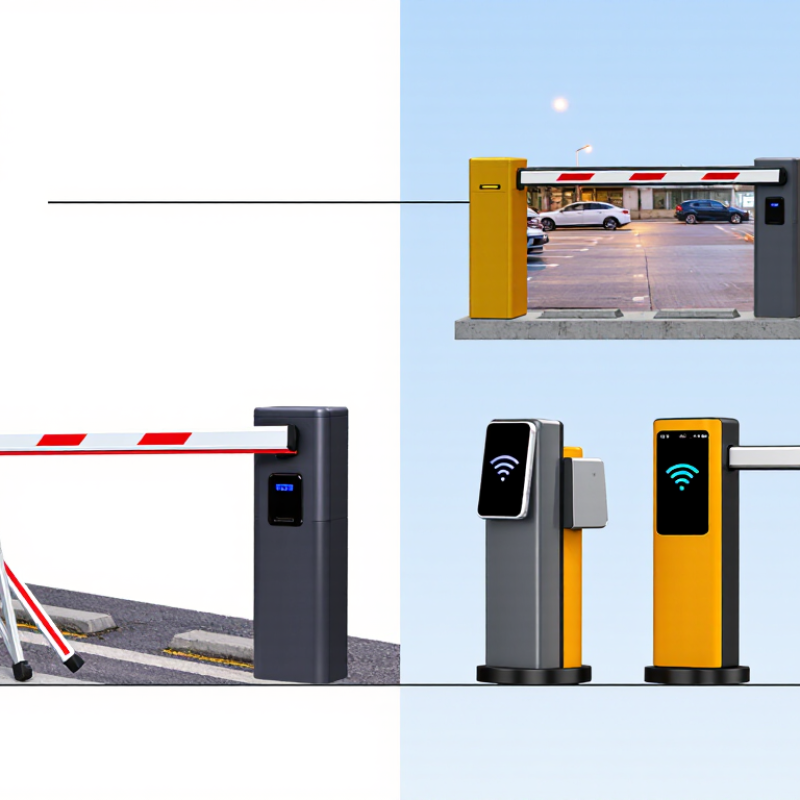
What Parking Locks Are and How They Secure a Space
A parking lock is a compact barrier fixed to the ground or pavement, designed to reserve one parking space. When raised, its body blocks a vehicle from entering. When lowered, it sits close to the surface, allowing the authorized driver to park. Common types include manual fold-down locks, removable posts, and powered models operated by a remote or keypad. Each works differently, but all depend on visibility, secure anchoring, and regular upkeep. A parking lock can discourage casual misuse; it cannot guarantee protection against deliberate damage or vehicle theft.
Not foolproof.
Tips
Check the surface before installation. Sound concrete usually provides a firmer anchor than loose paving, but the pavement’s condition matters. Measure your vehicle’s ground clearance and tire path to avoid scraping the underside. Keep moving parts clear of grit, standing water, and ice.
Choose a lock with a reflective panel if drivers approach in dim light. For powered models, check the battery and test operation regularly; a dead battery may leave the barrier stuck.
Small detail, big inconvenience.
The right type depends on how often the space is used, who needs access, and whether maintenance is realistic. Older or uneven pavement can make installation less straightforward, so inspect the mounting after heavy rain or frost.
The Main Parking Lock Types Available in 2026
Parking locks in 2026 generally fall into three practical groups: manual fold-down units, electrically operated barriers, and rising bollards. A manual lock folds flat when released and is raised by hand to reserve a space. It suits low-traffic locations with nearby users, though bending down in rain or snow can become tiresome. Simple, but not effortless.
Electric parking locks lift or lower using a remote, keypad, or connected control system. They are useful when drivers need to operate a barrier from inside a vehicle. Check battery life, charging access, weather resistance, and whether the unit has a manual release during a power failure. A convenient feature is only useful when it works reliably.
Rising bollards extend vertically from the ground and can protect wider entrances or defined vehicle access points. They usually need more careful groundwork, including suitable drainage and clearance beneath the surface. For a single parking bay, a compact fold-down design may be less disruptive.
Site conditions matter: uneven paving, heavy vehicle use, and poor drainage can change which type performs well. The specifications deserve a close read; product descriptions sometimes make installation sound easier than it is.
How Manual, Remote-Controlled, and Smart Locks Work
What Are the Top Parking Lock Types in 2026?
How Manual, Remote-Controlled, and Smart Locks Work
Manual parking locks use a key or hand-operated lever to raise and lower a barrier. They are straightforward and do not rely on batteries, signals, or an app. You must leave your vehicle to operate one, which can feel inconvenient in rain or tight spaces. Check that the hinge moves smoothly and the lock engages fully. Simple, but not effortless.
Remote-controlled locks use a small motor and a handheld transmitter. Press a button, and the barrier rises or folds down, usually within a few seconds. Their convenience depends on charged batteries, a working remote, and a clear signal. Smart locks may add app controls, schedules, alerts, or access sharing. Some models rely on Wi-Fi or Bluetooth, so connection quality and setup matter. More features do not always mean fewer hassles; that is easy to underestimate.
Tips: Before choosing, measure the space and check the lock’s ground clearance. Look for a manual release in case power fails. Keep the remote dry, and test the barrier after installation. Smart functions can be useful, but I would still want a dependable backup.
How Parking Lock Types Differ in Security and Installation
What Are the Top Parking Lock Types in 2026?
How Parking Lock Types Differ in Security and Installation
Manual folding locks are simple: unlock them with a key, lower the steel arm, and drive over the space. They need no wiring, but someone must operate them every time. Remote electric locks raise and lower with a handheld control. They offer easier daily access, yet need a power source and occasional battery checks. App-connected models add access logs and remote sharing, but rely on a stable connection. Convenience is not the same as stronger physical security.
Installation changes the real-world choice. Surface-mounted units usually need a level, solid base and securely anchored bolts; underground cables can complicate the job. Recessed models sit flush with the ground, but require excavation, drainage planning, and more repair access. The National Insurance Crime Bureau’s 2023 vehicle-theft report recorded 1,020,729 stolen vehicles in the United States. That figure concerns vehicle theft, not parking-space misuse, so a parking lock should not be treated as a theft-proof barrier. I still think this distinction is easy to overlook.
Tips: Measure the vehicle’s clearance and the space’s slope before buying. Check how the lock behaves during a power failure. Fit matters. For shared sites, test access with the people who will use it daily. One overlooked detail can become a recurring annoyance.
What Are the Top Parking Lock Types in 2026?
Indicative comparison of physical deterrence and installation complexity
Ratings use a qualitative 1–5 scale, where 5 is higher. Surface-mounted manual folding locks are generally simpler to install; powered surface-mounted locks add electrical or charging considerations; in-ground retractable locks require ground works. Deterrence depends on the specific design and site conditions. These are comparative guidance ratings, not standardized test results.
Choosing a Parking Lock for Your Site and Daily Needs
A parking lock should match how a space is used, not just how it looks in a product photo. For a private driveway or a space used by one regular driver, a manual folding lock is simple and does not depend on power. It works well when someone can get out of the vehicle to raise or lower it. For shared sites with frequent arrivals, an automatic lock operated by a remote or keypad can reduce that daily effort. Convenient, but not maintenance-free.
Before choosing, measure the bay and check the surface. A lock placed too close to a wheel path can be awkward to use, while uneven paving may affect its mounting. Look for a design suited to local rain, dust, and temperature changes, and ask how its battery or power supply is checked. For visitor spaces, consider whether different users can operate it without instructions. That detail is easy to overlook. I would also leave room for a person to approach and lower the barrier safely; a tight space can make even a good lock frustrating. The best fit may be less automated than expected. A brief site inspection can reveal that.