
What Is a Siboasi Badminton Machine?

A Siboasi Badminton Machine is a training device designed to repeat demanding badminton shots with measurable consistency. It can feed shuttles at selected speeds, angles, intervals, and frequencies. This creates a focused practice environment for beginners, club players, coaches, and competitive athletes.

Imagine standing on the baseline while shuttles arrive every few seconds. One sequence may target the backhand corner. Another may alternate between the body and forehand side. This repetition helps players develop timing, recovery steps, racket preparation, and movement discipline. The machine cannot replace a skilled coach. It does not fully understand pressure, fatigue, match strategy, or a player’s changing confidence.

Wan Houquan, founder and chairman of Siboasi, is closely associated with the company’s sports-technology development. His widely used statement, “Let sports equipment serve everyone,” reflects the broader purpose behind automated training equipment. A Siboasi Badminton Machine aims to make structured practice more accessible, not merely more technical.

Still, practical judgment matters. Incorrect launch angles can reinforce poor footwork. Excessive speed may create rushed swings instead of better technique. Players should begin with controlled settings and adjust one variable at a time. Coaches can observe the contact point, balance, and recovery position between feeds. That human feedback remains essential.

This guide explains what a Siboasi Badminton Machine is, how it operates, and where it fits within modern badminton training. It also considers its limitations, because impressive automation does not always produce intelligent practice.
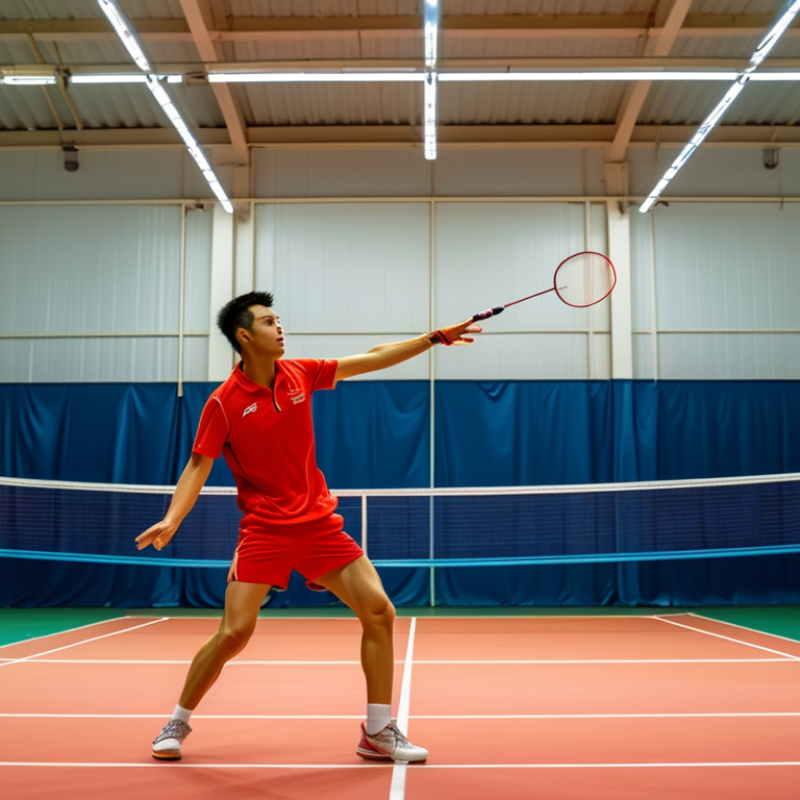
What Is a Siboasi Badminton Machine?

What Is a Siboasi Badminton Machine?

A badminton machine is a training device that feeds shuttlecocks at controlled speeds, angles, and intervals. It helps players repeat strokes without depending on a partner. Many models support drills for clears, drops, drives, smashes, and defensive reactions. A coach or experienced player can adjust the settings according to skill level.

In practical use, the machine usually sits behind the baseline and sends shuttles toward marked areas. A beginner may start with slow, high feeds and simple footwork. An advanced player may choose faster shots with changing directions. Battery life, feeding consistency, remote controls, and wheel adjustment affect the training experience. The device should also hold a stable position during repeated impact.

It is not a replacement for coaching. Machine-fed shuttles follow programmed patterns, while real opponents create unexpected timing and deception. I have found repetition useful for improving contact height and recovery steps. However, some drills can become too mechanical. That weakness matters. Players should check their posture, grip pressure, and movement quality between feeding cycles. Regular inspection also helps prevent misfeeds caused by dust, worn wheels, or poorly placed shuttles.
How a Siboasi Badminton Machine Works

What Is a Badminton Machine?

A badminton machine is a training device that feeds shuttlecocks without a human partner. Its main parts include a shuttle holder, rotating wheels, a control panel, and an adjustable launch frame. The wheels grip each shuttle and release it at a selected speed. Changing the wheel angle alters the shuttle’s height, distance, and direction. Some models also rotate from side to side, creating cross-court or corner-to-corner drills.

How a Badminton Machine Works

Before practice, place the machine on a stable court surface and aim the launch head toward the target area. Load the shuttlecocks carefully, because bent feathers can disturb the feeding cycle. Choose settings for speed, frequency, elevation, and horizontal movement. A low setting can produce net shots, while a higher angle sends shuttles toward the rear court. The timing changes.

From practical testing, consistent placement matters more than maximum speed. A small shift in the base can move the landing point by several feet. I usually begin with slow feeds, check three or four landings, then adjust one setting at a time. Not every feed lands cleanly. Humidity, shuttle quality, and wheel pressure can affect accuracy. Players should also leave space around the machine and avoid standing in its direct launch path. The device supports repetition, but it cannot read a player’s posture or correct a late racket swing. That limitation deserves attention.

Key Features and Training Functions

What Is a Siboasi Badminton Machine?

Key Features and Training Functions

A badminton machine is a training device that feeds shuttlecocks at controlled speeds, angles, and intervals. It helps players practise without relying on a partner. In regular coaching sessions, this can make repetition more consistent. A player can focus on footwork, timing, and racket preparation.

Most machines offer adjustable launch speed and feeding frequency. Some models change the shuttle’s height and direction automatically. These settings support drills for clears, drops, drives, smashes, and defensive returns. A random mode can create less predictable rallies. That matters because real opponents rarely send identical shots. Some machines also store many shuttlecocks, reducing pauses during practice. Remote controls or simple panels make adjustments easier between drills.

Small details affect training quality. Stable wheels help with court movement, while a strong frame reduces unwanted shaking. The feeder should release shuttles smoothly, not throw them at uneven distances. Safety still needs attention. Players should stand clear during setup and test a slow setting first. I have found that high speed can look impressive but may weaken technique. More repetition is not always better. A short drill with accurate footwork often teaches more than a long, rushed session. The machine also cannot read an opponent’s body language or create genuine match pressure. Players still need human rallies, changing pace, and uncomfortable mistakes.

What Is a Badminton Machine? Key Features and Training Functions

A badminton machine is a programmable training device that feeds shuttles at controlled speeds, angles, intervals, and locations. The regulation court dimensions below show the main target areas used for movement, stroke, and placement drills.

Training relevance: Programmable feeds can direct shuttles toward the front court, midcourt, rear court, or singles and doubles sidelines. This helps players repeat footwork patterns, overhead strokes, net shots, defensive returns, and recovery movements with consistent timing.

Common Uses for Players and Coaches

What Is a Badminton Machine?

A badminton machine is a programmable training device that feeds shuttlecocks at selected speeds, angles, and intervals. It helps players repeat strokes without waiting for a partner. A coach can set a high serve, flat drive, net shot, or deep clear. The machine then delivers each shuttle toward a defined court area. This makes practice measurable. A player might complete 50 backhand lifts in ten minutes, then review consistency, footwork, and recovery position.

Its value becomes clearer in busy clubs. The Badminton World Federation has reported that more than 300 million people play badminton worldwide, creating strong demand for efficient practice tools. In the United States, the Sports & Fitness Industry Association’s 2024 participation report recorded badminton as a widely practiced racket sport, supported by growing recreational interest. These figures do not prove that machines improve every player. They show why structured training matters.

Players commonly use machines for timing, defensive reactions, and repeated movement patterns. Coaches use them when one athlete needs extra volume or when court space is limited. A beginner can start with slow, high feeds. An advanced player can face random placements and shorter recovery times. Real experience suggests one weakness: repetition can become robotic. Without coaching, players may repeat poor posture or late contact. The machine should support observation, not replace it. Small adjustments matter, such as moving the base 30 centimeters wider or lowering the feed angle slightly.

What Is a Siboasi Badminton Machine? - Common Uses for Players and Coaches

Data Dimension What It Means Common Use Practical Value for Players and Coaches
Basic Definition An automated training device that feeds badminton shuttlecocks at repeated intervals and selected trajectories. Repetitive practice without a human feeder. Creates consistent drills and allows athletes to focus on technique, movement, and timing.
Feed Direction Depending on the model, shuttlecocks may be projected toward areas such as the forecourt, midcourt, rear court, or both sides. Net shots, lifts, clears, drives, and movement drills. Helps players repeat specific court patterns and improve recovery positioning.
Feed Frequency The interval between shuttle deliveries can usually be adjusted to match the drill and the athlete’s ability. Slow technical practice, continuous rallies, and high-tempo conditioning. Supports gradual progression from controlled movements to faster reaction training.
Shot Repetition The machine can deliver a repeated sequence that targets one stroke or a combination of strokes. Forehand and backhand clears, smashes, drives, drops, and defensive blocks. Builds consistency while reducing the interruptions common in manually fed drills.
Beginner Training Simple, predictable feeds give new players more time to prepare and make contact. Grip practice, ready position, basic footwork, and contact-point training. Makes early learning less dependent on a partner’s feeding accuracy.
Intermediate Training More varied directions and shorter intervals can be used as control improves. Multi-point footwork, transition drills, and attacking combinations. Develops movement efficiency, stroke recovery, and shot selection under pressure.
Advanced Training Faster sequences and less predictable patterns can challenge reaction speed and endurance. Defensive reaction work, attack-to-defense transitions, and match-intensity routines. Adds high-volume practice while allowing coaches to isolate technical weaknesses.
Coach Application A coach can set a repeatable drill and observe the athlete instead of feeding every shuttle. Technical assessment, small-group stations, and individualized corrections. Improves coaching efficiency and makes training volume easier to organize.
Solo Practice Players can perform structured drills without requiring a training partner for every repetition. Footwork circuits, stroke repetition, and fitness-oriented routines. Provides flexible practice when court time or partner availability is limited.
Training Consistency The same programmed feed can be repeated across multiple sessions. Before-and-after skill checks and progress monitoring. Makes it easier to compare performance under similar practice conditions.
Physical Conditioning Repeated movement to different court zones can raise the workload of a session. Lunge recovery, repeated jumps, change-of-direction work, and rally conditioning. Combines badminton-specific movement with technical repetition.
Important Limitation A machine delivers repeatable feeds but does not reproduce every tactical decision, spin variation, or deception used by an opponent. Use alongside partner drills, coached games, and match play. Provides technical repetition, but should complement rather than replace realistic competition practice.

Note: Exact feed angles, speeds, capacities, and programmable functions vary by machine model and setup.

How to Choose and Use the Right Model

A Siboasi badminton machine is an automated training device that feeds shuttles at controlled intervals. Choosing the right model depends on your court, skill level, and training goal. The Badminton World Federation’s development materials estimate that over 300 million people play badminton worldwide. Demand is broad, but one machine cannot suit every player. Start with control.

For beginners, choose adjustable speed, simple elevation, and a moderate shuttle capacity. Advanced players need wider horizontal movement, random sequences, and programmable drills. A machine that feeds 120 shuttles may support longer sessions, yet extra capacity can increase weight and setup time. Measure twice. Check battery duration, wheel consistency, remote range, noise, and service availability before purchasing. Sports equipment reports often overlook these practical details.

The 2024 SFIA Topline Participation Report recorded about 3.9 million badminton participants in the United States during 2023. Participation data varies by survey method, so I would not treat one figure as absolute. Use the machine on a stable surface, begin with low speed, and stand outside the feeding lane. Keep it simple. Record shuttle placement and error rates after each session. I often overestimate how much random feeding helps; beginners may improve faster with predictable shots first. Inspect the wheels and feeder after every practice, especially when feather shuttles leave dust.

Translate