Welding safety practices will face sharper scrutiny in 2026 as fabrication shops adopt automation, advanced alloys, and higher production targets. The hazards remain familiar: bright arc radiation, hot metal, compressed gases, electric shock, noise, and invisible welding fumes. A clean floor does not guarantee a safe workplace.
The International Agency for Research on Cancer classifies welding fumes as carcinogenic to humans. NIOSH recommends controlling exposure through local exhaust ventilation, enclosure, substitution, and suitable respiratory protection. OSHA also identifies fires, explosions, burns, eye injuries, and toxic exposures as major welding hazards. These findings make ventilation a production requirement, not merely a maintenance detail.
Evidence should guide daily decisions. The U.S. Bureau of Labor Statistics reported 5,283 fatal occupational injuries in 2023 across American workplaces. That figure is not welding-specific, but it shows why supervisors must treat near misses seriously. A forgotten gas cylinder cap, a damaged torch lead, or a blocked extraction hood can change a routine shift within seconds.
Practical controls should be visible. Inspect leads before striking an arc. Keep cylinders upright and secured. Test airflow near the fume source. Separate hot work from combustible materials. Confirm that face shields, gloves, flame-resistant clothing, and hearing protection match the task. Workers should also understand the limits of each control.
No checklist is perfect. Fatigue, rushed repairs, and poor communication still create weak points. Effective Welding safety practices therefore require competent supervision, worker feedback, documented inspections, and continuous review against OSHA guidance, NIOSH research, and applicable ISO 45001 principles. Safety improves when managers examine uncomfortable failures instead of hiding them.
2026 How to Improve Welding Safety Practices?
OSHA’s estimate of 500,000 workers exposed to welding fumes shows the scale of the problem. It is not a small workshop issue. Fume exposure can occur during arc welding, cutting, brazing, and grinding. The visible haze is only part of the hazard. Some harmful particles are too small to see.
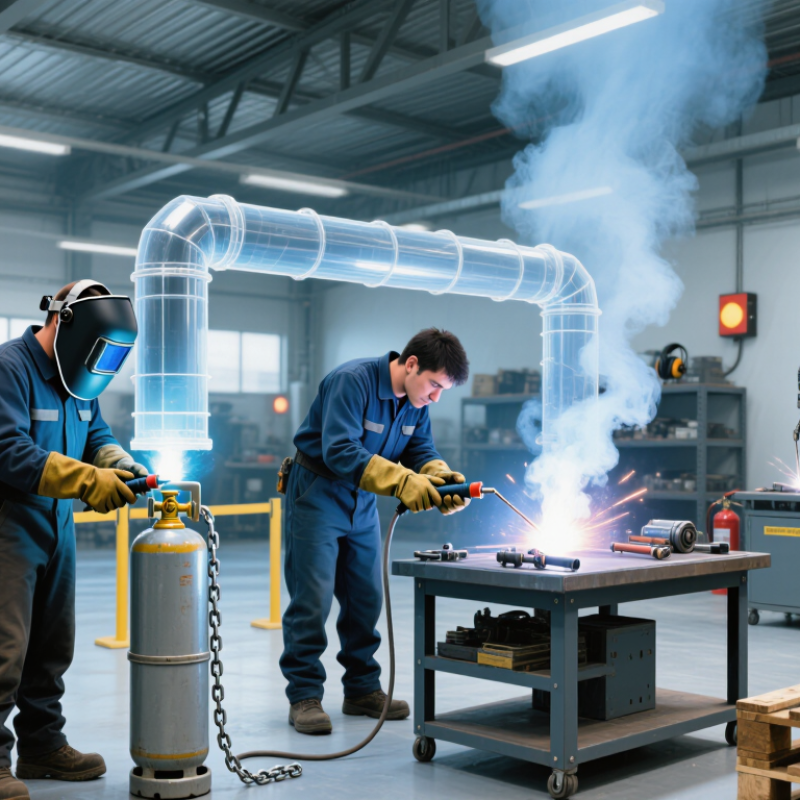
A practical safety review should begin at the welding point. Check whether local exhaust ventilation captures fumes near the arc. Watch the airflow with smoke testing, but never use smoke near active flames. Keep the worker’s head outside the fume path. Respiratory protection may be necessary when ventilation cannot control exposure. It must fit the worker and support a documented protection program.
Other hazards deserve equal attention. Sparks can travel beneath doors or through floor openings. A trained fire watch should inspect nearby areas before and after hot work. Inspect cables for damaged insulation, secure gas cylinders upright, and keep oxygen equipment away from oil. Face shields, proper gloves, flame-resistant clothing, and suitable eye protection reduce common injuries.
Our first checklist missed ventilation performance. That was a real weakness. We focused on equipment condition instead of worker breathing zones. Daily observations can reveal habits that written procedures overlook. Record exposure concerns, near misses, and corrective actions. Improve the process when evidence shows it is failing.
Welding fumes demand more than an open workshop door. IARC classified welding fumes as carcinogenic to humans in its 2017 Monographs, Volume 118. Local exhaust ventilation should capture the plume near its source. A worker’s face should not sit above the smoke. Respiratory protection may still be necessary after exposure assessment. I sometimes see ventilation positioned too far away. That mistake deserves review.
Noise, radiation, fire, and electric shock require separate checks. OSHA’s occupational noise standard sets an 85 dBA action level and a 90 dBA eight-hour permissible exposure limit. Use dosimeters near grinders and arc equipment, not only at the room entrance.
Welding arcs emit ultraviolet radiation that can injure eyes and skin. IARC also classifies ultraviolet radiation from welding as carcinogenic. Correct lens shade, covered skin, and intact curtains matter. Small gaps matter.
Fire controls should remove combustibles before sparks begin. Inspect nearby walls, floors, and hidden spaces. Keep suitable extinguishing equipment immediately accessible. For electrical safety, inspect leads, electrode holders, grounding connections, and gloves before every shift. Never weld beside standing water or with damaged insulation. OSHA identifies electric shock as a major welding hazard.
A checklist helps, but it can become meaningless paperwork. Supervisors should watch the actual work, question shortcuts, and record near misses.
References: IARC Monographs, Volume 118; OSHA 29 CFR 1910.95; OSHA Welding, Cutting, and Brazing Safety.
OSHA 1910.252 requires practical controls around welding areas. Use local exhaust ventilation to capture fumes near the arc, not several feet away. Keep airflow steady, but avoid directing contaminated air toward nearby workers. Check ducts, filters, and capture hoods before each shift. A blocked hood may look functional while providing little protection. General ventilation alone may not control hazardous fumes effectively.
Tips: Keep welding screens closed. Inspect them for gaps and damage. Position screens to protect workers from arc rays, sparks, and flying metal. Remove combustible materials from the work area whenever possible, following OSHA requirements. Maintain suitable fire extinguishers nearby. Assign a trained fire watch when conditions require it, especially near walls, floors, or hidden spaces. Small openings can hide serious heat exposure.
A clean floor helps, but it does not guarantee fire prevention. Inspect the opposite side of partitions before striking an arc. Cover cracks and openings with suitable fire-resistant materials. Do not weld on containers that previously held flammable substances unless they are properly cleaned and verified safe. Supervisors should confirm ventilation, screens, and fire controls before work begins. In practice, rushed inspections are common. That is where procedures need improvement. Record findings, correct deficiencies, and review the controls after unusual jobs or layout changes.
Welding safety in 2026 must address more than sparks, fumes, and ultraviolet radiation. Noise also deserves careful attention. When an eight-hour exposure reaches a 90-dBA hearing-protection action level, workers should wear suitable hearing protection. Do not judge noise by discomfort alone. Grinding, chipping, compressed air, and nearby fabrication equipment can raise exposure quickly.
A competent safety assessment should measure noise with a calibrated dosimeter. Record the worker’s actual exposure, not only the sound level beside the welding booth. Choose earplugs, earmuffs, or both according to exposure, fit, and communication needs. Hearing protection must work with helmets, face shields, respirators, and safety glasses. Poor compatibility creates gaps and encourages removal. Fit testing is valuable, especially for workers who struggle to insert earplugs correctly. Small details matter.
Check the equipment before each shift. Replace damaged cushions, dirty plugs, and stretched headbands. Keep hearing protection available at the work area, not locked in a distant cabinet. Workers still need to hear alarms and instructions, so add visual signals when protection reduces communication. Local rules may use a different action level or calculation method; verify the applicable requirement. I have seen teams select the highest-rated device and assume the problem is solved. That approach is simple, but often incomplete. Comfort, consistent use, and measured exposure can matter more than impressive packaging.
| Safety Dimension | Realistic Exposure or Requirement | Recommended PPE or Control | Selection Criteria | Verification and Good Practice |
|---|---|---|---|---|
| Noise exposure below 85 dBA TWA | Daily noise exposure remains below the occupational hearing-conservation action level when measured as an 8-hour time-weighted average. | Hearing protection is not normally required solely because of the measured noise level, but voluntary use may be offered. | Use comfortable, properly fitting earplugs or earmuffs when workers prefer additional protection or when exposure may change. | Repeat measurements when welding processes, tools, work areas, or production schedules change. |
| 85–89 dBA TWA | At or above 85 dBA TWA, workers may meet the hearing-conservation action level under commonly applied occupational noise criteria. | Hearing-conservation program; hearing protectors when required by the applicable regulation or when engineering and administrative controls do not sufficiently reduce exposure. | Provide earplugs, earmuffs, or a combination based on fit, compatibility with the welding helmet, communication needs, and exposure duration. | Provide noise training, baseline and periodic audiometric testing where required, and evaluate proper fit and consistent use. |
| 90–99 dBA TWA | Exposure reaches or exceeds the commonly referenced 90 dBA 8-hour permissible exposure limit under an OSHA-style 5-dB exchange-rate criterion. | Use engineering or administrative controls first; require suitable hearing protection where exposure remains above the limit. | Choose protection that reduces the estimated protected exposure to 90 dBA or below without creating communication or safety hazards. | Use a noise dosimeter or calibrated sound-level meter and document exposure measurements and corrective actions. |
| 100–109 dBA TWA | High exposure level with a substantially increased risk of hearing damage if unprotected. | Double hearing protection, such as earplugs plus earmuffs, may be appropriate when a single protector cannot provide sufficient attenuation. | Confirm that the combined protection is compatible with the welding helmet, face shield, safety glasses, respirator, and communication equipment. | Use fit testing or individual attenuation estimation when available; do not rely only on the labeled Noise Reduction Rating. |
| 110–115 dBA TWA | Very high exposure requiring immediate attention to source reduction and restricted exposure time. | Engineering controls, isolation, enclosure, scheduling, and double hearing protection should be evaluated together. | Use protectors selected by a qualified safety professional and verify that workers can still hear alarms and safety instructions. | Restrict access, post hazard warnings, and reassess exposure after controls are implemented. |
| Impulse or impact noise | Short-duration peaks from chipping, grinding, hammering, metal impact, or compressed-air use may be hazardous even when an 8-hour average appears acceptable. | Use hearing protection suitable for both continuous and impact noise; consider dual protection for high peak levels. | Evaluate peak sound-pressure levels separately from the 8-hour TWA. Avoid protectors that interfere with other required PPE. | Measure representative tasks and include non-welding activities performed in the same work area. |
| Earplug selection | Disposable or reusable earplugs can provide effective protection when correctly inserted and worn continuously. | Formable foam, pre-molded, or level-dependent earplugs may be selected according to the task and user needs. | Check ear-canal fit, hygiene, compatibility with communication devices, and the worker’s ability to insert the protector correctly. | Train workers to roll, insert, and hold foam earplugs correctly; replace dirty, damaged, or poorly fitting protectors. |
| Earmuff selection | Earmuffs are useful when workers need frequent removal or have difficulty inserting earplugs. | Use circumaural earmuffs with intact cushions and a secure headband. | Verify a complete seal around the ear. Safety glasses, welding helmets, hard hats, hair, and facial hair can reduce the seal. | Inspect cushions and headbands regularly; replace components when they become cracked, compressed, or damaged. |
| Noise Reduction Rating calculation | A labeled NRR is a laboratory value and does not represent the exact protection achieved by every worker. | Use the protector’s NRR as an initial screening value, not as a substitute for fit testing. | For an OSHA-style estimate in a workplace measured in dBA: estimated attenuation = (NRR − 7) ÷ 2. Protected level = measured TWA − estimated attenuation. | Example: 100 dBA with an NRR of 25 gives approximately 9 dB estimated attenuation, resulting in about 91 dBA; a higher level of protection or double protection should be evaluated. |
| Welding helmet and eye protection | Arc welding can produce intense ultraviolet, infrared, and visible radiation, while grinding and chipping can create flying particles. | Use a properly rated welding helmet or filter lens, plus safety glasses with side protection underneath where required. | Select filter shade according to the welding process, current, electrode size, and applicable safety guidance. Use impact-rated eye protection for grinding. | Inspect lenses, auto-darkening functions, shells, and seals before use. Replace cracked, deeply scratched, or defective components. |
| Respiratory protection | Welding fumes may contain metal oxides and other contaminants; risk depends on the process, base metal, coatings, ventilation, and duration. | Use local exhaust ventilation first. Where respirators are necessary, use a compliant respiratory-protection program and an appropriate respirator. | Base selection on exposure assessment, contaminant identity, oxygen level, assigned protection factor, fit, facial hair, and compatibility with the helmet. | Provide medical evaluation, fit testing, training, maintenance, and a written program when tight-fitting respirators are required. |
| Protective clothing and gloves | Welding creates heat, sparks, molten metal, sharp edges, and ultraviolet radiation. | Use flame-resistant clothing, welding gloves, sleeves, aprons, and safety footwear appropriate to the process. | Choose materials and garment coverage based on heat, sparks, molten-metal exposure, movement, and the risk of snagging. | Keep clothing clean and free from flammable contaminants. Inspect gloves and garments before each shift and replace damaged items. |
| PPE compatibility | Multiple PPE items can interfere with one another and create gaps in protection. | Use a coordinated PPE system covering hearing, eyes, face, respiratory system, hands, body, and feet. | Check that hearing protectors do not break the respirator seal, that helmet straps do not displace earmuffs, and that eye protection remains secure. | Conduct a worker trial, observe task performance, and correct interference before authorizing routine use. |
| Training and continuous improvement | Incorrect selection, poor fit, and inconsistent use can eliminate much of the intended protection. | Provide task-specific training on hazards, limitations, inspection, cleaning, storage, donning, doffing, and replacement. | Use worker feedback, exposure data, incident reviews, and changes in equipment to update the PPE assessment. | Review the program at least annually and whenever processes, materials, equipment, regulations, or exposure results change. |
| Important technical note: The 90 dBA value is commonly used as an 8-hour permissible exposure limit under an OSHA-style noise criterion, while 85 dBA TWA is commonly used as the hearing-conservation action level. Always verify the requirements applicable to the work jurisdiction and conduct a documented exposure assessment before selecting PPE. | ||||
In 2026, welding safety should be measured through evidence, not confident impressions. An annual audit is not enough. Safety leaders should schedule monthly spot checks on work areas, ventilation, cable condition, gas cylinders, and fire controls. Auditors can photograph blocked exits, record missing barriers, and interview welders privately. These details reveal routine weaknesses that paperwork often hides. Each finding needs an owner, a deadline, and documented verification.
Training rates should show more than attendance.
Track completed courses, practical assessments, refresher training, and overdue qualifications by work team. A worker may sign a roster but still struggle with equipment inspection or confined-space procedures. Supervisors should observe a short task and record whether the worker identifies hazards before striking an arc. Keep the scoring simple. Complex forms are often ignored.
Incident data should include injuries, burns, fires, equipment damage, and near misses. Compare monthly numbers with hours worked and welding volume, rather than using raw totals alone. Investigate repeated events, such as damaged gloves or poor cable placement, through root-cause interviews. A declining report count may look positive, but it can also indicate weak reporting trust. Perfect audit scores deserve questions. People may be correcting the checklist, not the hazard. Reviewers should revisit closed actions and ask workers what still feels unsafe.