What Are the 2026 Best Engineering Fabrication Solutions?

In 2026, the best Engineering fabrication solutions will be judged by more than speed or low pricing. They must deliver accurate parts, repeatable quality, safer workflows, and measurable value across the product lifecycle. CNC machining, robotic welding, additive manufacturing, laser cutting, and hybrid production each offer distinct advantages. The right choice depends on material, tolerance, geometry, volume, and intended service conditions.

Dr. John A. Schey, a respected manufacturing engineer and author, wrote, “Manufacturing is the transformation of materials into useful products.” That principle remains practical today. A fabricated bracket is not successful merely because it leaves the machine quickly. Its edges must be clean, its holes aligned, and its material traceable. Engineers should also examine inspection records, operator experience, equipment maintenance, and documented process controls before trusting a supplier.

Real workshops reveal complications. A highly automated line may still struggle with unusual alloys or frequent design changes. A smaller fabricator may provide better communication, but lack production capacity. No ranking is perfect. Cost estimates can also hide finishing, tooling, transport, or rework expenses. Therefore, this guide compares 2026 fabrication methods through technical performance, scalability, sustainability, reliability, and practical experience. It also considers where each solution can fail. That reflection matters. The strongest Engineering fabrication solutions are not always the newest ones; they are the solutions that consistently produce safe, functional, and verifiable results.

What Are the 2026 Best Engineering Fabrication Solutions?

Defining Engineering Fabrication Solutions and Their 2026 Role

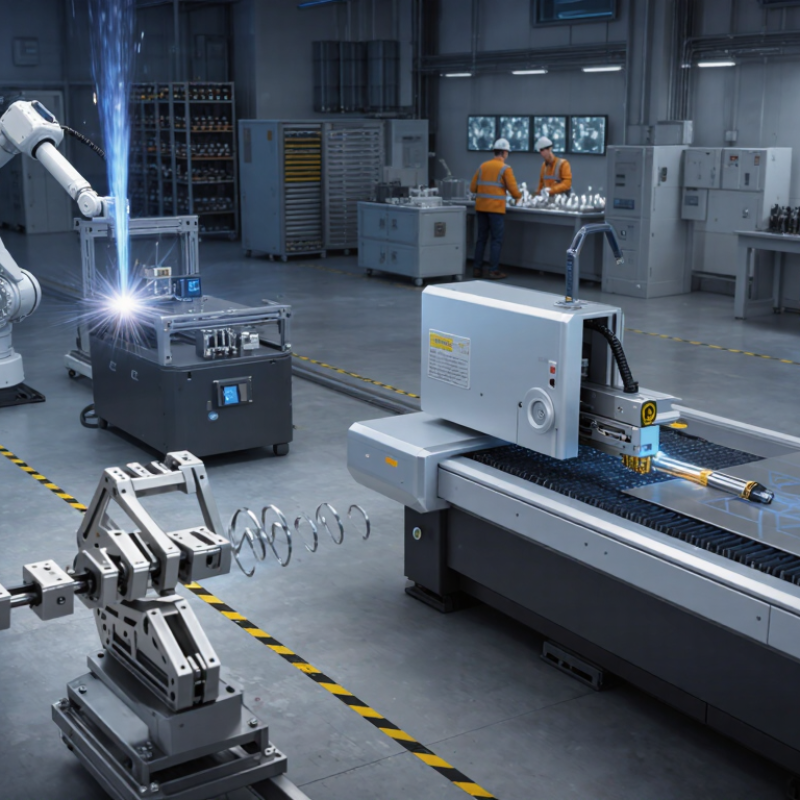
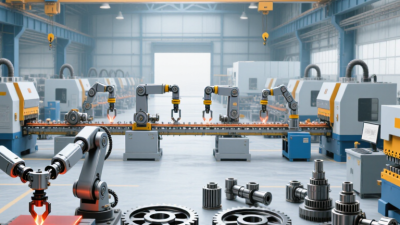
Engineering fabrication solutions combine design, material selection, machining, forming, welding, finishing, and quality verification. They turn digital specifications into physical components. In a modern workshop, this may mean a stainless-steel bracket leaving a laser cutter, followed by robotic welding and dimensional inspection. The process must balance strength, cost, speed, traceability, and repairability.

Data supports this shift. The International Federation of Robotics reported 541,302 industrial robots installed worldwide in 2023, a 10% annual increase. This growth makes automation central to 2026 fabrication planning, but automation alone is not a solution. Skilled engineers still validate tolerances, heat distortion, material behavior, and production risks. The World Economic Forum’s Future of Jobs Report 2025 estimates that 39% of workers’ core skills may change by 2030. Fabrication teams therefore need practical digital skills, not only machine access.

In 2026, strong engineering fabrication solutions will connect simulation, flexible machinery, inspection data, and experienced judgment. Digital twins can expose weak joints before cutting begins. Inline sensors can identify drift during production. Yet these systems can create false confidence when input data is incomplete. That happens more often than expected. My view is imperfect but practical: the best solution is rarely the newest one. It is the process that produces consistent parts, documents decisions, and allows a human engineer to challenge the result. Industry guidance from NIST also emphasizes interoperable manufacturing data and reliable measurement, both essential for repeatable fabrication.

What Are the 2026 Best Engineering Fabrication Solutions?

Industrial automation is becoming a defining engineering fabrication solution for 2026. Global annual industrial robot installations reached more than half a million units in 2023, highlighting the growing role of automated welding, CNC handling, material movement, inspection, and flexible production cells.

The chart shows annual industrial robot installations worldwide, a measurable indicator of investment in automated fabrication and manufacturing systems. Data source: International Federation of Robotics, World Robotics reports. The 2026 role of these solutions is expected to center on higher throughput, repeatable quality, safer operations, and more adaptable production.

Comparing Materials, Processes, and Manufacturing Technologies

What Are the 2026 Best Engineering Fabrication Solutions?

In 2026, the best fabrication solution depends on the part’s function, environment, and production volume. Aluminum remains useful for lightweight frames and thermal components. Stainless steel suits corrosive areas, medical equipment, and demanding industrial assemblies. Advanced composites can reduce weight, but they require careful inspection and controlled curing.

Process selection matters as much as material choice. CNC machining delivers tight tolerances for complex metal parts. Laser cutting supports fast sheet fabrication with clean edges. Additive manufacturing helps create prototypes, internal channels, and low-volume components. For repeated production, automated forming and robotic welding can improve consistency. However, automation does not remove risk. Poor fixtures, unstable parameters, or inaccurate drawings still create defective parts. I have seen efficient equipment produce weak results when the design ignored assembly access.

Tips: Define load, temperature, tolerance, and surface requirements before selecting a process. Request material certificates and inspection records. Compare the full cost, including tooling, finishing, maintenance, and rejected parts. Test a representative sample before approving larger production. Do not choose a newer technology simply because it sounds advanced. A familiar process may deliver better reliability, although this assumption should still be tested.

What Are the 2026 Best Engineering Fabrication Solutions? — Comparing Materials, Processes, and Manufacturing Technologies

Typical engineering ranges are indicative and depend on machine capability, part geometry, material grade, inspection method, and production conditions.
Fabrication Solution Typical Materials Best-Fit Production Volume Typical Dimensional Capability Typical Surface Finish Design Strengths Main Limitations Relative Tooling Requirement Relative Unit Cost Typical 2026 Use Case
CNC Milling and Turning Aluminum, steel, stainless steel, brass, titanium, engineering plastics 1–10,000+ parts Approximately ±0.01 to ±0.05 mm for well-controlled features Approximately Ra 0.8–3.2 µm after standard machining High accuracy, strong finished parts, broad material selection, excellent repeatability Material waste can be significant; internal channels and complex undercuts may require special tooling or multiple setups Low; uses cutting tools and workholding rather than dedicated molds Medium to High Precision housings, shafts, fixtures, prototypes, and low-to-medium volume components
Sheet Metal Laser Cutting and Bending Carbon steel, stainless steel, aluminum, copper, galvanized sheet 10–100,000+ parts Approximately ±0.1 to ±0.5 mm, depending on thickness and bend setup Cut edges are generally clean; formed surfaces retain mill or sheet finish Fast production, efficient for panels and brackets, relatively low setup cost, easy design changes Limited to sheet-based geometries; heat-affected zones and bend springback require design allowance Low; dedicated forming tools may be needed for very high volumes Low to Medium Electrical enclosures, chassis, guards, brackets, cabinets, and structural panels
Metal Press Forming and Stamping Low-carbon steel, stainless steel, aluminum, copper alloys 10,000–10,000,000+ parts Approximately ±0.05 to ±0.3 mm, depending on tooling and part geometry Generally retains sheet finish; secondary finishing may be required Very high throughput, repeatable shapes, low unit cost at scale, efficient material usage High upfront die cost; less economical for frequent design changes or low volumes High; progressive, transfer, or compound dies are commonly required Very Low at High Volume Automotive brackets, terminals, clips, appliance parts, and thin structural components
Injection Molding ABS, polypropylene, polyamide, polycarbonate, POM, filled engineering polymers 5,000–10,000,000+ parts Approximately ±0.05 to ±0.3 mm, depending on material and geometry Approximately Ra 0.1–1.6 µm on polished or textured mold surfaces Fast cycle times, repeatable complex shapes, integrated ribs and snap-fits, low unit cost at scale High mold investment; draft, wall thickness, shrinkage, weld lines, and sink marks must be managed High; production molds are required Very Low at High Volume Consumer products, medical housings, automotive interiors, connectors, and technical enclosures
Reaction Injection Molding Polyurethane and other thermoset polymer systems 1,000–100,000+ parts Approximately ±0.2 to ±0.8 mm, depending on material and mold design Can range from textured to smooth molded surfaces Suitable for large lightweight parts, integral foam structures, and lower-pressure tooling Material chemistry and cure control are important; dimensional stability is generally lower than precision injection molding Medium to High Medium Large panels, energy-absorbing parts, ergonomic components, and insulated structures
Sand Casting Aluminum, iron, steel, copper alloys, nickel alloys 1–100,000+ parts Approximately ±0.5 to ±2.5 mm before machining Typically Ra 6.3–25 µm before secondary finishing Supports very large parts, complex cavities, broad alloy selection, and relatively low tooling cost Rougher surface finish and lower dimensional precision; porosity and inclusions require process control Low to Medium; patterns and core equipment may be required Low to Medium Engine housings, pump bodies, machine bases, structural castings, and heavy equipment components
Investment Casting Stainless steel, tool steel, aluminum, nickel alloys, cobalt alloys 100–100,000+ parts Approximately ±0.1 to ±0.5 mm before machining Typically Ra 1.6–6.3 µm, depending on shell and process control Complex near-net shapes, thin sections, internal passages, and reduced machining allowance Longer process cycle; part size is limited; ceramic shell and wax pattern control are critical Medium; reusable tooling is needed for wax patterns Medium to High Flow components, aerospace-style brackets, medical instruments, and complex metal hardware
High-Pressure Die Casting Aluminum, zinc, magnesium alloys 10,000–1,000,000+ parts Approximately ±0.05 to ±0.2 mm for controlled features Typically Ra 1.6–6.3 µm as-cast Rapid cycles, thin walls, excellent repeatability, and strong production economics at high volume High die cost; generally unsuitable for ferrous alloys and large isolated sections; porosity may affect heat treatment or welding High; hardened dies and trimming tools are required Very Low at High Volume Lightweight housings, automotive structures, motor components, and electronic enclosures
Metal Laser Powder Bed Fusion Stainless steel, aluminum, titanium, nickel alloys, tool steel 1–10,000 parts Approximately ±0.05 to ±0.2 mm after suitable process control and finishing Typically Ra 6.3–25 µm as-built; machined surfaces can be much smoother Highly complex internal channels, lattice structures, part consolidation, and lightweight optimization Higher cost per part, build-size constraints, support removal, residual stress, and required inspection or heat treatment Low for tooling; post-processing equipment may be necessary High Complex low-volume metal parts, conformal cooling channels, implants, and topology-optimized structures
Metal Binder Jetting Stainless steel, tool steel, iron-based alloys, selected copper alloys 100–100,000+ parts Approximately ±0.1 to ±0.5 mm before final sizing or machining Typically Ra 6.3–25 µm before finishing Batch production, high nesting efficiency, reduced need for support structures, and complex geometries Debinding and sintering cause shrinkage; density, distortion, and dimensional control require validated process parameters Low to Medium Medium to High Small-to-medium metal components produced in repeatable batches
Fused Filament Fabrication PLA, ABS, PETG, nylon, polycarbonate, fiber-reinforced thermoplastics 1–10,000 parts Approximately ±0.1 to ±0.5 mm, depending on part size and orientation Visible layer lines; typically Ra 6.3–25 µm on vertical surfaces Low equipment cost, rapid design iteration, large build envelopes, and broad material accessibility Anisotropic strength, lower surface quality, warpage risk, and limited fine-feature resolution Low; no dedicated mold required Low for Prototypes Concept models, jigs, fixtures, ergonomic studies, and functional prototypes
Vat Photopolymerization Standard, tough, flexible, high-temperature, castable, and biocompatible photopolymers 1–10,000 parts Approximately ±0.05 to ±0.2 mm for small, well-supported features Typically Ra 1.6–6.3 µm, with fine visible details High detail, smooth surfaces, thin walls, and strong visual prototypes Resins can be brittle or UV-sensitive; supports and washing or curing are required; long-term properties vary by resin Low; no dedicated mold required Low to Medium Appearance models, dental and medical models, investment patterns, and precision prototypes
Composite Automated Fiber Placement or Layup Carbon fiber or glass fiber with epoxy and other thermoset matrices 10–10,000 parts Approximately ±0.25 to ±1.0 mm before final machining Depends on tooling and mold surface; typically smooth on the tool side Excellent strength-to-weight ratio, directional stiffness, and large lightweight structures Material anisotropy, cure-cycle control, inspection requirements, and relatively high tooling cost Medium to High High Lightweight structural panels, pressure vessels, robotics, transportation, and energy systems
Robotic Arc Welding Carbon steel, stainless steel, aluminum, nickel alloys 100–1,000,000+ assemblies Approximately ±0.5 to ±2.0 mm for assemblies, depending on fixturing and distortion control Weld appearance varies; grinding, blending, or coating may be required High throughput for repeatable assemblies, flexible cell programming, and reduced manual handling Requires stable joint design and fixturing; distortion, spatter, heat input, and access limitations must be managed Medium; robotic cells and fixtures are required Low to Medium at Volume Frames, chassis, racks, structural assemblies, and repetitive fabricated products
Waterjet Cutting Metals, stone, glass, composites, rubber, plastics, and laminated materials 1–100,000+ parts Approximately ±0.1 to ±0.5 mm, depending on thickness and machine setup Cut edge commonly ranges from Ra 3.2–12.5 µm No heat-affected zone, broad material compatibility, and suitable for thick or heat-sensitive materials Slower than laser cutting for many thin metals; abrasive management and taper control are important Low; no dedicated hard tooling is usually required Medium Thick plate, composite panels, stone, heat-sensitive parts, and mixed-material prototypes

Selection guideline: Choose CNC machining for precision and low-to-medium volumes, molding or stamping for high-volume repeatability, casting for large or complex metal forms, additive manufacturing for intricate or customized parts, and automated welding or composite layup for repeatable structural assemblies.

Evaluating Precision, Automation, Sustainability, and Production Speed

What Are the 2026 Best Engineering Fabrication Solutions?
Evaluating Precision, Automation, Sustainability, and Production Speed

In 2026, strong fabrication solutions balance four demanding goals: precision, automation, sustainability, and speed. Shop-floor experience shows that accuracy begins with stable material handling. Laser cutting, calibrated tooling, and in-process measurement can hold tight tolerances across repeated batches. A coordinate measuring machine can verify critical holes before assembly, reducing expensive rework.

Automation now supports more than repetitive welding. Connected presses, robotic cells, and production software can identify delays within minutes. Operators still matter. They adjust fixtures, inspect weld penetration, and respond when material behaves unexpectedly. A fast line can still produce poor parts. That lesson is easy to forget.

Sustainable fabrication requires measurable decisions. Energy monitoring can reveal an idle compressor consuming power overnight. Nesting software can reduce sheet-metal waste, while reusable packaging protects finished components during transport. However, automation equipment also requires energy, maintenance, and eventual replacement. The environmental benefit is not automatic. Manufacturers should compare total lifecycle impacts, not only production speed.

The most reliable systems also create traceable records. Digital inspection reports, maintenance logs, and material certificates strengthen customer confidence. Yet data can contain errors. A misplaced sensor or incorrect tolerance may influence an entire batch. Regular audits and skilled review remain necessary, especially during process changes.

In practical terms, the best solution is rarely the newest machine. It is the system that delivers consistent parts, controlled waste, transparent evidence, and realistic output targets.

Selecting the Best Fabrication Solution for Each Engineering Application

Choosing the best fabrication solution in 2026 starts with the application, not the machine. A load-bearing bracket may need CNC machining for tight tolerances. A lightweight enclosure may suit laser-cut sheet metal and formed bends. Complex internal channels can justify metal additive manufacturing. No process wins every time.

The Wohlers Report 2024 valued the global additive manufacturing industry at $20.035 billion in 2023, a 13.5% increase. That growth matters, but it does not make 3D printing automatically economical.

For low-volume parts, it can reduce tooling and consolidate assemblies. For large repeat orders, stamping, casting, or CNC may deliver steadier unit costs. Material certification, surface finish, inspection access, and repairability should sit beside price in the selection sheet.

Professional teams should compare four practical questions:

What tolerance is truly functional?
How many parts are required?
Which loads, temperatures, and chemicals are expected?
Can the supplier document material heat numbers and inspection results?

ISO’s 2023 survey recorded more than 1.26 million ISO 9001 certificates worldwide, showing how widely quality systems are used. Certification helps, but it is not proof of process capability.

Ask for sample reports, first-article results, weld procedure qualifications, and a clear change-control trail. Projects often over-specify tolerances, then pay for unnecessary finishing.

That is an avoidable blind spot. A smaller pilot batch may expose distortion, warping, or assembly friction before production hardens the mistake.

Assessing Future Trends in Engineering Fabrication for 2026 and Beyond

What Are the 2026 Best Engineering Fabrication Solutions?

Engineering fabrication in 2026 will depend less on isolated machines and more on connected production systems. Digital twins can test fixture changes before metal is cut. Sensor-based monitoring can detect vibration, heat, and tool wear during production. The International Federation of Robotics reported 541,302 industrial robots were installed worldwide in 2023. That figure signals stronger automation, but automation alone does not guarantee quality. Poor data still produces poor decisions.

Low-carbon fabrication will become a practical purchasing requirement. Facilities may combine electric furnaces, renewable electricity, recycled alloys, and near-net-shape manufacturing. The International Energy Agency reports that industry remains responsible for nearly 30% of global energy demand. This pressure will push engineers to measure energy per component, not only output volume. Small details matter, including idle compressors, repeated rework, and oversized transport packaging.

Workforce capability remains uncertain. The World Economic Forum’s Future of Jobs Report 2025 estimates that 39% of workers’ existing skills may change by 2030. Fabricators will need expertise in robotics, inspection software, cybersecurity, and materials behavior. Hands-on judgment still matters. A technician noticing an unusual weld color may prevent a costly failure before software raises an alert. The weak point is training time. Many forecasts assume rapid adoption, yet real workshops often operate with old drawings, inconsistent data, and limited maintenance budgets. That gap deserves more attention.

Translate